01. Edit your private car vehicle sales receipt online
Type text, add images, blackout confidential details, add comments, highlights and more.

Type text, add images, blackout confidential details, add comments, highlights and more.

Draw your signature, type it, upload its image, or use your mobile device as a signature pad.

Send it via email, link, or fax. You can also download it, export it or print it out.
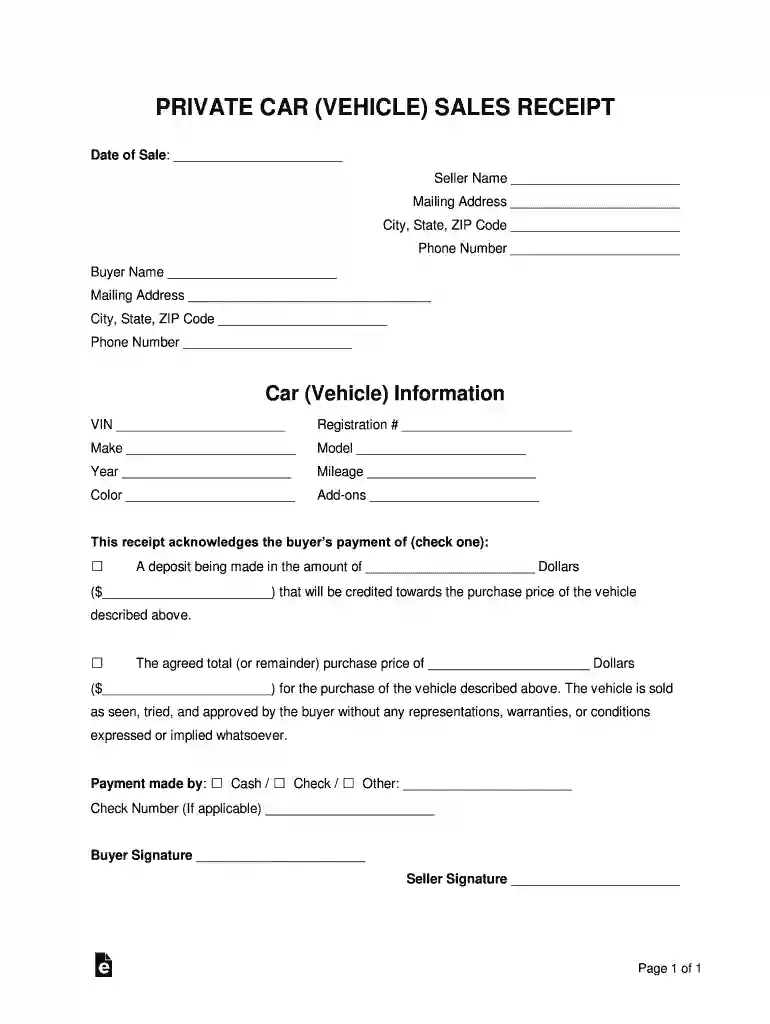
A private car vehicle sales receipt is a legally binding document used to record the sale of a vehicle between two private parties. It includes important details such as the buyer's and seller's information, vehicle specifications, payment details, and signatures from both parties. This receipt is essential for confirming the transfer of ownership and serves as proof that the buyer has paid for the vehicle. It is particularly important in cases where warranties are not provided, as it clearly states that the sale is made without warranties. This document can be crucial in resolving disputes regarding the transaction or ownership of the vehicle.
Utilizing the private car vehicle sales receipt involves several steps to ensure all necessary information is accurately captured. First, gather details about the vehicle, including make, model, year, VIN, and mileage. Next, record the seller's and buyer's names, addresses, and contact details. Include payment information, such as the selling price, date of transaction, and method of payment. Both parties should carefully read the document and confirm the details before signing. Retain a copy for personal records and provide one to the other party. This thorough process helps ensure both parties are aligned and the transaction is documented appropriately.
Prepare the Receipt Form: Start by accessing a template or creating a blank document. DocHub offers tools to create or manage this process, enabling users to input required fields easily.
Enter Vehicle Details: Fill in specific information about the vehicle, including make, model, year, color, and VIN. Accuracy in this section is critical for clear identification of the vehicle.
Input Buyer and Seller Information: Clearly document the names, addresses, phone numbers, and email addresses of both the buyer and the seller to avoid any future misunderstandings.
Document Payment Terms: Specify the agreed-upon sale price, payment method, and any initial deposits. Note if the payment was made in full or if there are any outstanding balances.
Include Sale Conditions: Outline any additional conditions or clauses pertinent to the sale, like the absence of warranty or any agreed repairs or modifications.
Sign and Date: After both parties review the document, sign and date it in the space provided. This action finalizes the receipt as a legal record.
Distribute Copies: Each party should receive a copy of the completed sales receipt for their personal records. This serves as evidence in case of future disputes.
The private car vehicle sales receipt must include several critical elements to ensure its validity and comprehensiveness:
The private car vehicle sales receipt acts as a legally recognized document to confirm the transaction and transfer of ownership. It not only aids in certifying that the buyer has paid the agreed price but also in transferring responsibility for the vehicle. This is critical as certain states may require documentation to transfer a vehicle's title officially. Careful completion of all sections and compliance with state-specific regulations ensure legal validity and protection.
Different states have varying requirements for a private car vehicle sales receipt's content and necessity. For instance, some states might require notarization of the document, while others require additional forms to be filed with local Department of Motor Vehicles (DMV) offices. Familiarizing yourself with local laws ensures smooth processing of vehicle ownership transfer and a headache-free sales process.
Example scenarios provide clarity on how different contexts can impact the private car vehicle sales receipt:
Example One: An individual selling a used car to a friend includes full payment in cash, requiring a straightforward receipt with basic information and signatures.
Example Two: In a situation where a vehicle is sold with known mechanical issues, the receipt includes an acknowledgment that the buyer accepts the vehicle in its current condition, without warranty.
Each example underscores the importance of adapting the receipt to suit specific details and situations, ensuring all aspects of the transaction are duly recorded.
Understanding key terminology ensures both parties recognize their responsibilities and rights:
By familiarizing yourself with these terms, you can effectively communicate and execute a thorough and legally sound vehicle sale.
We've got more versions of the private car vehicle sales receipt form. Select the right private car vehicle sales receipt version from the list and start editing it straight away!
| Versions | Form popularity | Fillable & printable |
|---|---|---|
| 2019 | 4.5 Satisfied (34 Votes) |
At DocHub, your data security is our priority. We follow HIPAA, SOC2, GDPR, and other standards, so you can work on your documents with confidence.