






Definition & Meaning
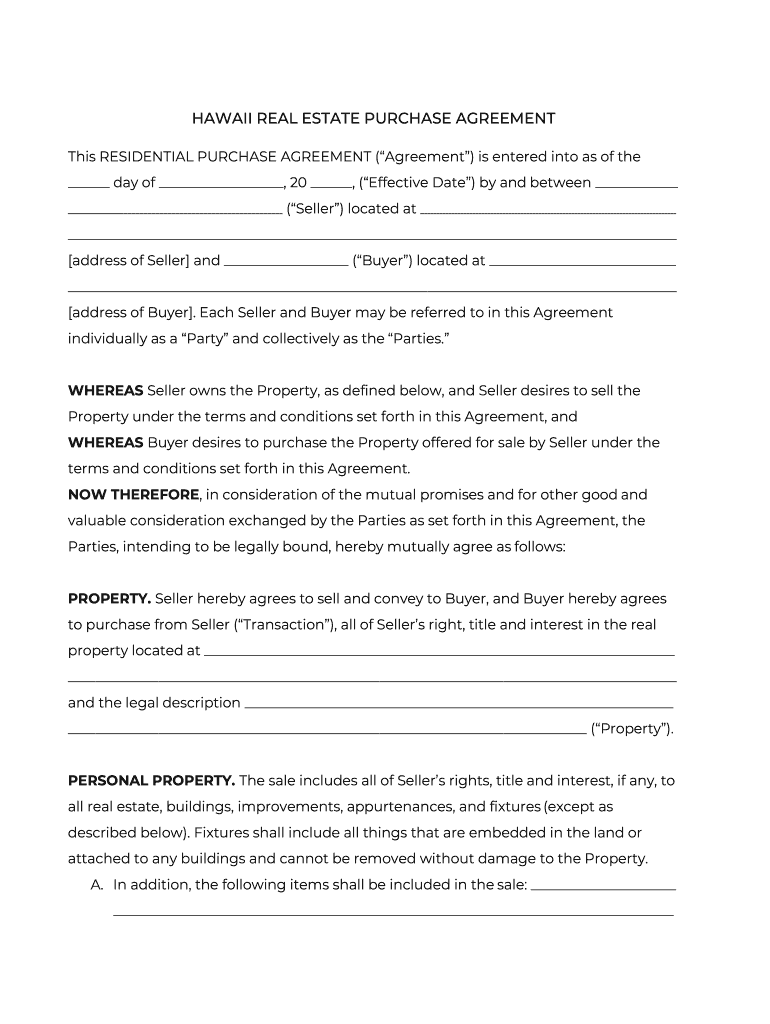
The Hawaii Real Estate Purchase Agreement is a legally binding document used in residential real estate transactions in the state of Hawaii. This agreement stipulates the terms and conditions under which a seller agrees to sell and a buyer agrees to purchase a specified property. It includes critical information such as the property's description, purchase price, financing options, and seller representations. The agreement serves as a comprehensive guide to formalize the transaction, ensuring compliance with Hawaii state laws and regulations.
Key Elements of the Hawaii Real Estate Purchase Agreement
Understanding the essential components of the Hawaii Real Estate Purchase Agreement is crucial for both buyers and sellers. Here are the fundamental elements:
- Property Description: Clearly outlines the property's details, including address, legal description, and any fixtures or exclusions.
- Purchase Price: Specifies the agreed-upon amount the buyer will pay for the property.
- Financing Options: Details various methods of financing the purchase, such as conventional loans, FHA, VA, or cash payments.
- Earnest Money: Discusses the amount of earnest money to be deposited, which demonstrates the buyer's commitment.
- Disclosures: Mandates necessary disclosures by the seller, including any known defects or issues related to the property.
- Inspection Rights: Grants the buyer the right to inspect the property within a specified period.
Steps to Complete the Hawaii Real Estate Purchase Agreement
Completing the Hawaii Real Estate Purchase Agreement involves several steps to ensure all parties are aligned. Here's a step-by-step guide:
- Negotiate Terms: Both parties should negotiate terms such as price, contingencies, and closing date.
- Complete the Agreement: Fill in all required fields, ensuring accuracy in the property description, buyer/seller information, and financial details.
- Add Disclosures: Include any legally required disclosures to provide transparency.
- Sign the Agreement: Both the buyer and seller must sign the contract to make it legally binding.
- Distribute Copies: Provide copies of the signed agreement to all parties involved, including real estate agents and legal representatives.
Important Terms Related to the Hawaii Real Estate Purchase Agreement
Familiarity with key legal terminologies can aid in understanding the Hawaii Real Estate Purchase Agreement:
- Contingency: Conditions that must be met for the contract to be binding, such as obtaining financing.
- Closing Costs: Expenses over and above the property price, paid at the closing of a real estate transaction.
- Due Diligence: Period allowing the buyer to conduct inspections and resolve any issues.
Legal Use of the Hawaii Real Estate Purchase Agreement
The Hawaii Real Estate Purchase Agreement is governed by state laws, ensuring that both buyer and seller interests are protected. Legal compliance involves incorporating all required disclosures and adhering to state-specific regulations on real estate transactions. Failure to comply can result in legal consequences, including voided contracts or lawsuits.
State-Specific Rules for the Hawaii Real Estate Purchase Agreement
Hawaii imposes unique rules and regulations on real estate transactions; here are some you should be aware of:
- Condominium Disclosure: If the property is a condominium, additional disclosures related to association rules and fees are mandatory.
- Environmental Hazards: State law requires disclosure of environmental hazards such as lead paint or asbestos.
Examples of Using the Hawaii Real Estate Purchase Agreement
Consider scenarios to understand how the Hawaii Real Estate Purchase Agreement is used in practice:
- First-Time Buyers: A first-time homebuyer can use the agreement to ensure they understand all contingencies, financing options, and obligations.
- Investment Properties: Investors use these agreements to outline terms, focusing on specific clauses like tenant arrangements or occupancy timelines.
Disclosure Requirements
Disclosure plays a pivotal role in the real estate purchase process. Sellers must supply information on known defects, neighborhood nuisances, and any other matters affecting property value or desirability. This transparency is not only a legal requirement but also helps to foster trust between parties.
Who Typically Uses the Hawaii Real Estate Purchase Agreement
The Hawaii Real Estate Purchase Agreement is utilized by various stakeholders in the real estate sector:
- Homebuyers and Sellers: The primary users, conducting transactions for residential properties.
- Real Estate Agents: Help draft, review, and negotiate terms within the agreement.
- Legal Advisors: Provide guidance on compliance with state laws and proper disclosure practices.
These sections provide a detailed and comprehensive overview of the Hawaii Real Estate Purchase Agreement, ensuring clarity and compliance in property transactions.