






Definition and Meaning of Getting Started in Excel and Visual Basic
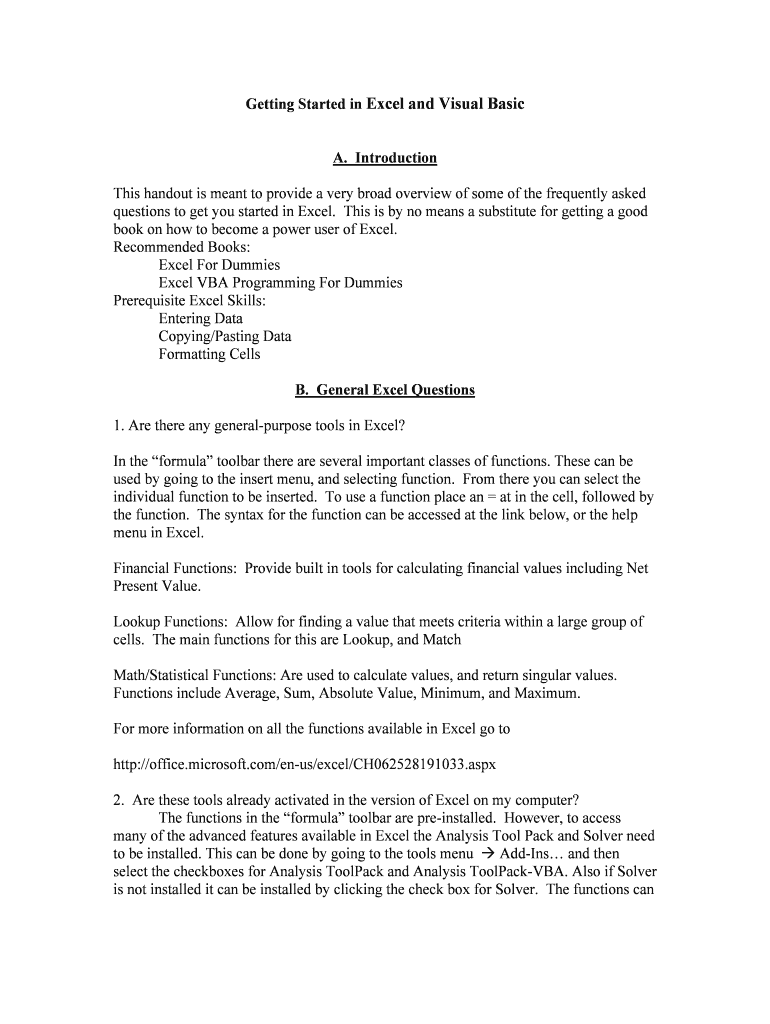
The "Getting Started in Excel and Visual Basic" guide serves as an introductory resource for individuals seeking to learn the basics of Excel and Visual Basic for Applications (VBA). Excel is a widely used spreadsheet application that facilitates data organization, analysis, and visualization. VBA, a programming language integrated within Excel, allows users to automate tasks, perform complex calculations, and customize functionalities. This guide aims to equip beginners with foundational skills that enhance productivity and efficiency by leveraging both Excel’s features and VBA programming.
Key Elements of Getting Started in Excel and Visual Basic
Several core elements are covered within the guide, providing a well-rounded introduction:
- Excel Interface and Navigation: Understanding Excel's interface, including ribbons, menus, and toolbars, is fundamental. The guide explains how to navigate spreadsheets, manage worksheets, and utilize basic functions.
- Data Management and Formulas: Proper data entry, sorting, filtering, and the application of formulas and functions are crucial skills. The guide introduces basic formulas such as SUM, AVERAGE, and VLOOKUP.
- Visual Basic Integration: VBA’s capabilities, such as recording macros, writing simple scripts, and debugging, are detailed. Learning to access the Visual Basic Editor is the first step to utilizing these features.
- Creating Automation: Automating repetitive tasks using VBA is emphasized. Users learn to create simple macros that can reduce manual effort and minimize errors.
Steps to Use the Getting Started in Excel and Visual Basic
A structured approach is proposed to effectively utilize the guide:
- Familiarize with Excel Basics: Start with understanding the basic functions and layout of Excel. This includes learning to enter data, format cells, and utilize built-in formulas.
- Explore Visual Basic Editor: Access the VBA editor from Excel and familiarize yourself with its components, such as the code window and project explorer.
- Record a Macro: Use Excel's macro recorder to capture a sequence of actions. This introduces you to the concept of automation without needing to write code immediately.
- Edit and Write VBA Code: Progress from recording macros to writing and editing VBA code. Simple examples include loops and conditional statements.
- Experiment with Automation: Implement automation for tasks such as data formatting or generating reports from large datasets. This reinforces understanding and highlights the power of VBA.
Important Terms Related to Excel and Visual Basic
Understanding specific terminology is essential for mastering Excel and VBA:
- Workbook/Worksheet: A workbook is an Excel file with one or more worksheets (spreadsheets) where data is entered.
- Macro: A series of automated commands and functions written in VBA used to perform tasks.
- Module: A section within the VBA editor where code is stored.
- Loop: A programming construct that repeats a block of code multiple times.
Who Typically Uses the Getting Started in Excel and Visual Basic
This guide primarily targets:
- Students: Individuals in academic settings who require Excel for coursework or data analysis.
- Professionals: Anyone in business roles where data management and analysis are crucial, including finance and marketing sectors.
- Small Business Owners: Entrepreneurs looking to manage finances, inventory, and operations efficiently.
- Data Analysts: Individuals who need to automate data processes and report generation.


Legal Use of Excel and Visual Basic
Excel and VBA applications should comply with legal and ethical standards:
- Software Licensing: Users must ensure they have legal licenses for Excel usage per Microsoft’s agreement.
- Data Privacy: Respect privacy laws (e.g., GDPR) when using Excel for handling personal data.
- Automation Compliance: Automation scripts, especially those linked to financial transactions, should adhere to audit and compliance standards.
Examples of Using Excel and Visual Basic
Practical applications of Excel and VBA include:
- Inventory Management: Automating stock level updates and generating order reports.
- Budgeting: Creating dynamic budgets with forecast analysis capabilities.
- Human Resources: Streamlining employee record management and payroll calculations.
- Customized Reports: Automatically generating periodic performance or sales reports with minimal manual intervention.
Software Compatibility Considerations
The guide should address compatibility with different systems:
- Operating Systems: Compatibility of Excel and VBA with Windows and Mac systems, noting potential feature differences.
- Third-Party Tools: Integration capability with popular software such as TurboTax for financial analysis or QuickBooks for accounting.
- Cloud Environments: Accessibility of Excel and VBA functionalities in cloud-based platforms like Microsoft 365.
Enhanced Learning for Excel and Visual Basic
To deepen understanding, consider additional resources:
- Online Courses: Websites like Coursera or edX offer comprehensive Excel and VBA courses.
- Books: Reference books such as "Excel 2019 Power Programming with VBA" for advanced learning.
- Community Forums: Participate in forums like Reddit or Stack Overflow to exchange tips and solutions with other users.
Why Start with Excel and Visual Basic
The transition to using Excel and VBA offers significant advantages:
- Increased Efficiency: Automate tedious tasks and reduce error margins.
- Better Data Analysis: Utilize Excel’s powerful data manipulation and visualization capabilities for informed decision-making.
- Skill Development: Learning VBA adds valuable programming skills to your repertoire, enhancing career prospects.