
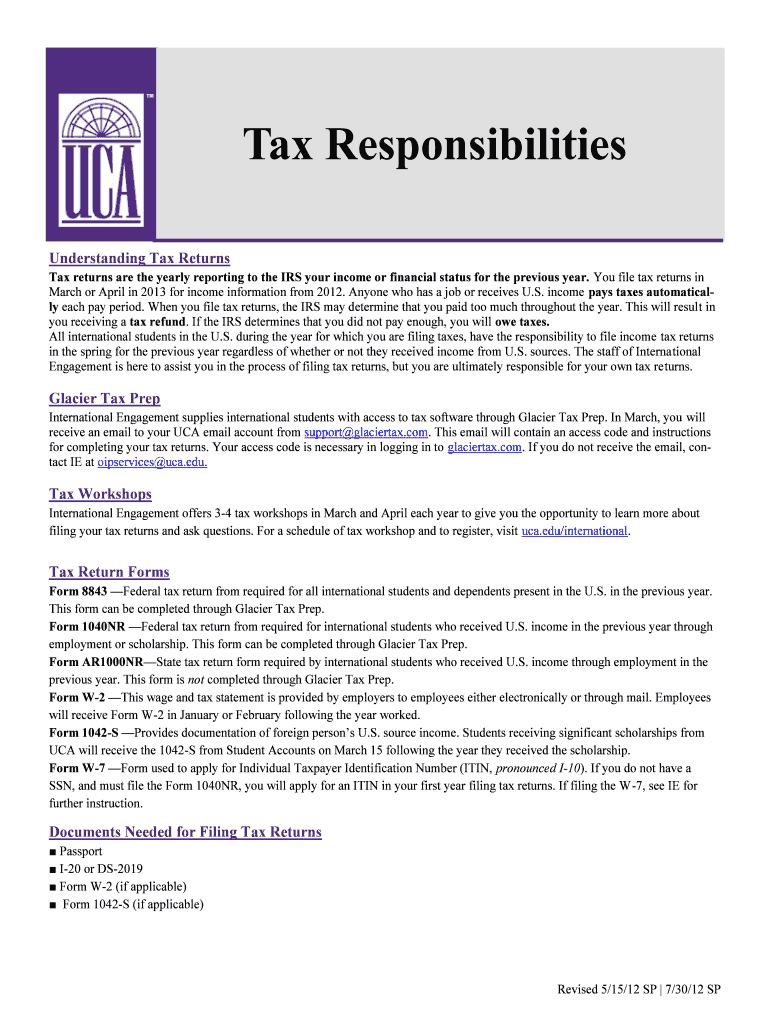







Definition & Meaning of Tax Responsibilities
Tax responsibilities refer to the obligations individuals and entities have to report earnings and pay applicable taxes to the government. These responsibilities can vary depending on the taxpayer's status, income level, and type of income. For international students in the U.S., this includes filing tax returns and understanding the specifics of income received both domestically and abroad. Accurate fulfillment of these responsibilities ensures compliance with tax laws and avoids penalties.
Steps to Complete the Tax Responsibilities for International Students
-
Determine Residency Status: International students must first determine if they are considered residents or non-residents for tax purposes. This affects which forms they must file and how they calculate their tax liabilities. The Substantial Presence Test is a commonly used method for determining residency status.
-
Gather Necessary Documentation: Compile all necessary documents, such as Form W-2 for employment income, Form 1099 for other types of income, and any records of scholarships, grants, or fellowships. These documents provide the foundational data required for accurate tax filing.
-
Choose the Appropriate Form: Non-resident students typically file Form 1040-NR, while resident aliens use Form 1040. Understanding which form to use is crucial for accurate reporting and compliance with IRS guidelines.
-
Utilize Tax Preparation Software: Tools like Glacier Tax Prep are specifically designed for non-residents and can simplify the filing process. These tools guide users through complex tax scenarios and ensure all applicable deductions and credits are applied.
-
Verify Filing Deadlines: The filing deadline for tax returns is typically April 15, but international students should confirm any specific requirements that might apply to them to avoid late fees or penalties.
-
Submit the Completed Forms: Depending on the form chosen, submissions can be done either online through IRS e-file services or mailed directly to the IRS offices.
Required Documents for Filing Taxes
Accurate tax filing requires several key documents:
- Form W-2: Reports wage and salary information.
- Form 1098-T: Tuition statement from educational institutions, which can affect tax deductions.
- Form 8843: Required for non-resident students to explain their exempt status under the substantial presence test.
- Scholarship/Fellowship Records: Documentation of any academic financial awards received, which may be taxable.
Maintaining an organized system for storing and retrieving these forms will aid in efficient tax preparation and filing.
IRS Guidelines and Compliance
International students must comply with specific IRS guidelines to ensure their tax responsibilities are met:
- Understanding Taxable vs. Non-Taxable Income: It is essential to distinguish which forms of income, like certain scholarships, may be exempt from taxation.
- Filing Even Without Income: All non-resident international students, regardless of their income status, must file Form 8843.
- Utilizing Resources for Assistance: IRS publications and tax workshops are valuable resources that provide authoritative guidance and clarification on tax-related inquiries.
Penalties for Non-Compliance
Failing to meet tax responsibilities can result in various penalties:
- Late Filing Fees: Charges assessed for not submitting tax returns by the deadline.
- Underpayment Penalties: Fees for not remitting the full amount of taxes owed.
- Potential Legal Consequences: In more severe cases, significant breaches of tax rules can lead to legal action.
Being proactive in understanding tax obligations eliminates these risks.
Filing Deadlines and Important Dates
Key dates include:
- April 15th: The standard deadline for filing federal income tax returns.
- June 15th: Extended deadline for non-U.S. residents who live outside of the U.S.
Meeting these dates is crucial to maintaining compliance and avoiding penalties. For those needing extensions, Form 4868 can be submitted to request additional time, usually extending the deadline to October 15th.
Digital vs. Paper Version of Tax Forms
The method of filing taxes can affect the convenience and speed of processing:
-
Digital Filing: Offers fast submission and verification through the IRS e-file service. This method reduces errors and accelerates refunds.
-
Paper Filing: Traditional method for those who prefer physical documents but can result in longer processing times.
Choosing a format depends on individual preferences and access to technology. For many, digital filing represents the most efficient avenue.
Taxpayer Scenarios: International Students
Different scenarios demand unique reporting obligations:
- Scholarship Recipients: Must evaluate if any portion of their award is taxable.
- Part-Time Workers: Need to report all employment income, even if small amounts.
- No Income: Still required to file Form 8843 to maintain compliance with IRS requirements.
Each scenario comes with distinctive tax considerations, underscoring the need for careful evaluation of personal circumstances.


Software Compatibility for Tax Filing
Many international students utilize specific software for tax filing:
- Glacier Tax Prep: Tailored to non-resident international students, simplifying the process of filing Form 1040-NR and 8843.
- TurboTax and QuickBooks: These software options provide broad functionality for those with varied income sources or more complex tax scenarios.
Careful selection based on individual tax filing needs ensures efficient preparation and submission, reducing the likelihood of errors.




