



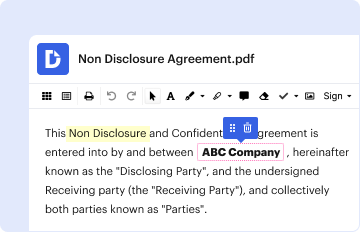
01. Edit your jury duty excuse letter florida online
Type text, add images, blackout confidential details, add comments, highlights and more.

Type text, add images, blackout confidential details, add comments, highlights and more.
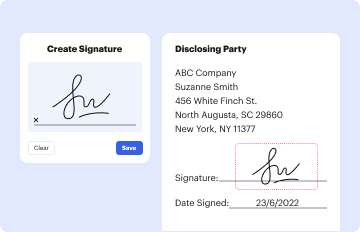
Draw your signature, type it, upload its image, or use your mobile device as a signature pad.

Send medical excuse for jury duty example via email, link, or fax. You can also download it, export it or print it out.
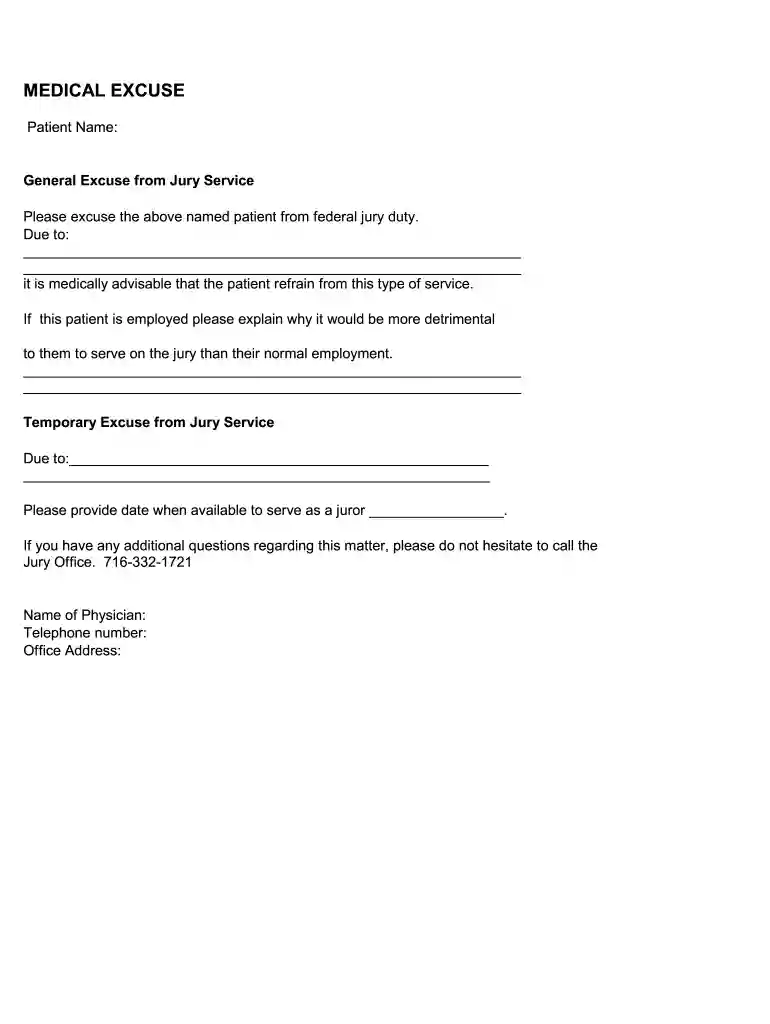
Medical excuse forms are essential documents used by individuals seeking exemption from jury duty or other court-related obligations due to health conditions. These forms serve as formal requests for leniency, substantiated by medical evidence, and must convey specific details about the individual’s health status.
Different states have unique requirements, but generally, medical excuse letters should include:
Creating a medical excuse letter requires precision and clarity. Here are examples for various states:
Submissions need to be handled delicately to ensure compliance:
Certain conditions may warrant exceptions, which must be clearly outlined:
Securing a medical excuse involves several steps that ensure adherence to legal and procedural norms:
Failing to provide a valid medical excuse can lead to penalties, including:
Individuals should be ready for any follow-up from the court regarding their medical excuse:
In summary, understanding the procedures and requirements for medical excuse letters can facilitate a smoother interaction with court systems. Proper documentation and adherence to guidelines can alleviate the stress associated with fulfilling jury duty obligations while managing personal health issues.
At DocHub, your data security is our priority. We follow HIPAA, SOC2, GDPR, and other standards, so you can work on your documents with confidence.
Do not register for service! The MD Registrar will send a letter to the court requesting that you be excused until graduation from medical school.Read more
Must be a citizen of the United States of America, at least 18 years of age, who has resided for a period of one year within the judicial district;Read more


