Definition & Meaning
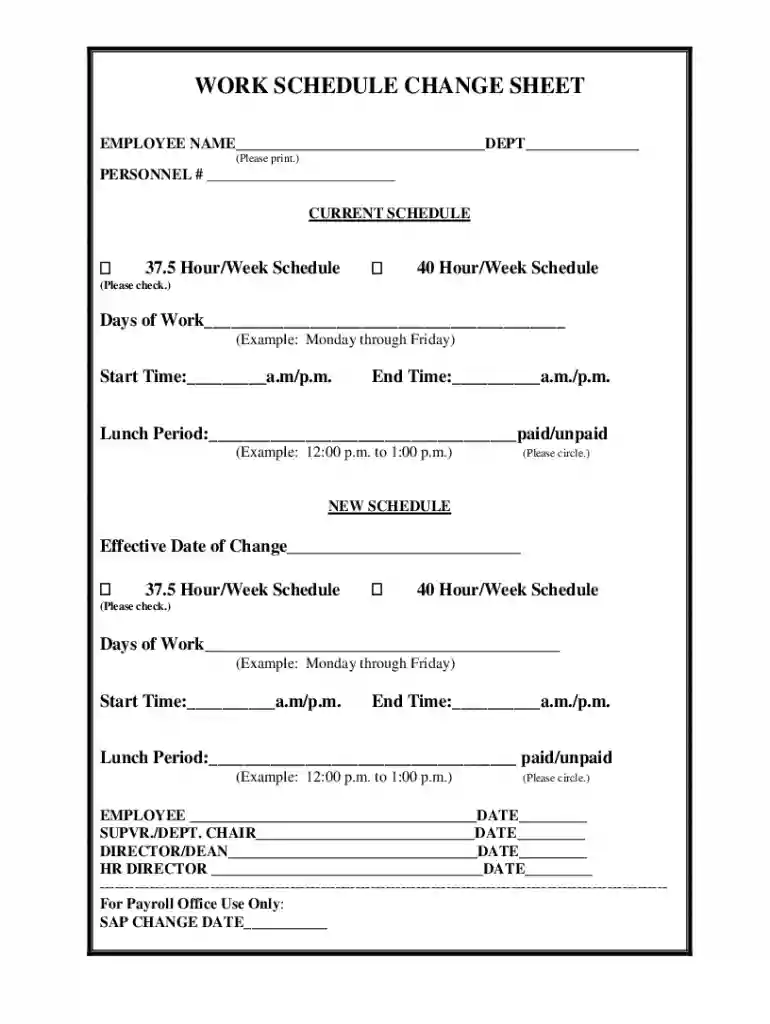
The Work Schedule Change Sheet is a formal document utilized within organizations to request modifications to an employee's existing work schedule. This form captures critical details about both the current schedule and the desired changes, such as updated work hours, days of the week, and any changes to meal periods. This sheet plays a significant role in managing workforce schedules efficiently by providing a structured approach to request, review, and approve changes. By standardizing the schedule change process, employees and supervisors can ensure that any alterations to work arrangements are documented, transparent, and agreed upon by all relevant parties.
Key Elements of the Work Schedule Change Sheet
Understanding the specific components of the Work Schedule Change Sheet helps streamline the change process. Key elements typically included are:
- Employee Information: This section requires basic data such as the employee’s name, position, and department, ensuring that the request is appropriately tracked.
- Current Schedule Details: Includes information about the existing arrangement, specifying workdays, start and end times, and any breaks.
- Proposed Schedule Changes: Provides the requested new hours or changes, exact details of which shifts, days, times, or breaks are affected.
- Justification for Changes: A required field where the employee must provide reasons or context for why the change is necessary.
- Approval Section: Spaces for signatures from the employee, their supervisor, department head, and HR director to document agreement and approval for the schedule change.
Steps to Complete the Work Schedule Change Sheet
Accurate completion of the Work Schedule Change Sheet is crucial for processing requests efficiently. Follow these steps:
- Gather Necessary Information: Before filling out the form, collect all relevant details about your current and desired work schedules.
- Fill Out Employee Information: Enter your personal information and department details clearly.
- Document Current Schedule: Ensure that all current working hours, days, and breaks are accurately recorded.
- Propose New Schedule: Clearly specify the requested changes, including new days and timings.
- Provide Justification: Write a concise yet comprehensive explanation for the requested changes. Consider including personal circumstances or logistical reasons.
- Submit for Approval: Obtain the necessary signatures from your supervisor, department chair, and HR director. Often, electronically routed forms expedite this process.
How to Use the Work Schedule Change Sheet
Effective use of the Work Schedule Change Sheet ensures smooth transitions and minimal disruption to workplace operations:
- Understand Need for Change: Before initiating a change request, evaluate both personal needs and organizational impact. Consult with managers to discuss potential impacts.
- Communicate Clearly: Use the form to communicate any changes directly and succinctly to minimize misunderstandings.
- Anticipate Timeline Requirements: Recognize that processing a change request can take time, especially if multiple approvals are needed. Plan ahead to avoid complications.
Legal Use of the Work Schedule Change Sheet
Ensuring compliance with labor laws and internal policies is essential when using the Work Schedule Change Sheet:
- Company Policies: Each organization may have specific rules and guidelines regarding schedule changes. It's critical to understand these before submitting a request.
- Legal Guidelines: The sheet must comply with local, state, and federal labor regulations. Adjustments need to respect legal requirements such as required breaks and maximum working hours.
Examples of Using the Work Schedule Change Sheet
Several practical applications demonstrate the utility of this form:
- Accommodating Personal Needs: Employees may request changes to better align with family obligations, such as adjusting start times to coordinate with children’s school schedules.
- Supporting Temporary Changes: For example, an employee undergoing a temporary recovery from an injury might require shorter shifts for a specified period.
Form Submission Methods (Online / Mail / In-Person)
Submitting the Work Schedule Change Sheet can usually be done through multiple channels:
- Online Submission: Many organizations prefer digital submissions through HR portals or email, which streamline the process and increase efficiency.
- Mail or In-Person Submissions: Physical forms can be submitted to the HR department or direct supervisors where electronic submissions are not feasible.
Consider your company’s preferred submission channel to ensure timely processing and approval of your request.