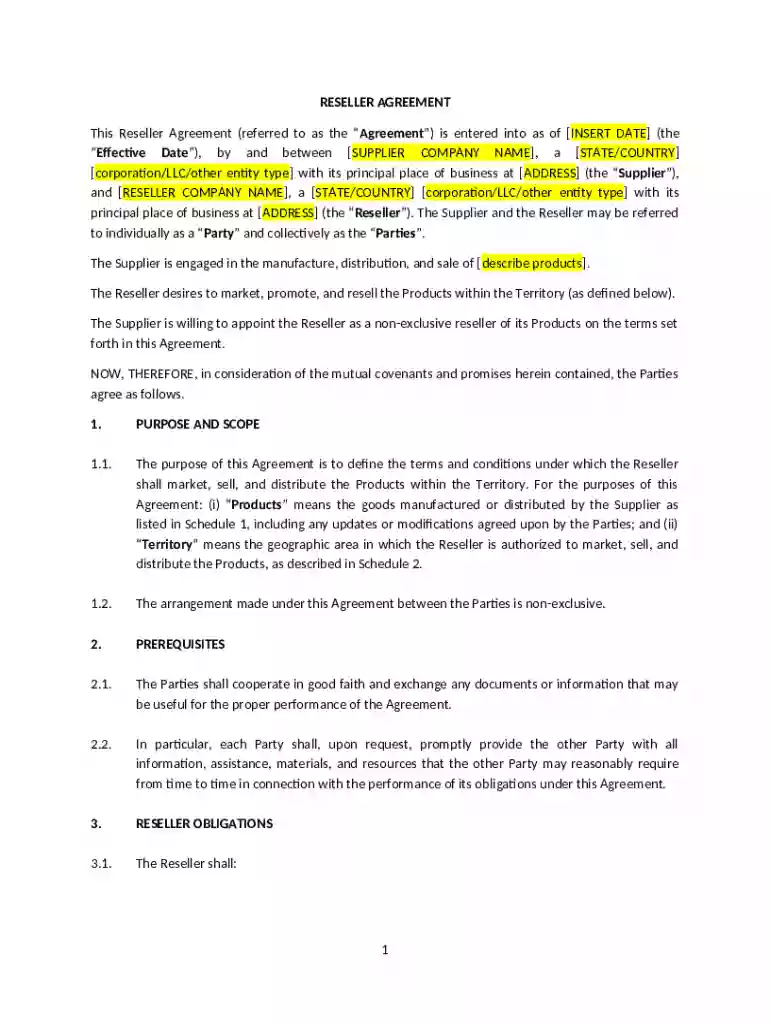
Definition and Purpose of a Reseller Agreement
A Reseller Agreement is a legally binding document that outlines the specific terms under which a Supplier authorizes a Reseller to market, sell, and distribute its products within a predetermined territory. This agreement is pivotal in defining the operational boundaries and responsibilities of both parties involved in the transaction. It covers critical components such as pricing structures, marketing obligations, and liability. The agreement is typically non-exclusive, meaning that the Supplier can appoint additional Resellers for the same territory. Additionally, it includes clauses related to the termination of the agreement, conditions for amendments, and the governing law applicable to the contract.
Key Components
- Product Supply: Details regarding the types and quantities of products the Reseller is authorized to sell.
- Territory: Specifies the geographic area where the Reseller is permitted to operate.
- Pricing: Outlines the agreed-upon pricing model and any conditions related to discounts or incentives.
- Confidentiality: Enforces the confidentiality of commercially sensitive information exchanged during the partnership.
- Liability: Specifies the extent of liability for each party under various circumstances.
Steps to Complete a Reseller Agreement
Completing a Reseller Agreement involves several critical steps to ensure that both parties fully understand their rights and obligations. Here is a detailed guide to drafting a comprehensive agreement:
- Initial Discussion: Start with a meeting between the Supplier and Reseller to discuss the partnership goals, expectations, and the products involved.
- Drafting the Agreement: Engage legal experts to draft the initial version of the agreement, incorporating specific terms that align with business objectives.
- Review and Amendments: Both parties should meticulously review the draft to identify areas for amendment and negotiate terms based on mutual interests.
- Finalizing Details: Clarify all key elements, including pricing, payment terms, territory, and exclusivity clauses, ensuring all parties are in agreement.
- Signing the Agreement: Once mutual consent is achieved, representatives from both parties sign the agreement. Use electronic signature platforms like DocHub for efficiency.
- Retention of Copies: Both parties should retain signed copies for reference and compliance with legal requirements.
Important Terms Related to Reseller Agreement
Understanding the terminology associated with a Reseller Agreement is essential for effective communication and the precise execution of duties. Key terms include:
- Exclusive vs. Non-Exclusive: Indicates whether the Reseller is the sole agent allowed to sell products in a particular territory.
- Minimum Purchase: The least quantity of product a Reseller is required to purchase within a specific timeframe.
- Intellectual Property: Rights related to trademarks, patents, and copyrights that the Reseller may use in marketing.
- Force Majeure: A clause that exempts the parties from liability due to unforeseen or uncontrollable events.
- Termination Clause: Provisions under which the agreement can be legally ended by either party.
Legal Use and Compliance
The legal enforceability of Reseller Agreements is governed by federal and state laws in the United States. To ensure compliance, consider these legal aspects:
- Governing Law: The agreement should specify which state laws regulate it, providing a clear legal framework for dispute resolution.
- Contractual Obligations: Both parties must adhere to the specifics outlined in the contract to avoid legal repercussions.
- Audit Clauses: Include provisions allowing the Supplier to review the Reseller's performance and adherence to the agreement.
- Consumer Protection: Ensure the agreement complies with federal consumer protection laws, avoiding clauses that could be considered unfair or deceptive.
Key Elements of the Reseller Agreement
For a Reseller Agreement to be effective, it must cover several key elements that frame the business relationship. These include:
- Product Details: A comprehensive list of products, including their specifications and categories.
- Sales Targets: Defined sales targets the Reseller needs to meet within specific periods.
- Price Lists and Terms: Transparent demonstration of the pricing mechanism and any associated terms such as bulk discounts.
- Marketing and Promotion: Obligations regarding promotional activities, branding efforts, and marketing strategies.
- Duration of Agreement: Clearly stated duration for which the agreement is valid, including renewal and termination options.
Examples and Scenarios
The implementation of Reseller Agreements can vary greatly depending on the industry and specific business relationships. Here are some scenarios:
- Technology Products: A software company appoints a Reseller to sell licenses and provide support services in a particular region.
- Consumer Goods: A manufacturer allows a retail chain to exclusively sell its products in a local market, promoting brand loyalty.
- Industrial Equipment: A company selling specialized machinery partners with a Reseller that has established industry connections to increase reach.
Business Types Benefiting Most from a Reseller Agreement
Various business types can benefit significantly from implementing Reseller Agreements, including:
- Manufacturers and Producers: Companies that produce goods and require wider distribution networks.
- Tech Firms: Organizations that develop software and need regional representatives for selling and customer support.
- Wholesalers: Entities dealing with large volumes of merchandise that seek partners to penetrate new markets.
- Startups: New businesses that need Resellers to help foster market entry and brand recognition.
State-Specific Rules for Reseller Agreements
While a Reseller Agreement is generally governed by broader commercial laws, specific states may have additional regulations:
- California: Requires transparency in disclosure of business relationships and compliance with strict consumer laws.
- Texas: Emphasizes enforceability of non-compete clauses and territory allotments within the agreement.
- New York: Mandates clarity in terms of financial dealings, including taxes and revenue sharing.
Understanding these nuances ensures the agreement is legally sound across different jurisdictions.