






Definition and Meaning of Interdisciplinary Graduate Internship Opportunities
Interdisciplinary Graduate Internship Opportunities refer to specialized internships designed for graduate students from diverse fields of study. These opportunities aim to bridge various disciplines, encouraging the application of integrated knowledge to tackle complex problems in real-world settings. They offer hands-on experience across multiple sectors, such as cultural resources, public interest campaigns, and environmental conservation, providing students with a holistic understanding of interconnected systems.
Practical Examples
- Cultural Resources: Internships may involve working with organizations like the Museum of Northern Arizona, where students from social sciences and history can collaborate on artifact preservation alongside geology and ecology experts.
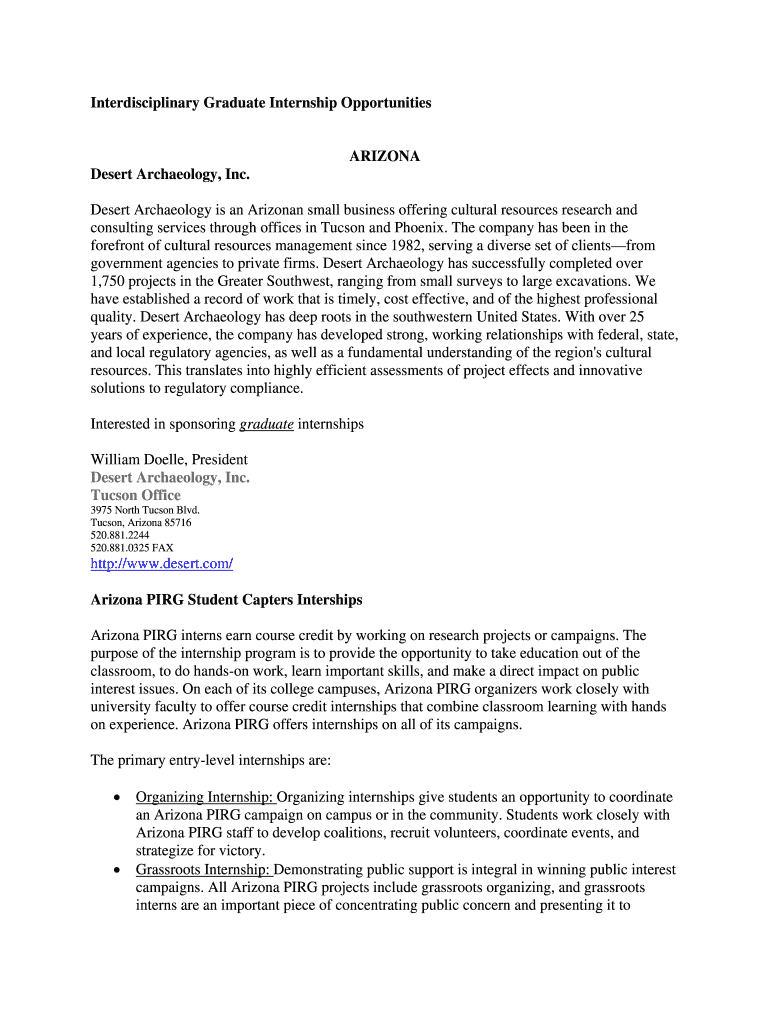
- Public Interest Campaigns: Arizona PIRG might offer internship positions where law students work alongside marketing students to develop policies and communicate them to the public.
- Environmental Conservation: Programs at the Smithsonian Institution could combine biological sciences with policy work, engaging students from environmental science and political science backgrounds.
How to Use the Interdisciplinary Graduate Internship Opportunities
To make the most of these opportunities, students should initially assess their career goals and the specific skills they hope to develop. Engaging with faculty advisors and career counselors can help identify suitable internships that align with academic and professional aspirations.
Steps to Utilize the Opportunity
- Research Available Internships: Utilize university career centers and online portals to find current offerings in your field of interest.
- Evaluate Suitability: Compare the roles, required skills, and potential learning outcomes with your personal and professional goals.
- Application Preparation: Customize your resume and cover letter to highlight interdisciplinary skills and projects.
- Networking: Connect with alumni or professionals in the field to gain insights and increase your chances of selection.
How to Obtain the Interdisciplinary Graduate Internship Opportunities
Securing an interdisciplinary graduate internship requires strategic planning and proactive engagement with industry resources. Interested students should engage with career services and online platforms to discover potential openings.
Detailed Process
- University Resources: Leveraging career services and faculty networks is crucial. Many universities have exclusive partnerships with organizations offering these internships.
- Professional Networks: Joining field-specific professional groups, both online and offline, can provide leads on upcoming internship opportunities.
- Direct Applications: Regularly check the websites of organizations of interest, such as Desert Archaeology or Arizona PIRG, for direct application portals.
- Conferences and Workshops: Attend industry conferences where companies might announce upcoming internships.
Steps to Complete the Interdisciplinary Graduate Internship Opportunities
Completing an interdisciplinary internship involves significant commitment and dedication to learning across various disciplines.
Completion Process
- Orientation and Training: Participate actively in all training sessions and familiarize yourself with organizational goals.
- Project Assignments: Approach each task with an open mind, applying knowledge from diverse fields to problem-solve creatively.
- Feedback Mechanism: Regularly seek feedback from supervisors and peers to enhance your interdisciplinary skills.
- Final Presentation: Many internships culminate in a presentation. Use this as an opportunity to showcase your integrated knowledge and learning outcomes.
Eligibility Criteria
Eligibility for these internships generally includes being enrolled in a graduate program with a strong academic record. Some programs may require prior coursework or experience in relevant fields.


Common Requirements
- Active Enrollment: Must be enrolled in a graduate program during the internship period.
- GPA Criteria: Most opportunities require a minimum GPA, often around 3.0 or higher.
- Field of Study: While open to various disciplines, specific internships might require background knowledge in subjects like environmental science, history, or public policy.
- Skills and Competencies: Proficiency in problem-solving, teamwork, and communication is often mandatory.
Application Process and Approval Time
The application process for these internships is rigorous and might involve multiple stages, from initial applications to interview rounds.
Sequence of Actions
- Initial Application: Submit a resume, cover letter, and possibly transcripts.
- Interviews: Be prepared for multiple interview rounds, often involving interdisciplinary panels.
- Additional Assessments: Some internships might require case studies or practical assessments.
- Timeline for Approval: Once selected, formal confirmation can take anywhere from two to six weeks depending on the organization.
Important Terms Related to Interdisciplinary Graduate Internship Opportunities
Understanding key terminology is crucial for navigating the application and completion processes.
Key Terms
- Interdisciplinary: Combining or involving two or more academic, scientific, or artistic disciplines.
- Internship: A temporary position with an emphasis on on-the-job training rather than merely employment.
- Cultural Resources: Physical evidence or place of past human activity, including sites, structures, landscapes, and objects.
- Public Interest Campaigns: Organized efforts to advocate for policies or changes that benefit the general public.
- Environmental Conservation: The protection, preservation, management, or restoration of natural environments and wildlife.
Examples of Using the Opportunities
Students who have participated in these internships report enhanced employability, mastery of complex problems, and increased confidence in cross-disciplinary communication.
Scenario-Based Examples
- Environmental Study: A biology student might collaborate with political science peers to develop an advocacy project for a conservation area.
- Cultural Project: An anthropology intern at Desert Archaeology might work alongside data scientists to analyze archaeological data, blending qualitative and quantitative methods.
- Policy Development: Graduates from varied backgrounds working at Arizona PIRG could jointly create comprehensive policy reform proposals, incorporating diverse expert opinions.
Understanding these multifaceted internship opportunities can significantly enhance a graduate student's professional trajectory, equipping them with the skills needed in today's interconnected world.