Definition and Purpose of Counseling Client Intake Form Template
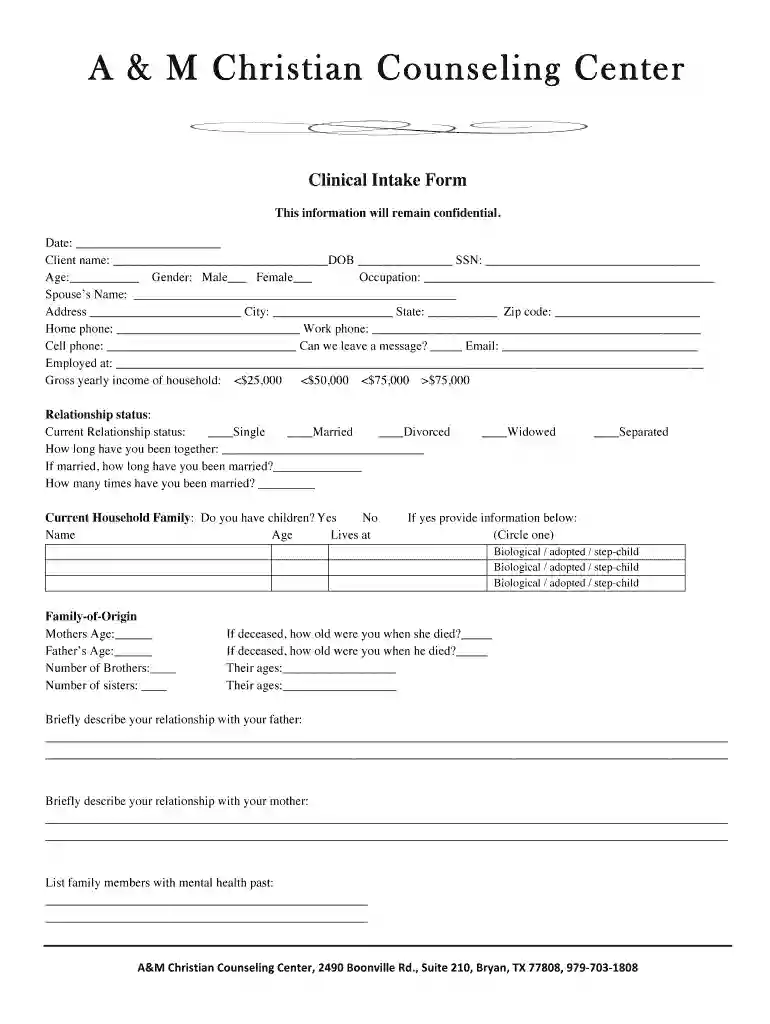
A counseling client intake form template is a structured document that gathers essential information from clients seeking counseling services. This form is designed to streamline the initial assessment process, ensuring that counselors obtain a comprehensive understanding of their clients’ backgrounds, issues, and goals for therapy. Typically, the intake form includes sections related to personal identification, family dynamics, past medical and counseling history, presenting problems, and therapeutic objectives.
Key Components of a Counseling Client Intake Form
- Personal Information: Basic identification details such as name, contact number, address, date of birth, and emergency contact information.
- Family and Social Background: Information regarding family relationships, marital status, and support systems can provide context for the client's current situation.
- Medical History: A review of physical and mental health conditions, current medications, and previous psychological evaluations helps identify any factors impacting the client’s well-being.
- Counseling History: Understanding any previous experiences with therapy, including what worked or did not work, informs current counseling approaches.
- Presenting Issues: Specific concerns or symptoms that prompted the client to seek therapy, such as anxiety, depression, or relationship problems, guide the counselor's focus.
- Goals for Therapy: Clients are encouraged to articulate what they hope to achieve through counseling, which helps shape treatment planning.
How to Effectively Use a Counseling Intake Form
Using a counseling client intake form template effectively involves several steps to ensure comprehensive data collection.
- Client Completion: Provide ample time for clients to fill out the form in a private space, encouraging honesty and thoroughness in their responses.
- Review Process: After the client submits the form, the counselor should review the details to prepare for the first session, reflecting on areas needing clarification.
- Follow-Up Questions: During the session, use the intake information to ask targeted follow-up questions, allowing for deeper exploration of the client’s issues.
- Updating the Form: It's important to update the intake form periodically, especially if there are significant changes in the client’s life or circumstances.
Examples of Counseling Client Intake Forms
Counseling client intake forms can vary by practice or therapist, but they generally share similar core questions.
- Example One: A mental health clinic may use a comprehensive form that includes sections on substance use, trauma history, and coping mechanisms.
- Example Two: A family therapist's intake form might emphasize dynamics within family units, prompting clients to reflect on communication patterns and conflicts.
- Example Three: A marriage counselor may have an intake form that focuses on relationship history, satisfaction levels, and goals for couples therapy.
Customization of Counseling Client Intake Forms
Customization of the counseling client intake form template is crucial to meet the specific requirements of different therapeutic settings or client demographics.
- Tailored Questions: Incorporate questions that address specific populations, such as adolescents, couples, or individuals with particular cultural considerations.
- Language and Tone: Adjust the language of the form to be inclusive and sensitive to the client’s background, using terminology that resonates with their experiences.
- Format Flexibility: Offer various formats such as PDFs for printing, fillable online forms, or editable Word documents to accommodate client preferences.
Legal and Ethical Considerations
It is essential to consider legal and ethical aspects while designing and using the counseling client intake form template.
- Confidentiality: Ensure that the information collected is kept confidential and stored securely, in compliance with HIPAA regulations.
- Informed Consent: Clarify the purpose of collecting data from the intake form and obtain consent from clients to use their information for therapeutic purposes.
- Data Management: Develop clear policies on how long client intake forms are retained and the process for securely disposing of them once they are no longer needed.
Steps to Create an Effective Counseling Client Intake Form
Creating a functional counseling client intake form requires a thoughtful approach.
- Define Purpose: Clearly outline the objectives of the intake form—what information is necessary for the therapeutic relationship.
- Select Relevant Sections: Choose components that align with the specific counseling population and therapy type.
- Draft Questions: Develop open-ended questions that encourage detailed responses while also including specific queries to capture quantifiable data.
- Pilot Testing: Test the form with a small group of clients to identify any ambiguities in questions and to ensure ease of completion.
- Finalize and Distribute: Once adjustments are made, finalize the form and distribute it to clients, ensuring accessibility in various formats.
Common Pitfalls to Avoid with Counseling Intake Forms
Being aware of common mistakes helps enhance the effectiveness of counseling client intake forms.
- Overloading with Questions: Avoid making the form excessively lengthy, which may deter clients from completing it. Focus on essential information that directly informs therapy.
- Neglecting to Update: Regularly review and update the intake form to ensure it remains relevant to current practices and client needs.
- Ignoring Feedback: Actively seek and incorporate feedback from both clients and peers on the intake form's clarity and effectiveness.
Conclusion
A well-designed counseling client intake form template is a vital tool in the therapeutic process, facilitating insightful understanding and establishing a productive counselor-client relationship. By addressing essential components, ensuring effective use, and adhering to legal requirements, counselors can optimize their intake procedures for better client outcomes.