
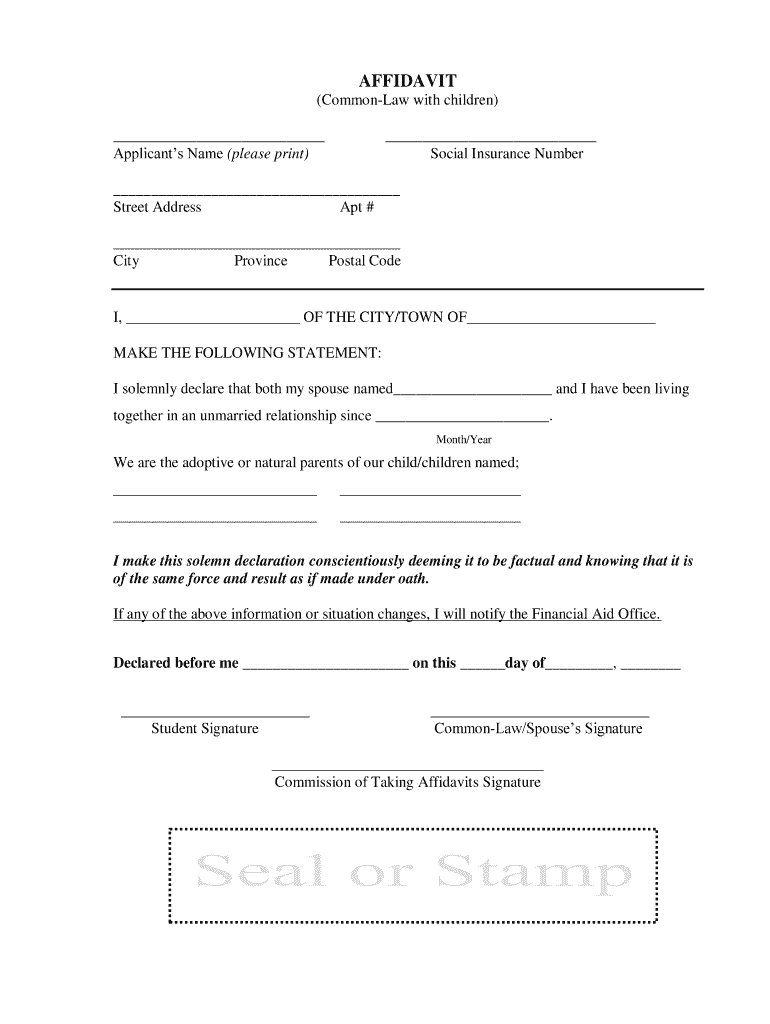







Common Law Affidavit Template in Ontario
A common law affidavit template is a vital document for individuals in a common-law relationship in Ontario, particularly when dealing with legal matters such as financial aid applications, property ownership, and custodial rights. This affidavit primarily serves to declare the applicant's relationship status and affirm their authenticity under law.
Essential Sections of a Common Law Affidavit
Affidavits typically follow a structured format that includes several critical components. A well-prepared common law affidavit will generally contain:
-
Personal Information of the Affiant: This includes the name, address, and contact information of the person making the affidavit.
-
Details about the Common Law Partner: The affidavit should also outline the partner's information, including their full name, residential address, and the nature of the relationship.
-
Cohabitation Statement: A key part of the affidavit that affirms how long the parties have lived together in a romantic and committed relationship.
-
Parental Status and Children Information: If applicable, this section includes details about any children born from the relationship, including names and dates of birth.
-
Statement of Truth: This is an affirmation that all the provided information is true and that the affiant understands the legal implications of making false statements.
Steps to Complete a Common Law Affidavit
To successfully draft a common law affidavit in Ontario, follow these critical steps:
-
Gather Necessary Information: Collect all personal data, including dates that define the relationship, such as the start date of cohabitation and any relevant documents.
-
Draft the Affidavit: Utilize a common law affidavit Ontario template to ensure all necessary sections are included. You can start from scratch or adapt a sample affidavit Ontario that suits your needs.
-
Include Required Legal Language: Make sure to incorporate standard legal terms and phrases that are typically used in affidavits to enhance the document's validity.
-
Sign Before a Notary: The document must be sworn before a commissioner or notary to be legally binding. This will authenticate the affidavit and provide legal standing.
-
Submit to Relevant Authorities: Depending on the purpose of the affidavit, submit the document to the Financial Aid Office, court, or other relevant parties.
Completing the Affidavit Form
When filling out the common law affidavit, it is essential to ensure that each section accurately reflects true circumstances. Identify the correct template, often referenced as the OSAP common law affidavit template when applying for financial aid, which may have specific requirements to meet.
-
Fillable Fields: Use fillable forms within platforms like DocHub to streamline the drafting process. This allows for easy insertion of necessary details and ensures no sections are overlooked.
-
Review and Edit: After completion, review the affidavit carefully. Any discrepancies or errors could lead to complications or disputes later.
-
Securely Store the Document: Maintain a copy for your records after completing the notarization process. This can be crucial for reference in the future, especially in legal matters.
Common Uses for a Common Law Affidavit
Affidavits serve several purposes in Ontario, particularly for couples who have not formalized their relationship through marriage. Common uses include:
-
Financial Aid Documentation: When applying for programs like OSAP, a common law affidavit may be required to confirm relationship status.
-
Property and Asset Claims: In cases of property disputes, this affidavit can serve as proof of shared ownership or contribution.
-
Child Custody and Support: Legal proceedings regarding custody may necessitate affidavits to confirm family structure and living arrangements.
Important Considerations
-
Legislation and Legal Standing: The common law affidavit must adhere to the legal definitions set forth by Ontario's Family Law Act. The parties involved must meet the criteria to be recognized as common law partners.
-
Updates and Changes: Be aware of changes to laws or templates that may affect the content or structure of the affidavit. Always refer to the most recent guidelines or legal references.
-
Privacy and Security: Given that these documents may contain sensitive personal information, take precautions in how they are stored and shared, utilizing secure online platforms.
Conclusion on Templates and Resources
A common law affidavit Ontario template is an indispensable tool for individuals in a common-law relationship for various legal prerequisites. Utilizing services that offer templates can significantly reduce time and ensure compliance with legal standards. When faced with any uncertainties or complexities, consider consulting a legal expert for tailored assistance.




