






Definition & Meaning
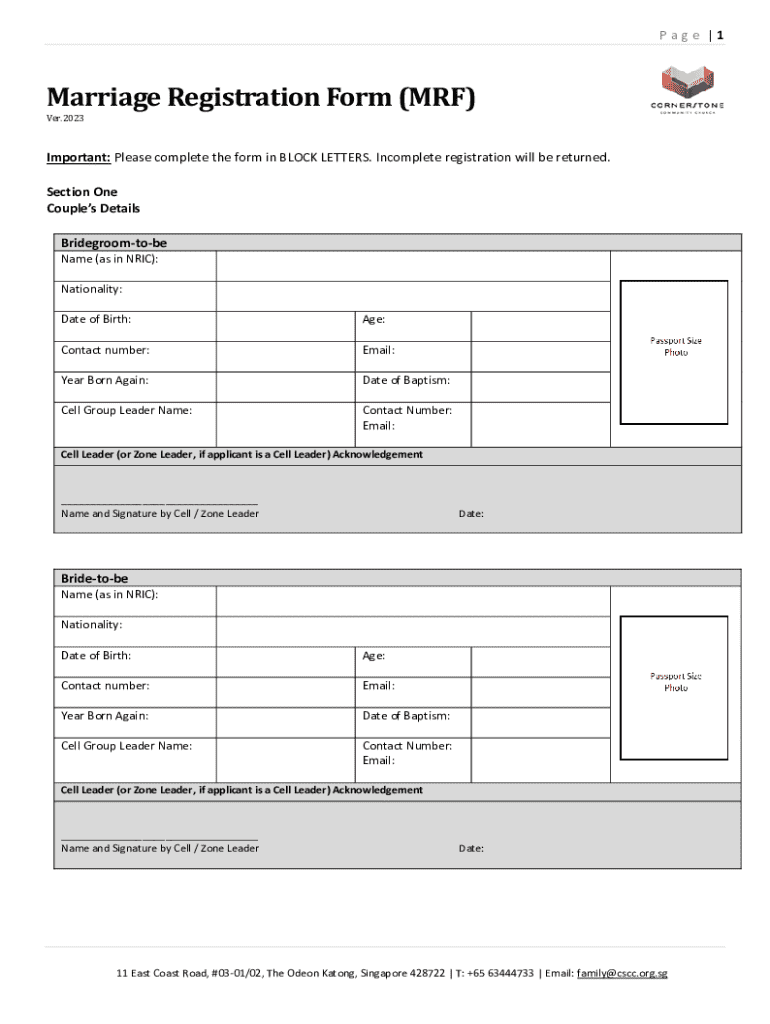
The Marriage Registration Form (MRF) is a formal document used primarily by couples seeking to register their marriage, typically at institutions like churches or government offices. This form acts as a legal record that formally acknowledges the union between two individuals. It is essential for validating the marriage in the eyes of the law and any associated religious institutions. The MRF not only serves as proof of marriage but also ensures that all necessary legal and personal details are documented correctly. This document safeguards the rights and responsibilities of both parties involved and becomes a crucial component of marital records.
How to Obtain the Marriage Registration Form (MRF)
To obtain the Marriage Registration Form (MRF), individuals usually need to visit the specific institution where they intend to register their marriage. This may include local county clerk offices, religious institutions such as churches, or governmental agencies involved in vital records. Many institutions now offer the form online, allowing couples to download and print it from the official website. Instructions are often provided to guide applicants through the process. In areas where online access is limited, individuals can request a physical copy by visiting the relevant office or contacting them via phone or mail.
Steps to Complete the Marriage Registration Form (MRF)
-
Gather Personal Information: Each party must provide detailed personal information, including full names, addresses, and contact numbers.
-
Include Background Details: Information such as date and place of birth, nationality, and in some cases, ethnicity, should be accurately filled out.
-
Document Marital History: If applicable, details about any prior marriages, including dissolution information, must be provided.
-
Attend Pre-Marriage Counseling: Certain institutions, like churches, may require proof of participation in marriage preparation courses.
-
Select Wedding Details: Couples need to include proposed wedding dates and venues, ensuring they align with the institution's availability and requirements.
-
Review and Sign: Both parties must carefully review the form for accuracy before signing it. The form may also require the signature of witnesses.
-
Submit the Form: Completed forms should be submitted to the issuing office. Verification processes may follow to ensure information validity.
Why Use the Marriage Registration Form (MRF)
The use of the Marriage Registration Form (MRF) is vital for making a marriage legally recognized. It ensures the marriage is duly recorded and protects the legal rights of both individuals in the union. The MRF acts as a binding agreement between the parties and the state, confirming that marriage laws and regulations are adhered to. Furthermore, it is necessary for accessing various benefits associated with being married, such as tax and insurance benefits, spousal privileges, and legal status in case of disputes.
Key Elements of the Marriage Registration Form (MRF)
- Personal Details: Includes the bride’s and groom’s full names, residences, and contact information.
- Background Verification: Baptismal records or similar when required by religious institutions.
- Marriage Intent: Statements affirming voluntary and mutual consent to marry.
- Legal Compliance: Acknowledgment of understanding and compliance with local marriage laws.
- Mentor Information: When applicable, details concerning a mentor couple facilitating pre-marriage counseling.
Legal Use of the Marriage Registration Form (MRF)
The Marriage Registration Form (MRF) serves a legal function by establishing the legality of the marriage. It is often required for changing names, filing taxes jointly, and for legal spousal healthcare and insurance claims. In legal proceedings such as divorce or separation, an MRF may be used to establish the terms and conditions of the marriage agreement originally entered into.
Important Terms Related to the Marriage Registration Form (MRF)
- Consent: Acknowledgment by both individuals that the decision to marry is mutual and voluntary.
- Banns: A traditional declaration of an intention to marry, often required before the ceremony in many religious contexts.
- Solemnization: The formal performance of the marriage ceremony.
- Dower Rights: Historically, the rights a wife is entitled to from her husband’s estate.
State-Specific Rules for the Marriage Registration Form (MRF)
State-specific regulations may affect the requirements and use of the Marriage Registration Form (MRF). For example, some states mandate blood tests or health screenings, while others might have waiting periods between issuance and the marriage ceremony. Legal age requirements can vary significantly, as can rules regarding consent and the necessity for parental permission. It is crucial for couples to verify the specific requirements of their state to ensure compliance and avoid potential delays or legal issues.
Required Documents for the Marriage Registration Form (MRF)
- Identification Copies: Such as driver’s licenses or passports for both parties.
- Birth Certificates: To verify age and identity.
- Proof of Divorce or Death Certificates: Required if either party was previously married.
- Parental Consent: If applicable, for individuals below a certain age.
Form Submission Methods (Online / Mail / In-Person)
The Marriage Registration Form (MRF) can often be submitted online through the issuing institution's website. When online submission is unavailable, forms can be mailed to the designated office along with all required supporting documentation. In-person submissions are also an option, allowing applicants to submit and verify the paperwork directly with an official, which can expedite processing and address any immediate concerns or errors.