




01. Edit your form online
Type text, add images, blackout confidential details, add comments, highlights and more.

Type text, add images, blackout confidential details, add comments, highlights and more.

Draw your signature, type it, upload its image, or use your mobile device as a signature pad.

Send it via email, link, or fax. You can also download it, export it or print it out.
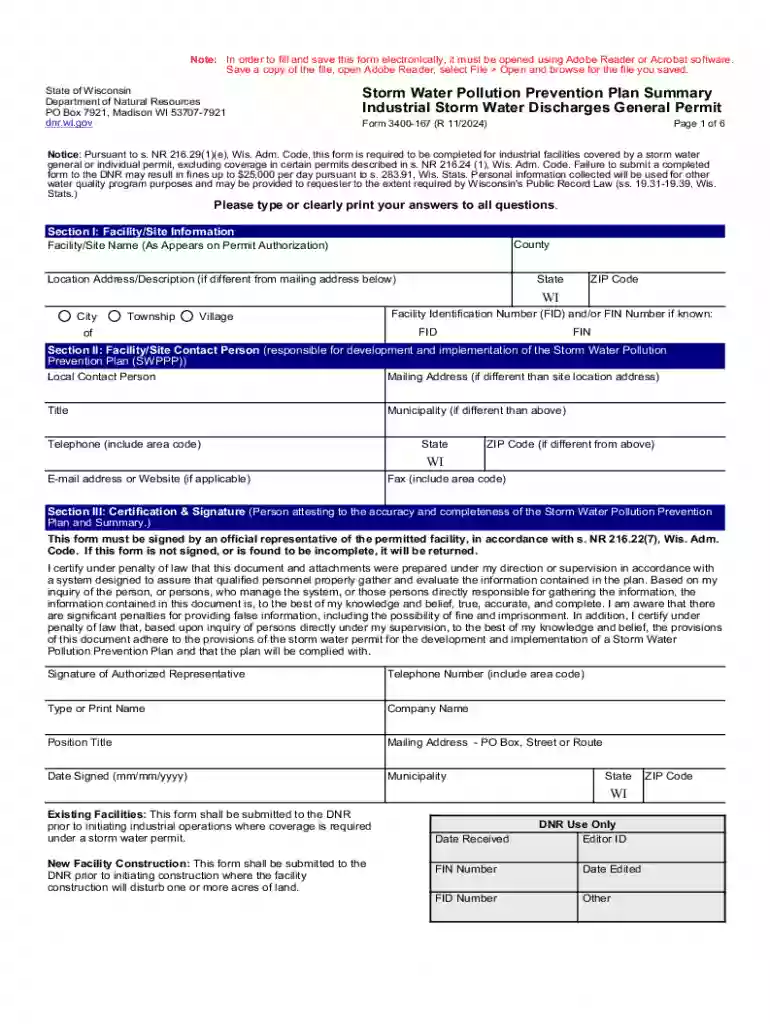
The Storm Water Pollution Prevention Plan Summary (SWPPP Summary) is a necessary document for industrial facilities seeking storm water permits in the United States. This form functions as a condensed guide outlining the procedures and measures required to mitigate storm water pollution. By detailing facility operations, potential pollutant sources, and control practices, it helps maintain compliance with federal and state environmental regulations focused on reducing industrial pollution impacts on water bodies.
Facility Identification: Begin by providing the official name, address, and classification of your facility. Accurate details ensure regulatory bodies can properly connect the document to the specific site.
Pollutant Source Inventory: Identify sources of potential pollutants related to facility activities. Include a thorough analysis of all material storage, handling areas, and processing units that might contribute to water pollution.
Best Management Practices (BMPs): Describe the BMPs employed to minimize pollutant discharges. Highlight structural controls such as containment measures and operational controls like material handling protocols.
Monitoring and Inspection Schedule: Define how frequently the facility will conduct inspections and water monitoring. This step is crucial for assessing the effectiveness of implemented pollution control measures.
Certification and Signatures: Ensure that the SWPPP Summary is reviewed and certified by an authorized representative, confirming its compliance and accuracy.
Facility Operations: Detailed descriptions of all activities taking place onsite that could affect storm water quality.
Pollutant Sources: Comprehensive listing of materials and equipment that are potential pollution sources, along with their locations on site.
Control Measures: Explanation of methods and technologies employed to reduce pollution risks, including both non-structural and structural controls.
Inspection Protocol: Step-by-step guide for conducting regular inspections and monitoring procedures to document compliance and effectiveness.
Detailed facility map highlighting significant areas like material storage, pollution sources, and BMPs.
Records of previous storm water sampling and testing, if applicable.
Permit application documents from the relevant environmental regulatory authority for verification purposes.
Contact information of the responsible environmental compliance officer.
The SWPPP Summary is a legal document required under various regulatory frameworks, including the National Pollutant Discharge Elimination System (NPDES) permits. Facilities are legally mandated to develop, implement, and maintain this summary to ensure compliance. Failure to comply can lead to hefty penalties, including fines and suspension of operational permits.
Different states may have variations in how the SWPPP Summary should be constructed and filed. For instance, Wisconsin mandates specific information about local hydrological conditions and weather patterns that must be considered in the plan. Facilities must adhere to both federal guidelines and individual state requirements to meet full compliance.
The primary users of the SWPPP Summary include environmental compliance officers at industrial facilities, environmental consultants who assist in drafting and reviewing the plan, and regulatory agency representatives who verify compliance. In industries ranging from manufacturing to wastewater treatment, the SWPPP Summary plays a critical role in environmental management strategies.


By leveraging digital tools like DocHub, facilities can streamline the preparation and maintenance of their SWPPP Summaries, enhancing both efficiency and regulatory compliance.
We've got more versions of the Storm Water Pollution Prevention Plan Summary form. Select the right Storm Water Pollution Prevention Plan Summary version from the list and start editing it straight away!
At DocHub, your data security is our priority. We follow HIPAA, SOC2, GDPR, and other standards, so you can work on your documents with confidence.


