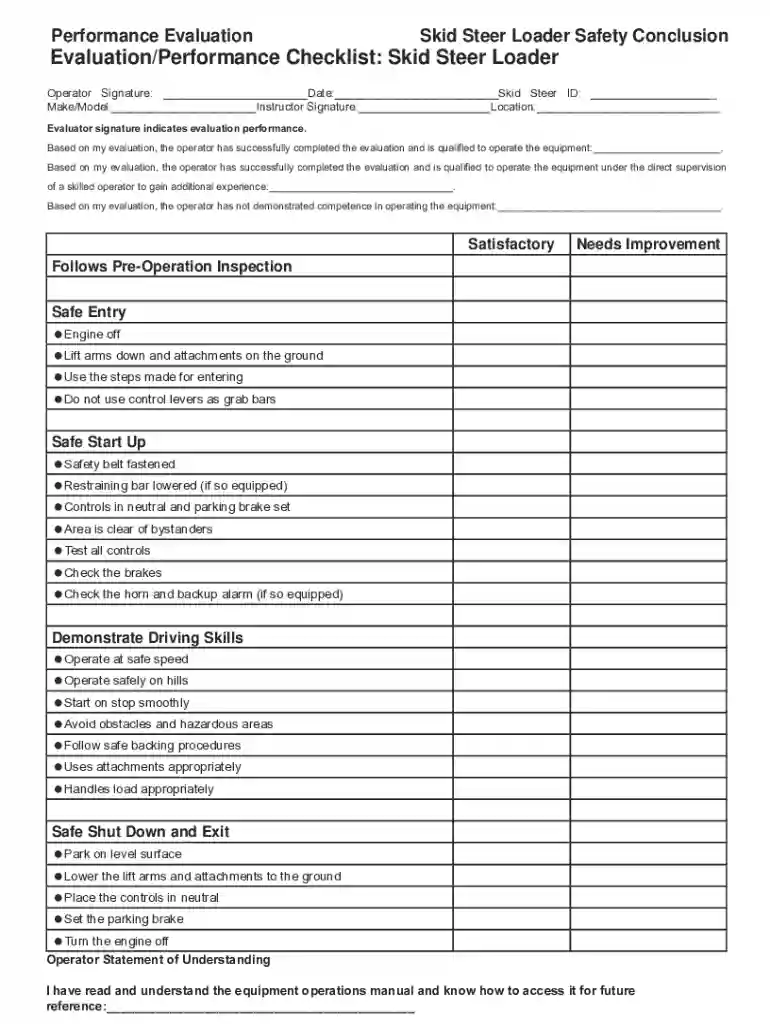
Daily Pre-Use Inspection Checklist Bobcat Skid-Steer and 2026

Get Form
Daily Pre-Use Inspection Checklist Bobcat Skid-Steer and Preview on Page 1

Here's how it works

01. Edit your form online
Type text, add images, blackout confidential details, add comments, highlights and more.

02. Sign it in a few clicks
Draw your signature, type it, upload its image, or use your mobile device as a signature pad.

03. Share your form with others
Send it via email, link, or fax. You can also download it, export it or print it out.

Definition and Meaning

The "Daily Pre-Use Inspection Checklist Bobcat Skid-Steer and" is a structured form used by operators to conduct safety and performance evaluations of Bobcat Skid-Steer loaders before they are put into use each day. This checklist serves to ensure that all critical components of the machinery are in safe and operable condition, thereby minimizing risks of malfunction during operation. It includes items such as checking fluid levels, tire pressure, and the functionality of safety features. The checklist is designed to confirm that the equipment meets all necessary safety standards and is fully prepared for the tasks of the day.

How to Use the Daily Pre-Use Inspection Checklist

Using the checklist involves a systematic examination of various components of the Bobcat Skid-Steer. The process typically begins with a walk-around to visually inspect the machine for any obvious signs of wear or damage. Operators should refer to each item on the checklist, verifying the status of the machine's operational elements, such as hydraulic systems, lights, brakes, and steering. Each completed inspection should be recorded with the date and name of the operator performing the check. Annotations on the checklist should detail any issues found and action taken.

Steps to Complete the Checklist

  1. Visual Inspection: Start with a thorough visual assessment of the equipment. Look for leaks, cracks, or any physical damage.
  2. Fluid Checks: Verify that oil, hydraulic fluid, and coolant levels meet manufacturer specifications.
  3. Safety Features: Ensure all safety devices, including seat belts and alarms, are functional.
  4. Control Operations: Test the steering, brakes, and control panels for proper operation.
  5. Complete Documentation: Document any discrepancies or required maintenance actions on the checklist.
  6. Operator Signature: Conclude the process by signing the checklist to verify completion.

Why Use the Checklist

The primary reason for utilizing this checklist is to ensure safety and prevent accidents. Regular inspections help identify potential hazards or issues early, allowing for timely maintenance that can avert costly equipment failures or operator injuries. Additionally, it ensures compliance with regulatory standards and supports a culture of safety in operations. By following this procedure, organizations can reduce downtime and prolong the lifespan of their equipment.

Key Elements of the Checklist

  • Personal Protective Equipment (PPE): Ensures the operator has and uses the appropriate safety gear.
  • Operational Checks: Lists specific machine operations to be tested for functionality.
  • Fluids and Lubrication: Notes the requirement to check fluid levels and lubricate moving parts.
  • Hydraulic and Electric Systems: Evaluates the condition and performance of critical systems.
  • Documentation: Includes fields for recording observations, signatures, and date.

Who Typically Uses the Checklist

The typical users of this checklist include operators of Bobcat Skid-Steer loaders in industries such as construction, agriculture, and landscaping. Supervisors may also review completed checklists to ensure compliance with safety protocols. Additionally, maintenance personnel use this document to identify areas requiring attention and scheduling necessary repairs or services.


decoration image ratings of Dochub

Legal Use and Compliance

Using the "Daily Pre-Use Inspection Checklist" complies with Occupational Safety and Health Administration (OSHA) guidelines, ensuring that equipment adheres to safety standards. This practice not only aligns with legal requirements but also protects the company from liability in the event of an accident. Proper documentation from these checklists can be crucial in audits or in demonstrating due diligence in maintaining equipment safety.

State-Specific Rules

While the checklist follows a standard format, some states may have additional regulations or requirements for equipment inspection. It is advisable for operators and managers to be aware of any local variances in safety standards or reporting requirements which might affect how inspections are conducted and documented. Understanding these nuances ensures full compliance with local law and enhances the overall safety procedure.

Important Terms Related to the Checklist

  • Hydraulic Systems: Refers to components using fluid pressure to perform work, necessitating regular inspections for leaks or blockages.
  • Operational Check: Involves testing the controls and mechanical functioning of the equipment.
  • Personal Protective Equipment (PPE): Safety gear operators must wear, including helmets, gloves, and eye protection.
  • Visual Inspection: An assessment method that relies on sight to check for obvious defects or wear in equipment.
be ready to get more

Complete this form in 5 minutes or less

Get form

Got questions?

We have answers to the most popular questions from our customers. If you can't find an answer to your question, please contact us.
Contact us
Firstly, it depends on the upkeep and maintenance the owner has performed on the machine and the size of the skid steer. You can assume that most small machines over 2,000 hours are getting up there. At the same time, you can extend that to 3,500 hours for larger machines.
Crane/Hoist Operators Daily / Pre-use Checklist Has the load been calculated and verified to be below the limits of the hoist and rigging? Are operating controls clearly identified? Are the controls operating correctly? Has the monorail beam been walked and visually checked for broken bolts, loose anchors, etc.
1 Perform a visual inspection of all aerial lift components, missing parts, torn or loose hoses, hydraulic fluid leaks, and replace as necessary. 2 Check to see if all oil, hydraulic, fuel and coolant are all at proper fluid levels. 3 Check the wheels tires for damage. Check the wheel lugs for tightness.
Inspect the Bucket, Loader Arms and Cylinders To check for wear on the bucket, look at its leading edge, the cutting teeth, side panels and bottom for signs of wear or damage. Check the cylinders for s or leaks and the loader arms for welds, which could be a sign of a repair.
Inspect your lift daily before operating. Never operate if it malfunctions or if it is broken in any way. Check the lifting points and adapters for damage or corrosion, and for wet, oily, or slick surfaces that may cause slippage. Wear the proper personal protective equipment.

Security and compliance

At DocHub, your data security is our priority. We follow HIPAA, SOC2, GDPR, and other standards, so you can work on your documents with confidence.

Learn more
ccpa2
pci-dss
gdpr-compliance
hipaa
soc-compliance
be ready to get more

Complete this form in 5 minutes or less

Get form

People also ask

Visual checks: Tyres (check for wear, splitting and pressures) Condition of the lights and lenses. Condition of the gauges. Obvious signs of damage to the body and overhead guards. Obvious signs of damage to the mast, lifting assembly and attachments. Forklift tynes and backrest for s and fractures.
An inspection checklist (sometimes called an inspection sheet) is a structured list of tasks that must be completed during an inspection. It helps ensure compliance with safety regulations, industry standards, or maintenance requirements.

Related links