






Definition & Meaning
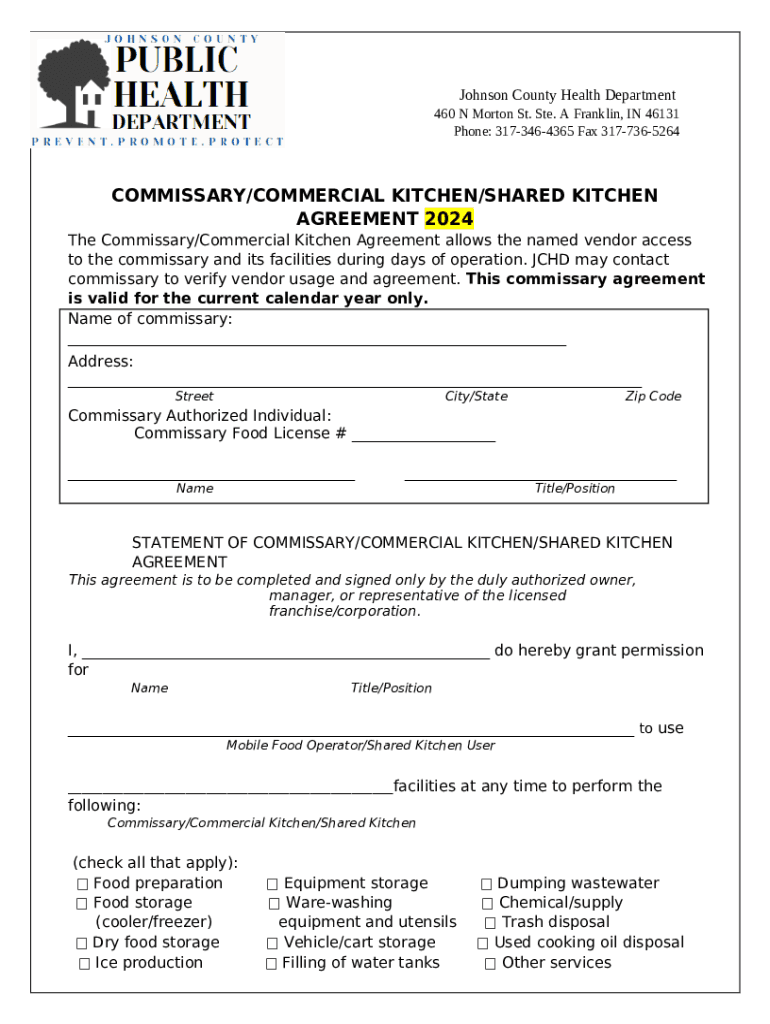
A commissary commercial kitchen agreement for facilities is a contractual document that governs the use of a shared kitchen space by multiple food vendors. It enables a mobile food operator or small food business owner to access a certified kitchen for operations like food preparation, cooking, and storage. These facilities provide a cost-effective solution for businesses that might not have the financial resources to own or lease a full-scale commercial kitchen. The agreement ensures both parties—the kitchen owner and the vendor—are aware of their responsibilities and rights, establishing clear guidelines for usage and payment.
How to Use the Commissary Commercial Kitchen Agreement for Facilities
When using a commissary kitchen agreement, business owners must adhere to the established rules and guidelines outlined in the document. The agreement typically details operational hours, specific facilities that can be accessed (e.g., stovetops, refrigeration units), and any equipment that the vendor can use. Businesses need to ensure they understand the terms regarding cleaning, waste disposal, and any maintenance requirements specified by the facility owner. Proper usage involves abiding by all safety and health regulations and cooperating with other users sharing the space.
Steps to Complete the Commissary Commercial Kitchen Agreement for Facilities
- Review the Agreement Terms: Begin by reading through the entire agreement to ensure understanding of all parties' obligations.
- Fill in Business Information: Enter details about your food business, including your business name, contact information, and specific requirements.
- Agree on Terms of Use: Discuss and confirm terms related to hours of operation, equipment use, and any additional services provided by the kitchen.
- Signatures: Both the commissary kitchen representative and the business owner must sign the document to formalize the agreement.
- Record Retention: Keep a copy of the signed agreement for your records and refer to it as needed during the term of the lease.
Who Typically Uses the Commissary Commercial Kitchen Agreement for Facilities
The agreement is most commonly utilized by mobile food vendors, such as food trucks, pop-up restaurants, and caterers who require professional-grade kitchen facilities but do not need or cannot afford a full-time space. Startups and small businesses also benefit from these agreements as they provide a way to test the market without significant upfront investment. Additionally, specialty food producers—like those making baked goods or packaged foods for retail—often use shared facilities to meet health regulations while controlling operating costs.

Important Terms Related to Commissary Commercial Kitchen Agreement for Facilities
Understanding specific terms within the agreement is crucial:
- Term of Lease: Indicates the duration for which the agreement is valid.
- Usage Fees: Details costs associated with using the kitchen space or equipment.
- Maintenance Responsibilities: Outlines what upkeep duties fall on the vendor versus the facility.
- Safety Regulations: Highlights compliance requirements with health and fire codes.
- Termination Clause: Specifies conditions under which the agreement can be terminated early.
Legal Use of the Commissary Commercial Kitchen Agreement for Facilities
Legally, this agreement ensures that both parties comply with local regulations concerning health, safety, and business operations. The signed agreement serves as a binding contract, outlining the responsibilities of both the kitchen facility and the vendor. Adhering to the contract helps avoid disputes and legal issues related to non-compliance or misuse of the space. The contract also usually includes clauses related to liability insurance and indemnity, protecting both parties in case of accidents or damages.
Key Elements of the Commissary Commercial Kitchen Agreement for Facilities
A thorough agreement will incorporate several key elements:
- Space Allocation: Specification of the exact areas designated for the business’s activities.
- Access Times: Defined schedule when the vendor can access the facilities.
- Payment Terms: Frequency and amount of payments required for using the space.
- Insurance Requirements: Coverage required for liability or property damage.
- Operational Guidelines: Procedures for maintaining cleanliness and safety.
State-Specific Rules for the Commissary Commercial Kitchen Agreement for Facilities
Each state may have unique regulations that affect how these agreements are structured and enforced. For instance, states may have varying health department requirements regarding food safety standards and inspections. Some states might require additional licenses or permits, such as a health permit, beyond simply signing an agreement. Vendors should familiarize themselves with any state-specific rules to ensure compliance and lawful operation. Consulting with a local attorney or business advisor can help clarify any state-related legal nuances.
Examples of Using the Commissary Commercial Kitchen Agreement for Facilities
Consider a food truck owner in Los Angeles using a shared kitchen to prepare daily meals. This arrangement allows the vendor to leverage high-quality kitchen equipment without the financial burden of owning a full-blown restaurant kitchen. Another example may involve a small bakery in New York City that utilizes shared space to increase their output during holiday seasons, thereby reducing operational costs while managing high demand. By using this agreement, such businesses can focus on growth and delivering quality products without substantial initial investments.