




01. Edit your form online
Type text, add images, blackout confidential details, add comments, highlights and more.

Type text, add images, blackout confidential details, add comments, highlights and more.

Draw your signature, type it, upload its image, or use your mobile device as a signature pad.

Send it via email, link, or fax. You can also download it, export it or print it out.
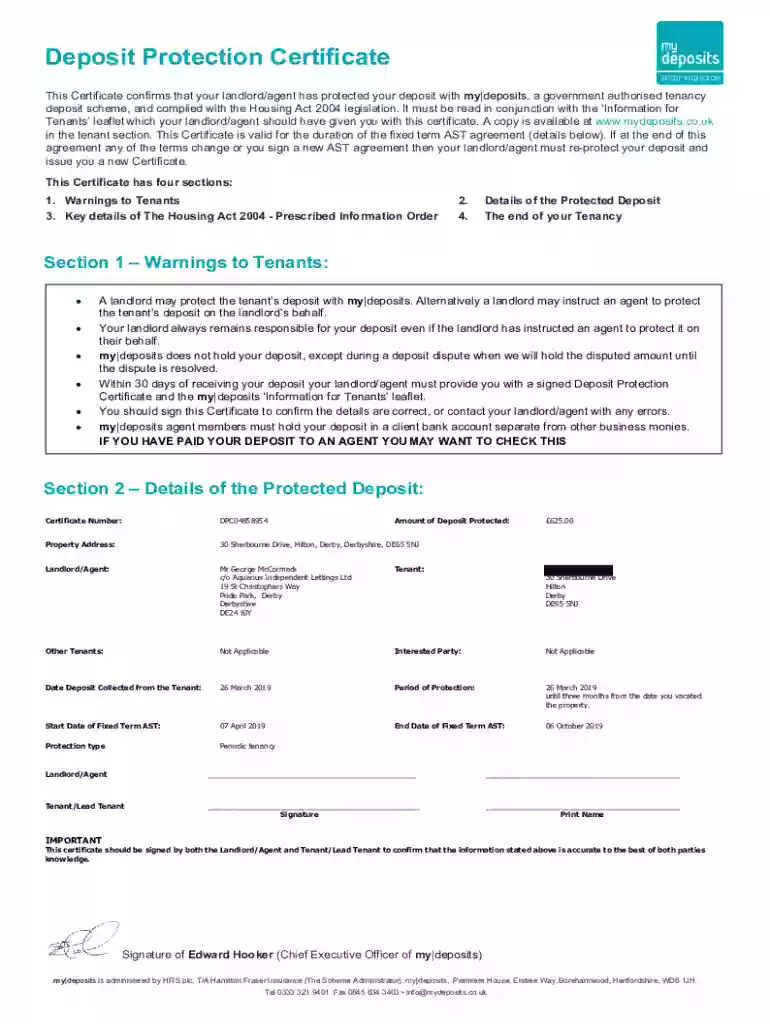
The Deposit Protection Certificate 1 serves as a critical document within the realm of tenant-landlord relationships in the United States. It confirms that a tenant's security deposit is legally protected under a recognized deposit protection scheme, such as the my|deposits scheme. The certificate is a requirement under the Housing Act 2004, ensuring that landlords follow proper procedures in safeguarding tenant deposits.
Purpose and Function: It certifies that the deposit is stored securely and outlines the obligations of both the landlord and tenant. This is to protect tenants from landlords who might misuse or fail to return deposits improperly.
Compliance Requirements: Both landlords and real estate agents must comply with these requirements to avoid legal disputes. The certificate's existence helps maintain transparency and trust in rental agreements, thereby reducing potential conflicts over deposit handling.
The deposit protection process involves several key steps and obligations:
Obtain the Certificate: Upon receipt of the tenant's deposit, landlords or agents should secure a deposit protection certificate from an accredited scheme within a specified timeframe.
Provide to Tenant: Landlords must provide the certificate to the tenant, ensuring that they understand their rights and the deposit's security status.
Review with Tenants: It is essential to review the accompanying 'Information for Tenants' leaflet, which outlines procedures, potential disputes, and relevant tenant rights.
Obligations for Landlords: They must ensure the accuracy and validity of the certificate's details, including the deposit amount and the tenant's information.
Tenant's Role: Tenants should verify that their deposit is covered and maintain copies of all related documents for future reference or disputes.
Detailed steps and procedural requirements must be adhered to for effective completion:
Submit Required Information: Provide detailed tenancy and deposit information to the chosen deposit protection scheme.
Receive Confirmation: After submission, the scheme will issue a certificate confirming the deposit's protection.
Verification: Check for the accuracy and completeness of all details on the certificate.
Provide to Tenant: Distribute copies of the certificate and related information to the tenant within the required timeframe, typically 30 days from deposit reception.
Possible Errors: Be on the lookout for common mistakes such as incorrect deposit amounts or tenant details, which could invalidate the certificate's protective nature.
Compliance Importance: Failing to complete these steps accurately can lead to significant legal penalties or issues in recovering deposits.
The completion and maintenance of the certificate include several critical components:
Tenant Information: Comprehensive details regarding the tenant(s) involved in the lease agreement.
Deposit Amount: The specific financial figure held as a deposit must be accurately represented to avoid disputes.
Scheme Details: Information about the protection scheme housing the deposit, including contact information and reference numbers.
Timeline and Dates: Important dates of deposit receipt, protection, and certificate issuance, which are fundamental to fulfilling legal obligations.
Legal Obligations: Clarifies the responsibilities of landlords for holding the deposit and the possible consequences of non-compliance.
The certificate has broader legal implications within the sphere of rental agreements:
Tenant Rights Protection: It both assures tenants of their deposit's security and spells out their rights under the protection scheme.
Dispute Resolution: Legal documentation like this is crucial in resolving any disputes that arise regarding the withholding of deposits or leaseground violations.
Judicial Precedence: Courts often require such documentation to determine the rightful owner of disputed funds, emphasizing its legal importance.
While the certificate follows national legislation, some variances occur on a state level:
State-Specific Legislation: Different states may have unique rules concerning deposit management, dispute resolution, and formalities in rental agreements.
Regional Schemes: Various jurisdictions might recognize different deposit protection schemes, influencing the specific platform used for obtaining certificates.
Local Dispute Resolution: In certain states, additional steps or paperwork might be required to handle disputes associated with the deposit.
Non-compliance with deposit protection regulations can lead to:
Financial Penalties: Landlords may incur significant fines or be required to pay back unlawfully withheld funds.
Legal Repercussions: Legal challenges may arise, leading to court actions or orders for restitution and penalties.
Reputational Damage: Beyond financial losses, landlords risk damage to their reputation, affecting future tenancy agreements.
Rights for Tenants: Tenants may gain additional rights, such as reclaiming part of the deposit or receiving compensation for a non-protected deposit.
Primarily involved parties include:
Landlords and Property Managers: The primary users responsible for securing the deposit protection certificate.
Real Estate Agents: Often manage these certificates on behalf of landlords, particularly in large-scale or commercial real estate operations.
Tenants: As the protected parties, tenants use these certificates to ensure their deposit is secured, understanding their rights, and as documentation in disputes.
Legal Advisors: Lawyers or consultants may use the certificate to advise clients on personal or landlord-tenant law issues, given its critical role in ensuring compliance and resolving disputes.


At DocHub, your data security is our priority. We follow HIPAA, SOC2, GDPR, and other standards, so you can work on your documents with confidence.


