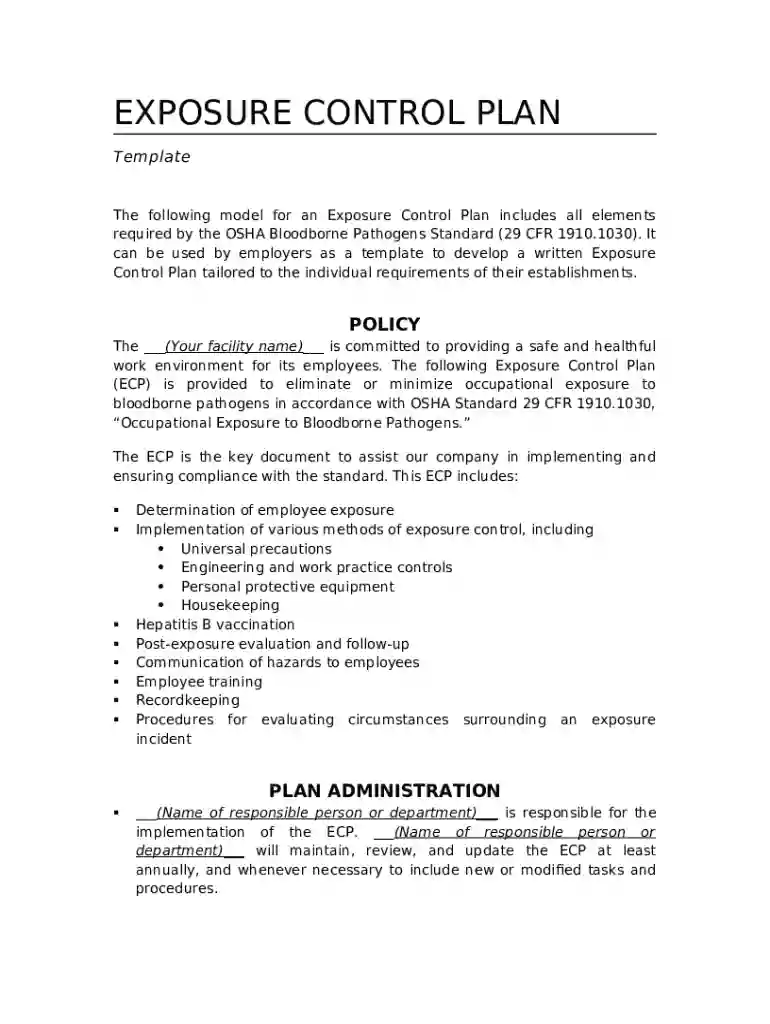
Definition and Purpose of the Exposure Control Plan for OSHA Personnel
The Exposure Control Plan (ECP) for OSHA personnel is a crucial document designed to comply with OSHA's Bloodborne Pathogens Standard. It serves as an organizational blueprint to protect employees from occupational exposure to bloodborne pathogens. The primary aim of the ECP is to ensure a safe working environment by laying out specific procedures and protocols. The plan's implementation is critical in minimizing the risk of exposure to harmful pathogens, such as hepatitis B and HIV, that may be encountered in certain work environments.
Key Components
- Employee Exposure Determination: Identifies roles and tasks where exposure to bloodborne pathogens is possible.
- Methods of Exposure Control: Details engineering and work practice controls, including the use of personal protective equipment (PPE) and standard precautions.
- Hepatitis B Vaccination Procedures: Outlines the process for providing vaccinations to at-risk employees.
- Post-Exposure Evaluation: Describes the steps for medical evaluation and follow-up after an exposure incident.
- Employee Training Requirements: Includes the schedule and content for regular training sessions.
Importance
Implementing the ECP is essential for employers to fulfill legal obligations under OSHA and to promote a culture of safety within the organization.
Steps to Complete the Exposure Control Plan for OSHA Personnel
Completing the ECP involves several critical steps to ensure comprehensive exposure control and compliance with OSHA standards. Each step requires thoughtful consideration and input from key personnel within the organization.
Detailed Steps
- Identify Job Classifications: Determine which job roles and tasks have the potential for exposure to bloodborne pathogens.
- Develop Controls and Procedures: Establish engineering controls, such as safety devices, and develop standard operating procedures to minimize risks.
- Provide Employee Training: Organize regular training sessions to educate employees about exposure risks, preventive measures, and the ECP itself.
- Implement Vaccination Programs: Ensure the availability and administration of hepatitis B vaccines to employees.
- Set Up Medical Evaluations: Arrange for prompt medical evaluations following any exposure incident.
Example Scenario
For example, in a healthcare setting, nurses, doctors, and lab technicians who handle bodily fluids are identified for ECP implementation. Regular training and access to vaccinations are critical components of their safety protocol.
Important Terms Related to the Exposure Control Plan for OSHA Personnel
Understanding the terminology used in the ECP is crucial for effective implementation and compliance. Here are some key terms:
Glossary
- Bloodborne Pathogens: Microorganisms present in human blood that can cause diseases in humans.
- Personal Protective Equipment (PPE): Equipment worn to minimize exposure to hazards that cause workplace injuries and illnesses.
- Engineering Controls: Strategies designed to isolate or remove hazards from the workplace.
- Work Practice Controls: Procedures that reduce the likelihood of exposure by altering how a task is performed.
- Standard Precautions: A set of infection control practices used to prevent transmission of diseases.
Contextual Application
Understanding these terms helps employers and employees communicate more effectively about safety protocols and responsibilities within the ECP.
Key Elements of the Exposure Control Plan for OSHA Personnel
The ECP is structured around several fundamental components that guide its development and implementation. Each element is crucial for the plan's overall effectiveness.
Core Components
- Exposure Determination: Identifies tasks and procedures where bloodborne exposure may occur.
- Implementation of Exposure Controls: Details the application of engineering and work practice controls, PPE usage, and other safety measures.
- Vaccination Programs: Describes processes for providing vaccinations, particularly the hepatitis B vaccine, to employees.
- Training and Communication: Ensures employees are informed about possible exposure risks and the organization's policies via regular training.
- Recordkeeping: Maintains records of exposure incidents, training sessions, and vaccination status.
Detailed Explanation
Each element is interdependent and collectively contributes to a robust system for minimizing exposure to bloodborne pathogens in the workplace.
Who Typically Uses the Exposure Control Plan for OSHA Personnel
The ECP is primarily used by organizations where employees have potential exposure to bloodborne pathogens. Its use is common in healthcare settings but also applicable in various other fields.

Typical Users
- Healthcare Facilities: Hospitals, clinics, and dental offices where there is a direct handling of blood and body fluids.
- Research Laboratories: Labs that handle human specimens for study and experimentation.
- Emergency Services: Paramedics, EMTs, and firefighters who may encounter bloodborne pathogens in emergency situations.
Practical Application
By identifying specific user groups, organizations can tailor the ECP to address the unique needs and risks associated with different environments.
Legal Use of the Exposure Control Plan for OSHA Personnel
Compliance with OSHA's Bloodborne Pathogens Standard is a legal obligation for employers to minimize exposure risks in the workplace. Properly documented and implemented ECPs are central to fulfilling these regulatory requirements.
Legal Requirements
- OSHA Compliance: Employers must adhere to OSHA's regulations regarding bloodborne pathogens.
- Documentation and Records: Accurate recordkeeping is vital to demonstrate compliance and for audit purposes.
- Regular Updates: The ECP must be reviewed and updated regularly to reflect changes in industry standards or work conditions.
Case Studies
Consider a hospital where failure to adhere to an ECP resulted in penalties after an OSHA inspection. Implementing a compliant plan post-inspection helped the facility avoid future violations and protected its workforce.
Steps to Update or Revise the Exposure Control Plan
An effective ECP requires periodic revision to remain up-to-date with changes in workplace processes or OSHA regulations. Updating the ECP involves a systematic review process.
Update Procedure
- Conduct a Risk Assessment: Identify new or altered risks since the last review.
- Review Regulations: Ensure the ECP reflects current OSHA standards and updates.
- Gather Employee Input: Solicit feedback from employees to identify gaps or concerns in the existing plan.
- Revise Procedures: Update procedural controls and training content as necessary.
- Distribute Updated ECP: Ensure all personnel have access to and understand the revised plan.
Example Application
Incorporating employee feedback typically surfaces overlooked risks, leading to practical updates in the procedures or training components of the ECP.
Examples of Using the Exposure Control Plan for OSHA Personnel
The practical application of the ECP in various work environments provides invaluable insights into its execution and effectiveness. Facilities that have successfully integrated the ECP illustrate its broad applicability and tailor-ability.
Real-World Examples
- Hospital Systems: Implementing standard precautions and vaccination policies to protect healthcare workers from exposure.
- Dental Offices: Utilizing PPE and sterilization protocols to safeguard dental staff.
- Research Institutions: Incorporating comprehensive training and emergency protocols to manage exposure risks in labs.
Success Stories
Facilities that actively involve all levels of staff in the ECP's implementation process often report higher compliance and reduced incidents of exposure, demonstrating the plan's protective value.