






Definition and Meaning
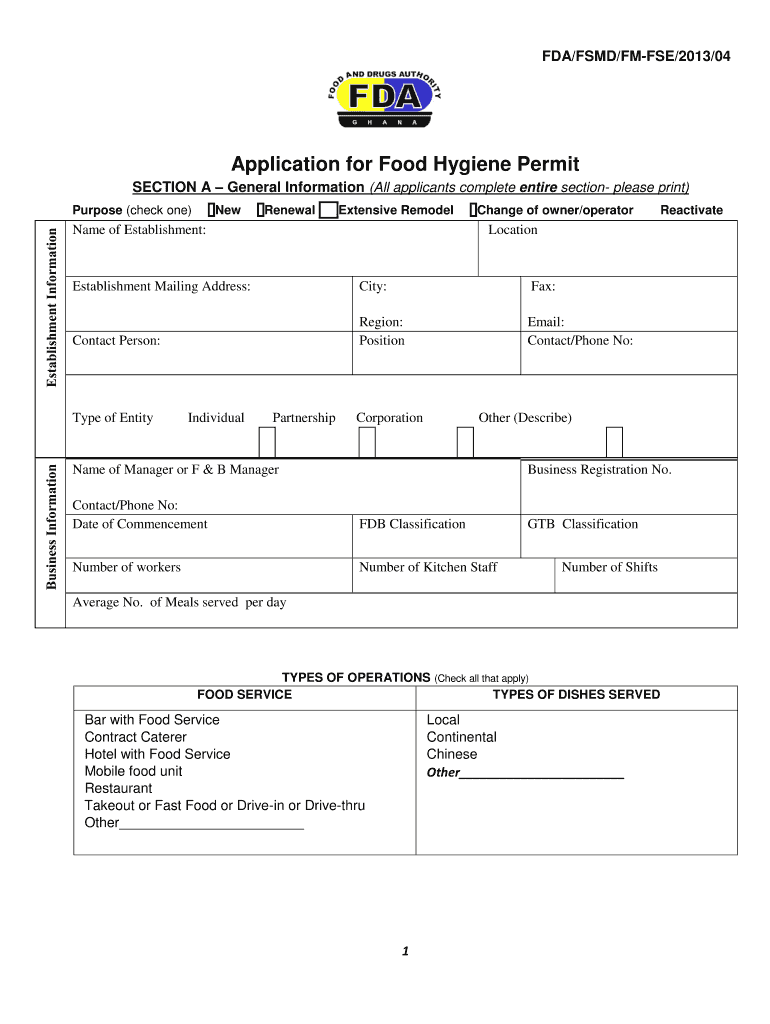
The "Application for Food Hygiene Permit - FDA GHANA" is a critical document necessary for food service establishments in Ghana. It serves as a formal request for a permit that verifies the establishment complies with the required food safety regulations set by the Food and Drugs Authority of Ghana. This form collects comprehensive data on various aspects of the establishment’s operations, ensuring adherence to hygiene standards, primarily aimed at safeguarding public health by minimizing risks related to foodborne illnesses.
Key Elements of the Application
The form includes sections that gather detailed information about the establishment, such as:
- General Information: Establishment name, address, and contact details.
- Type of Operations: Nature of the food service provided (e.g., restaurant, catering, bakery).
- Preparation Methods: Details on how food is prepared and handled.
- Equipment and Raw Materials: Information on the equipment used and sources of raw materials.
- Water Sources: The source and type of water used in food preparation.
- Waste Management: Methods employed for waste disposal and sanitation.
- Management Personnel Qualifications: Credentials and experience of staff responsible for food safety and hygiene.
How to Use the Application for Food Hygiene Permit - FDA GHANA
Organizations seeking to obtain a food hygiene permit must complete this application as an initial step. The form requires accurate and detailed information from the applicant, reflecting the operations and compliance measures of the establishment. This process involves:
- Gathering Required Details: Collect all necessary data related to each section of the form.
- Completing the Form Accurately: Fill out the form ensuring to reflect honesty and precision to avoid submission errors.
- Compiling Supporting Documentation: Attach any required documents such as certifications of staff training in food safety.
By filling out this form, establishments formally declare their commitment to maintaining food hygiene standards as per the regulations.
Steps to Complete the Application
Completing the Food Hygiene Permit application involves a structured approach:
-
Initial Assessment: Review all instructions provided with the form to understand the requirements fully.
-
Information Collection: Gather data from various departments within the establishment, like procurement, operations, and human resources.
-
Filling Out the Form:
- Start with basic information about the establishment.
- Detail the type and scale of operations.
- Elaborate on specific food preparation methods and equipment used.
-
Review and Edit: Check for any inaccuracies or missing sections before finalizing the form.
-
Submission: Once completed, submit the form along with the necessary documents to the relevant FDA office or through the designated electronic submission platform, if available.
Required Documents
When submitting the "Application for Food Hygiene Permit - FDA GHANA," several supporting documents are often required to validate the information provided:
- Proof of Business Registration: Legal documents that authorize the establishment to conduct business.
- Staff Training Certificates: Certificates that demonstrate staff competency in food safety and hygiene practices.
- Sanitation Certificates: Evidence of regular sanitation and pest control activities.
- Equipment Maintenance Records: Documentation showing regular servicing and maintenance of kitchen equipment.
These documents support the establishment’s claim of following proper hygiene and safety protocols.
Legal Use and Compliance
Obtaining a Food Hygiene Permit is a legal requirement for food establishments operating in Ghana. This permit ensures that the establishment conforms to the country’s laws concerning food safety and public health protection. Non-compliance can lead to warnings, fines, or closure of the business until the necessary standards are met.
Penalties for Non-Compliance
Failure to obtain or consistently renew the permit can result in significant consequences:
- Fines: Monetary penalties imposed for operating without a valid permit.
- Operational Restrictions: Temporary or permanent shutdowns until compliance is achieved.
- Legal Action: In severe instances, legal proceedings may be initiated by the regulatory authorities.
Why Obtain a Food Hygiene Permit
Securing this permit is not merely a regulatory compliance exercise but a crucial part of ensuring food quality and safety. It:
- Protects Public Health: Mitigates risks of foodborne diseases, which can harm consumers.
- Enhances Business Credibility: Demonstrates the establishment's commitment to high food safety standards, attracting more clientele.
- Promotes Operational Excellence: Encourages establishments to adopt systematic hygiene practices, resulting in better overall management.
Business Types Benefiting Most
The permit is particularly beneficial for:
- Restaurants and Cafés: Ensures daily operations meet hygiene protocols.
- Caterers: Essential for maintaining food safety across different venues.
- Bakeries and Confectioneries: Safeguards production processes involving perishable and potentially hazardous ingredients.
Examples of Using the Application
Several scenarios highlight the necessity of applying for this permit:
- New Establishments: Newly opened food service outlets must complete the application as part of their initial business setup.
- Expansion Projects: Existing businesses expanding their operations are required to update their permits to cover new facilities or service areas.
- Annual Renewals: Regular submissions ensure continuous compliance and renew the permit validity.
These cases underscore the permit’s role in operational legitimacy and continuous quality assurance within the food service industry.