






Definition & Meaning
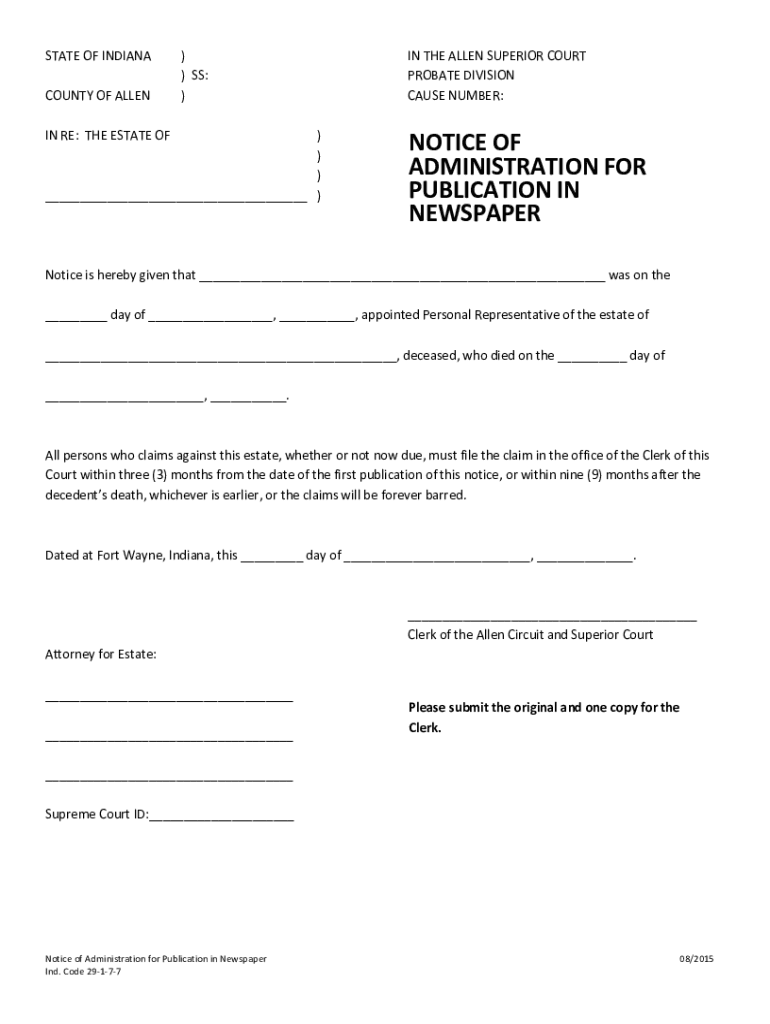
The "allencountyindiana imagesclerkofcourtsSTATE OF INDIANA ) IN THE ALLEN SUPERIOR COURT ) SS: PROBATE" form is an official legal document issued by the Allen Superior Court in Indiana. It pertains to the probate process, whereby the court oversees the management and distribution of a deceased person’s estate. The primary purpose of the probate form is to facilitate the appointment of a Personal Representative who is responsible for handling the estate's affairs, settling debts, and distributing assets to beneficiaries as per the deceased's will, or according to state law if no will exists.
How to Obtain the Form
Obtaining the probate form requires contacting the Allen Superior Court's Clerk of Courts office. Individuals can visit the court's website to locate the form or request a physical copy from the clerk's office. The form might also be available for download from other legal document platforms that specialize in court forms. This step is crucial for anyone involved in estate administration within Allen County, Indiana.
Steps to Complete the Form
-
Gather Required Information: Before completing the form, collect all relevant details including the deceased's full name, date of death, and any known estate assets.
-
Complete Personal Information: Insert the requestor's full name, address, and relationship to the deceased.
-
Designation of Personal Representative: Indicate the individual proposed to act as the Personal Representative, providing their contact information.
-
Asset Inventory: List the known assets of the deceased, including real estate, bank accounts, and personal property.
-
Debts & Liabilities: Document any outstanding debts or obligations.
-
Witness and Sign: Obtain the necessary signatures including any witnesses if applicable, ensuring the form is legally binding.
Important Terms Related to Probate
- Personal Representative: An individual appointed to administer the deceased's estate.
- Beneficiary: A person entitled to receive assets from the estate.
- Heir: A person legally entitled to inherit property in absence of a will.
- Intestate: The state of dying without a legal will.
- Probate Judge: A judicial officer who oversees the probate process.
Legal Use of the Form
The legal use of this probate form is specifically to establish the lawful administration of a deceased individual’s estate under the guidance of the Allen Superior Court. It is particularly important for legally appointing a Personal Representative, ensuring the proper transfer of the estate, and protecting the rights of heirs and creditors. Legal compliance with this form is mandatory to avoid future litigation or claims against the estate.
Filing Deadlines / Important Dates
Filing deadlines for probate in Allen County, Indiana, are critical to the administration process. Typically, probate must be initiated within a certain period after the deceased’s death to avoid complications or penalties. Deadlines for creditors to file claims against the estate are also stipulated, ensuring they are addressed before the estate is distributed.
Required Documents
When submitting the probate form, additional documents are necessary, including:
- Death certificate of the deceased.
- Valid will, if available.
- Inventory of assets and liabilities.
- Identification documents for the Personal Representative.
- Affidavit of heirship, if the will is not available.
Form Submission Methods
The probate form can be submitted through various methods to accommodate different preferences and technological access:
- Online Submission: Through the official court’s electronic filing system.
- Mailing: Sending the completed form and required documents via postal mail.
- In-Person Filing: Visiting the Clerk of Courts office directly to submit documents.
Penalties for Non-Compliance
Failure to comply with probate process regulations can result in severe penalties, such as:
- Legal challenges or disputes from heirs.
- Court-imposed fines.
- Delays in the administration of the estate.
- Possible dismissal of the probate case, causing additional legal complexities.