Definition and Meaning
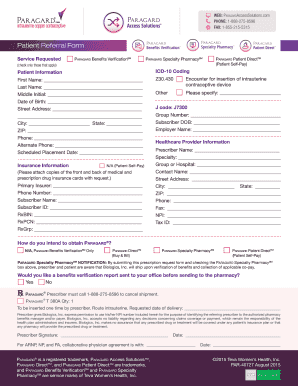
The NPWT Wound Care Certificate of Medical Necessity is a document essential for receiving approval for Negative Pressure Wound Therapy. This therapy is utilized to manage and treat complex wound conditions by applying controlled negative pressure around the wound. The certificate requires detailed medical information, serving as a bridge between healthcare providers and insurance companies to verify the medical necessity of the proposed treatment.
Key Elements of the Certificate
- Wound Details: Critical information such as wound type, size, and depth.
- Medical History: Comprehensive background, including previous treatments and their outcomes.
- Physician Recommendations: Attestations from healthcare professionals justifying the need for NPWT.
- Patient Information: Detailed personal and insurance information to support the claim.
Steps to Complete the NPWT Wound Care Certificate
Completing the NPWT Wound Care Certificate involves several steps that ensure accurate and comprehensive data capture.
- Gather Patient Information: Collect all necessary personal and insurance data.
- Document Wound Assessment: Detail the wound's characteristics, including type and measurements.
- Record Medical History: Outline past treatments and the patient's response to them.
- Include Physician Attestation: Secure a signed prescription and approval from a certified physician.
Common Mistakes to Avoid
- Incomplete Medical History: Failing to provide thorough past treatment details.
- Inaccurate Measurements: Ensure precise wound measurements to justify therapy needs.
- Missing Signatures: Verify all necessary endorsements are present.
How to Use the NPWT Wound Care Certificate
Using the NPWT Wound Care Certificate effectively involves understanding its purpose and submitting it properly for insurance approval.
Submission Methods
- Online: Many insurance providers offer electronic submission options.
- Mail: Physical copies can be sent directly to the insurer.
- In-Person: Visiting the insurance office for a direct submission.
Practical Examples
- A patient with a non-healing diabetic ulcer could submit this form to get coverage for NPWT.
- Hospitals often process multiple certificates simultaneously, particularly in wound care centers.
Who Typically Uses the Certificate
The NPWT Wound Care Certificate is primarily used by healthcare providers, patients requiring wound therapy, and insurance companies.
- Healthcare Providers: Physicians and medical staff responsible for wound assessment and treatment planning.
- Patients: Individuals seeking authorization for insurance-covered treatment.
- Insurance Companies: Entities validating the medical necessity to approve therapy costs.


Real-World Scenarios
- Healthcare Settings: Hospitals and clinics using it to streamline insurance processes.
- Home Health Services: For patients receiving NPWT in a non-hospital environment.
Legal Use of the NPWT Wound Care Certificate
The form carries significant legal weight, ensuring both compliance with medical practice standards and proper insurance billing procedures.
Essential Legal Considerations
- Compliance with HIPAA: Personal health information must be handled following privacy regulations.
- Fraud Prevention: Accurate information is vital to prevent insurance fraud.
- Regular Updates: Keeps pace with evolving legality in medical certifications.
Important Terms Related to the Certificate
Understanding critical terminology enhances accurate form completion and processing.
- Negative Pressure Wound Therapy (NPWT): A therapeutic technique using localized pressure to promote wound healing.
- Certificate of Medical Necessity (CMN): A document outlining the necessity for specific medical treatment.
- Wound Assessment: A thorough evaluation of wound condition and healing progress.
Key Elements of the NPWT Wound Care Certificate
The certificate is composed of several essential elements that require precise input to ensure successful processing.
- Wound Assessment Section: Detailed recording of wound specifics.
- Medical History Block: Historic treatment trails and outcomes.
- Physician Approval Section: Doctrine of medical necessity.
Examples of Using the Certificate
Having access to examples provides clarity and guidance on correctly executing the certificate process.
Case Study Examples
- Elderly Care: Patients in senior living facilities commonly utilize these for pressure ulcers.
- Post-Surgical Recovery: Forms used following surgeries involving complex wound care.
- Chronic Illness Patients: For managing long-term conditions like venous leg ulcers, these forms are instrumental.
Application Process and Approval Time
The submission and approval process for the NPWT Wound Care Certificate is critical for timely access to necessary treatments.
Approval Steps
- Submission of Form: Ensure complete and accurate data capture.
- Insurer Review: Validation of medical necessity by the insurance provider.
- Feedback and Approval: Response from the insurer regarding approval or additional information requests.
Timelines
- Standard Approval: Typically within two to four weeks.
- Expedited Requests: Possibly faster processing for urgent medical needs.