






Definition and Meaning of Carbonate Chemistry
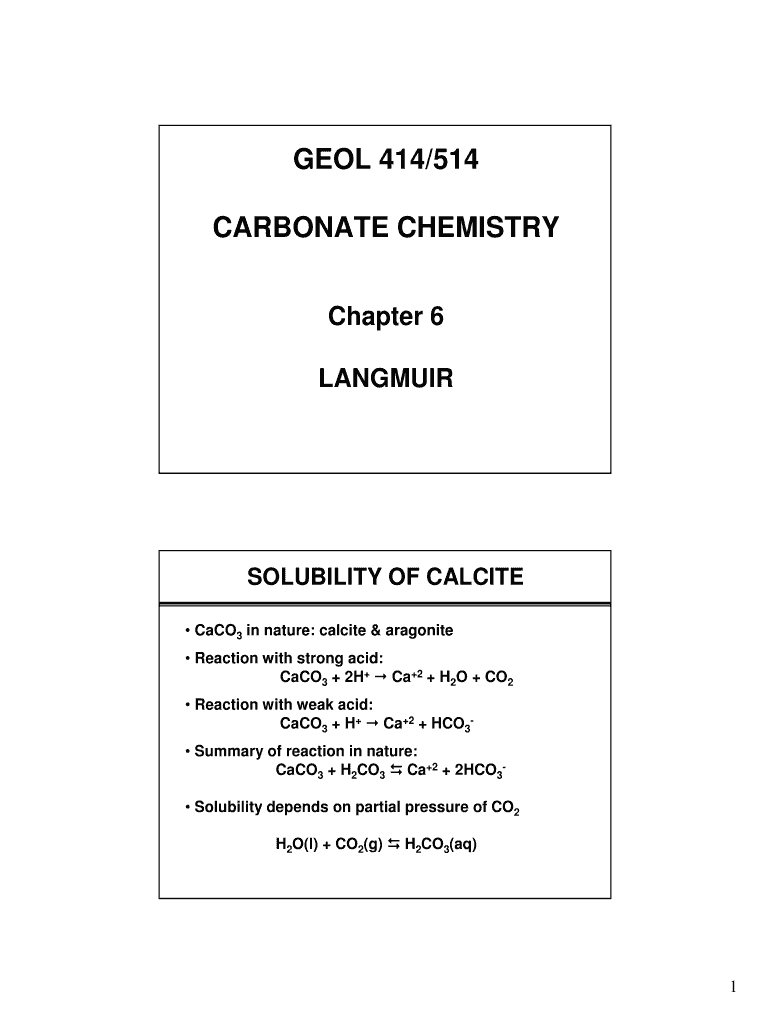
Carbonate chemistry involves the study of carbonate compounds, particularly focusing on their chemical behavior in natural environments. These compounds primarily include minerals like calcite and aragonite, both composed predominantly of calcium carbonate (CaCO3). Understanding carbonate chemistry is essential in geosciences, environmental chemistry, and oceanography, as it plays a pivotal role in processes like mineral formation, dissolution, and the global carbon cycle. This field investigates how variables such as temperature, pressure, and CO2 concentration impact the solubility and stability of carbonate minerals, alongside examining the equilibrium reactions between carbonates and other chemical constituents in aqueous systems.
Key Elements of Carbonate Chemistry
Carbonate chemistry encompasses several crucial components, including:
- Carbonate Equilibrium: Involves the balance between different carbonate species in solution, such as bicarbonate (HCO3-) and carbonate (CO3^2-), governed by factors like pH and partial pressure of CO2.
- Solubility of Calcite and Aragonite: These minerals dissolve in water, releasing calcium and carbonate ions. Their solubility is influenced by environmental conditions and is crucial for marine organisms that rely on these minerals for shell formation.
- Impact of CO2: Carbonate chemistry is deeply linked to atmospheric and dissolved CO2 levels, contributing to processes such as ocean acidification.
Steps to Complete Carbonate Chemistry Calculations
- Identify System Parameters: Determine the variables involved, such as pH, temperature, and CO2 partial pressure.
- Establish Equilibrium Constants: Use known constants for reactions involving carbonate species, which vary with temperature and pressure.
- Apply Mass and Charge Balance: Calculate concentrations of all species involved using principles of mass balance and charge balance.
- Determine Saturation States: Assess whether the system is oversaturated, undersaturated, or at equilibrium concerning carbonate minerals.
- Analyze Results: Interpret the calculations within the context of natural environments or laboratory settings.
Important Terms Related to Carbonate Chemistry
Understanding carbonate chemistry requires familiarity with specific terminology:
- pH: A measure of acidity, influencing carbonate equilibrium.
- Partial Pressure of CO2: The concentration of CO2 in the atmosphere or dissolved in water, affecting carbonate reactions.
- Buffering Capacity: The ability of a solution to resist changes in pH, critical for maintaining carbonate equilibrium.
- Saturation Index: An indicator of the potential for mineral dissolution or precipitation.
Examples of Using Carbonate Chemistry
Carbonate chemistry is applicable in various real-world scenarios:
- Marine Biology: Study of coral reefs and the impact of ocean acidification on calcifying organisms.
- Environmental Science: Assessment of carbon sequestration in soils and sediments.
- Geochemistry: Investigation of groundwater systems and mineral deposits in karst landscapes.
Legal Use of Carbonate Chemistry
In a U.S.-centric context, the application of carbonate chemistry aligns with environmental regulations and standards:
- EPA Guidelines: Involves monitoring and controlling atmospheric CO2 emissions and their impact on water bodies.
- Water Quality Standards: Dictate permissible levels of carbonate ions in drinking water and natural resources.
Form Submission Methods
When utilizing carbonate chemistry for regulatory compliance or scientific reporting, several submission methods exist:
- Online: Digital platforms and databases that require data entry related to carbonate parameters.
- Mail: Traditional submission of printed reports and data compilations.
- In-Person: Direct submission during environmental assessments or regulatory meetings.
Software Compatibility for Carbonate Calculations
Several software tools can aid in carbonate chemistry calculations:
- Speciation Programs: Software like PHREEQC and Geochemist's Workbench provide computational support for chemical equilibrium modeling.
- Spreadsheet Applications: Programs such as Microsoft Excel can be customized with carbonate chemistry formulas for quick analyses.
State-Specific Rules for Carbonate Chemistry
State regulations may impact how carbonate chemistry is applied, particularly concerning water quality and mineral extraction:
- California: Specific guidelines around carbonate levels in aquifers to ensure sustainable water use.
- Florida: Regulations targeting carbonate input in natural springs and aquatic conservation areas.
The above comprehensive insights into carbonate chemistry encompass theoretical principles, applicable scenarios, and regulatory considerations, providing a detailed examination of this significant field.