






Definition & Meaning
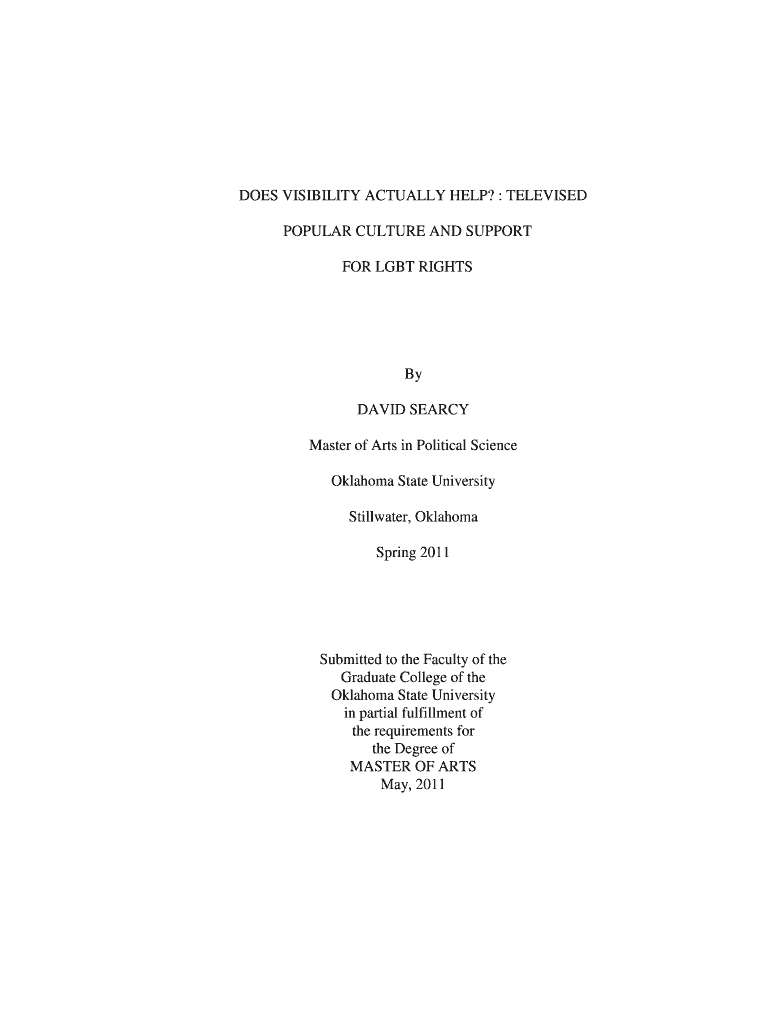
"Does Visibility Actually Help?: Televised Popular" explores the impact of television visibility on public opinion and legislative actions, particularly concerning LGBT rights. Visibility refers to the presence and representation of various groups in media, which can shape public attitudes and policy outcomes. Understanding this phenomenon involves examining both qualitative and quantitative data on media representation and its subsequent influence on societal norms and legislation.
Key Elements of "DoES VISIBILITY ACTUALLY HELP?: TELEVISED POPULAR"
This form or concept likely includes several critical components, such as:
- Measuring Visibility: Analyzing how frequently and positively characters or groups are portrayed on television.
- Influence on Public Opinion: Assessing how these portrayals shift public perception over time.
- Legislative Impact: Evaluating changes in laws and policies post major televised events featuring underrepresented groups.
- Case Studies: Highlighting specific instances, like prominent coming-out events, that had a substantial social impact.
Examples of Using "DoES VISIBILITY ACTUALLY HELP?: TELEVISED POPULAR"
Real-world examples of this concept include:
- Ellen DeGeneres's Coming Out: A pivotal moment in television that increased LGBT visibility and contributed to societal acceptance.
- Will & Grace: A show that significantly influenced public opinion on LGBT rights through its positive and normalized portrayals.
- Election Campaigns: Political figures using television to boost visibility and influence voter perceptions and legislative agendas.
How to Use the Concept in Analysis
To effectively use "Does Visibility Actually Help?: Televised Popular" within analysis:
- Identify Target Demographics: Determine whose visibility needs to be measured and its current status.
- Collect Data: Use public opinion polls, viewership statistics, and qualitative media analysis.
- Analyze Impact: Study the correlation between television visibility and shifts in public behavior or policy.
- Assess Timing: Consider the cultural context and timing of televised events for accurate evaluation.
Why Measure Visibility
- Cultural Understanding: Helps in comprehending societal shifts and progress.
- Policy Formation: Assists lawmakers and activists in forming effective strategies to address societal issues.
- Market Research: Useful for businesses targeting socially progressive markets.
Who Typically Engages with This Concept
- Researchers and Academics: Studying media influence on social issues.
- Policy Makers: Using visibility data to inform legislation around media representation.
- Media Professionals: Producing content that strategically increases visibility and diversity.
Legal Use in the U.S.
Considering American cultural and legal references, visibility in media can:
- Influence Legal Precedents: Align with cultural attitudes to promote legislative changes.
- Encourage Policy Adjustments: As visibility affects public opinion, it can lead to modifications in legal frameworks regarding representation and rights.
Important Terms Associated with Media Visibility
- Normalization: The process by which something previously unaccepted becomes standard through repeated exposure.
- Representation: The portrayal of diverse groups in media, highlighting real-world issues.
- Stereotyping: Often contrasted with positive visibility, it denotes oversimplified portrayal impacting public perception negatively.
The Impact of Televised Moments
Significant televised moments, such as those covered in the form, serve as cultural milestones. They illustrate how media can catalyze movements, shape perceptions, and drive legislative reform. Such impacts are usually more pronounced during periods of heightened visibility during or following pivotal events.