Type text, add images, blackout confidential details, add comments, highlights and more.
02. Sign it in a few clicks
Draw your signature, type it, upload its image, or use your mobile device as a signature pad.
03. Share your form with others
Send it via email, link, or fax. You can also download it, export it or print it out.
How to use or fill out how to file a motion to set aside a default judgment 2012 form
Ease of Setup
DocHub User Ratings on G2
Ease of Use
DocHub User Ratings on G2
Click ‘Get Form’ to open it in the editor.
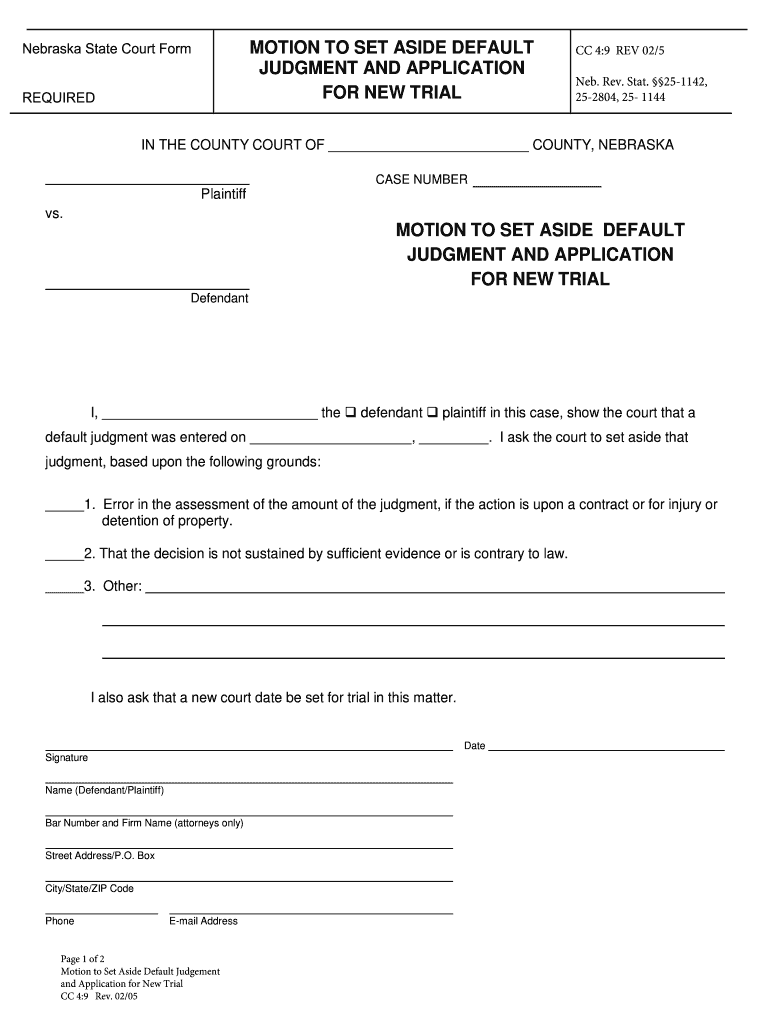
Begin by entering the county name and case number at the top of the form. This information is crucial for identifying your case.
In the section where you identify yourself, check whether you are the defendant or plaintiff and fill in your name accordingly.
Specify the date when the default judgment was entered. This is important for establishing context for your request.
Select one or more grounds for setting aside the judgment by checking the appropriate boxes. You may also provide additional details in the 'Other' section if applicable.
Request a new court date for trial by including this information in your submission.
Complete your contact information, including address, phone number, and email address, ensuring that all details are accurate.
If you are an attorney, include your bar number and firm name as required.
In the Certificate of Service section, confirm that you have filed the original motion and mailed copies to other parties involved in the case. Fill in their names and addresses as needed.
Start using our platform today to easily complete your motion form online for free!
Fill out how to file a motion to set aside a default judgment 2012 form online It's free
See more how to file a motion to set aside a default judgment 2012 form versions
We've got more versions of the how to file a motion to set aside a default judgment 2012 form form. Select the right how to file a motion to set aside a default judgment 2012 form version from the list and start editing it straight away!
Motion to set aside default judgment templateMotion to Set Aside Default Judgment Texas formMotion to set aside judgment exampleHow to file a motion to set aside JudgementMotion to Set Aside Default judgment pdfMotion to set aside default judgment Michigan formMotion and Affidavit to Set Aside Default (Civil)Motion to set aside default judgment and notice of hearing
Security and compliance
At DocHub, your data security is our priority. We follow HIPAA, SOC2, GDPR, and other standards, so you can work on your documents with confidence.
When you see this symbol, it is imperative that you consult the relevant section of this guide before touching or attempting adjustment of any kind.Read more
A civil action is commenced by filing a complaint with the court, if service is obtained within one year from such filing upon a named defendant, or upon anRead more
Upon motion, the trial court may set aside an entry of default when there is good cause shown. Rule 55(d). A. Good Cause Determination. The court does notRead more
Cookie consent notice
This site uses cookies to enhance site navigation and personalize your experience.
By using this site you agree to our use of cookies as described in our Privacy Notice.
You can modify your selections by visiting our Cookie and Advertising Notice.