






Definition & Meaning
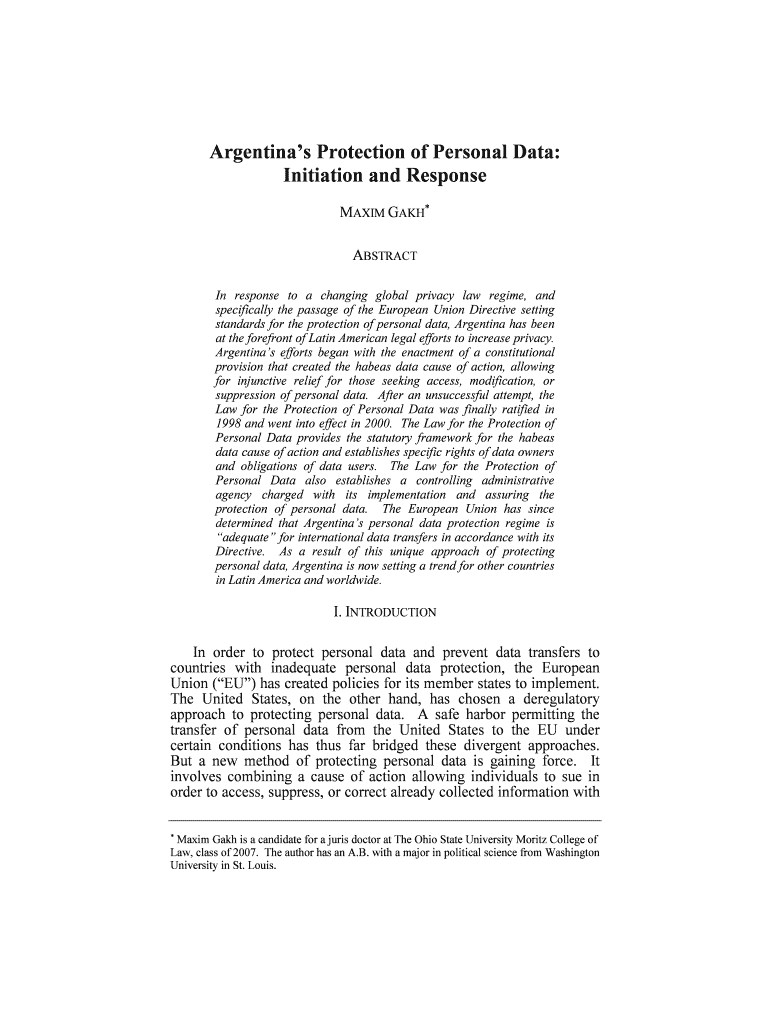
Argentina's Protection of Personal Data refers to the legislative framework designed to safeguard the privacy rights of individuals in Argentina. Enacted initially through the Law for the Protection of Personal Data (LPPD) in 1998 and effective from 2000, this law establishes the rights of data owners to access, modify, or suppress their personal data. The legal framework aligns with the European Union's privacy standards and is considered a model of privacy protection in Latin America, ensuring that individuals have a comprehensive legal mechanism to control their data.
Key Elements of Argentina's Protection of Personal Data
The LPPD outlines several critical components ensuring the protection of personal data in Argentina.
- Data Owner Rights: Individuals have the right to access, modify, or delete their personal data from databases.
- Data User Obligations: Entities processing personal data must adhere to strict privacy policies and ensure data security measures are in place.
- Habeas Data: A constitutional protection allowing individuals to challenge the handling of their data in court.
- International Data Transfer: Argentina is recognized as providing adequate privacy protection for international data transfers, particularly with EU countries.
Legal Use of Argentina's Protection of Personal Data
Organizations and entities collecting personal data must comply with the LPPD to avoid legal penalties and gain trust from their clients. The legal use involves:
- Obtaining Consent: Data users must obtain explicit consent from data owners before processing their personal data.
- Transparency Requirements: Informing individuals about how their data will be used, who will have access, and how it is protected.
- Data Security: Implementing robust security measures to protect personal data against unauthorized access or breaches.
Steps to Complete Compliance with the Law
Entities wishing to comply with Argentina's Protection of Personal Data should follow these steps:
- Assess Existing Data Practices: Evaluate current data collection and processing practices to identify gaps in compliance.
- Develop Privacy Policies: Establish comprehensive privacy policies that meet the LPPD requirements.
- Training: Conduct training for employees on data protection and privacy policies.
- Data Audits: Regularly audit data processes to ensure ongoing compliance with legal standards.
- Implement Security Measures: Use encryption and secure access protocols to safeguard personal data.
- Regular Reviews: Continuously review and update data protection measures in response to legislative changes or new security threats.
Who Typically Uses Argentina's Protection of Personal Data
Argentinian citizens and residents are the primary beneficiaries of the LPPD's protections.
- Individuals: They can use the law to protect their privacy by asserting their rights over their data.
- Businesses: Companies must comply with the law if they handle personal data, making it integral to their operations to avoid penalties.
- Legal Practitioners: Lawyers and legal experts utilize the framework to guide clients in compliance and litigate violations.
Who Issues the Protection Framework
The National Directorate for Personal Data Protection, a part of the Argentinian government, oversees the enforcement of the LPPD. This body is responsible for ensuring compliance, addressing violations, and updating regulations as needed. They also provide guidance and resources for data protection compliance.
Examples of Using Argentina's Protection of Personal Data
Practical scenarios demonstrate the application of the LPPD:
- Case Study: A digital marketing firm utilizes customer data for targeted campaigns. They implement strict consent protocols after realizing lapses in their initial data processing methods, ensuring compliance with the LPPD.
- Real-World Scenario: An Argentinian citizen requests access to their personal records from a health clinic and demands corrections to inaccuracies, illustrating the exercise of their rights under the LPPD.
Important Terms Related to Argentina's Protection of Personal Data
Understanding specific terminology is crucial for applying Argentina's data protection law effectively:
- Sensitive Data: Data related to racial or ethnic origin, political opinions, religious beliefs, or health, which require heightened protection measures.
- Data Processor: An entity that processes personal data on behalf of the data controller.
- Automated Decision-making: Processes involving decisions made solely by machines, often requiring transparency under data protection laws.
Penalties for Non-Compliance
Non-compliance with the LPPD can result in stringent penalties. Organizations may face:
- Monetary Fines: Businesses can be fined substantial amounts for failing to protect personal data.
- Reputational Damage: Loss of consumer trust due to data breaches or non-compliance can significantly impact a company.
- Legal Actions: Individuals may pursue lawsuits to enforce their rights, leading to costly legal battles for the violating entity.
Digital vs. Paper Version
Data handlers can manage and access personal data through digital or paper formats. Digital management offers streamlined processes, using software tools for efficient data handling, while traditional paper versions require physical storage and manual procedures. Compliance with the LPPD applies to both formats, necessitating secure handling and processing.
Software Compatibility
Organizations use various software tools to ensure compliance and streamline data handling, including:
- DocHub: Allows seamless document editing and management while ensuring data security through encryption and authentication.
- Industry-specific Data Management Tools: Align with legal standards to manage data effectively and maintain compliance.
State-by-State Differences
While the LPPD is a national law, certain provinces in Argentina might have additional regulations enhancing data protection. Businesses operating in multiple regions need to consider both national and local regulations for comprehensive compliance.
Application Process & Approval Time
Implementing compliance with the LPPD does not involve a formal application but requires establishing and adhering to lawful data processing procedures. The timeline for compliance varies based on existing data practices, complexity of data handling, and resources allocated for implementing compliance measures. Regular audits and adjustments to data handling practices can ensure continuous alignment with legal requirements.