






Definition & Meaning
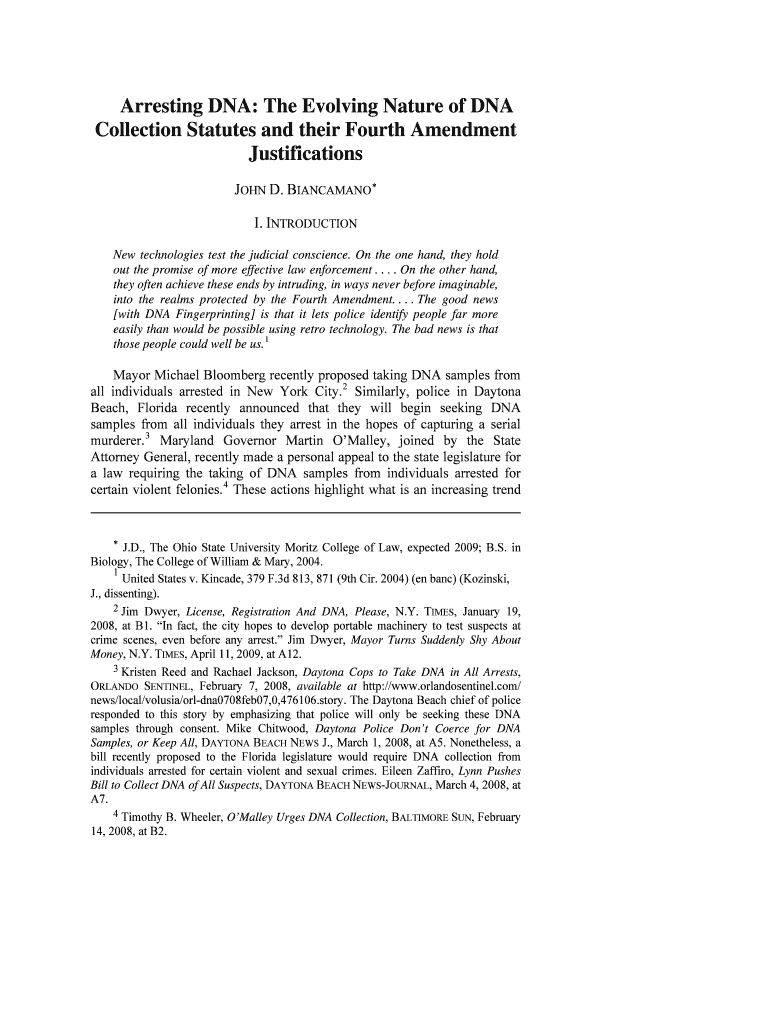
The form "Arresting DNA: The Evolving Nature of DNA" is a legal-document reference that examines the shift in statutes regarding DNA collection from individuals arrested but not yet convicted. It reflects on the changing landscape of these laws in the context of the Fourth Amendment, addressing issues of privacy and constitutional rights versus the needs of law enforcement. This document is essential for understanding legal and ethical considerations involved in the use of DNA for identifying suspects.
Key Elements of the Arresting DNA: The Evolving Nature of DNA
- DNA Collection Statutes: The document outlines the legal framework and statutes related to the collection of DNA from individuals under arrest.
- Fourth Amendment Concerns: It addresses how these practices may conflict with constitutional protections against unreasonable searches.
- Privacy and Ethical Issues: The document raises concerns about privacy rights and ethical implications of collecting DNA from non-convicted individuals.
- Impact on Innocents: It discusses the disproportionate effects on innocent individuals arrested but not convicted.
- Emerging Legal Trends: The document describes current trends and changes in laws across different states in the U.S.
State-Specific Rules for the Arresting DNA: The Evolving Nature of DNA
Different states have varying requirements and protocols regarding DNA collection. While some states mandate DNA submission only upon conviction, others require it upon arrest. This section addresses how these laws differ:
- Stringency of Requirements: States exhibit different levels of strictness in DNA collection practices.
- Legislative Variances: Highlights how legislative variances impact enforcement and judicial processes.
- Constitutional Challenges: Different states face unique challenges concerning legal suits addressing Fourth Amendment rights.
Legal Use of the Arresting DNA: The Evolving Nature of DNA
The form examines the legality of using DNA evidence ethically and within constitutional boundaries. It scrutinizes:
- Constitutional Justifications: Delving into arguments used to justify current DNA collection practices under constitutional law.
- Court Cases and Precedents: Analyzing significant court rulings that have influenced DNA collection laws and practices.
- Statutory Reforms: Discusses reforms aimed at balancing law enforcement efficiency with civil liberties.
Who Typically Uses the Arresting DNA: The Evolving Nature of DNA
This document is pivotal for a variety of stakeholders, including:
- Legal Practitioners: Lawyers and judges involved in criminal cases where DNA evidence is a factor.
- Policy Makers: Officials devising laws related to criminal justice and DNA usage.
- Civil Rights Advocates: Individuals and organizations fighting for privacy rights and ethical considerations in law enforcement.


Steps to Complete the Arresting DNA: The Evolving Nature of DNA
The process of engaging with the content and processes of this form usually involves:
- Acquisition: Obtain the document through legal databases or institutions.
- Review: Conduct a thorough review of the content, focusing on the aspect of legal statutes and personal rights.
- Consultation: Engage with legal experts to understand ramifications and applications.
- Application: Apply insights in relevant legal or policy-making processes.
Important Terms Related to Arresting DNA: The Evolving Nature of DNA
Understanding key terms is essential for fully appreciating this document:
- Arrest: Legal act of apprehending an individual for suspected criminal activity.
- DNA Collection: Process of obtaining biological samples for profiling.
- Fourth Amendment: Part of the U.S. Constitution protecting against unreasonable searches and seizures.
- Statute: A written law passed by a legislative body.
Examples of Using the Arresting DNA: The Evolving Nature of DNA
This document applies to real-world scenarios such as:
- Criminal Cases: Use in cases where DNA evidence is pivotal to prosecution or defense.
- Policy Amendments: Guiding policy amendments aimed at aligning law enforcement practices with constitutional rights.
- Advocacy Campaigns: Supporting civil rights campaigns focusing on reducing arbitrary uses of personal data.
State-by-State Differences
Each state in the U.S. exhibits unique differences concerning DNA statutes, impacting enforcement and legal outcomes:
- Identification Policies: States vary in their use of DNA data for identification and record-keeping.
- Legislative Updates: Differing timelines and content in statutory updates reflect the political climate and priorities at the state level.
- Legal Recourses: Varies availability and effectiveness of legal recourses for citizens challenging DNA collection practices.