






Definition & Meaning
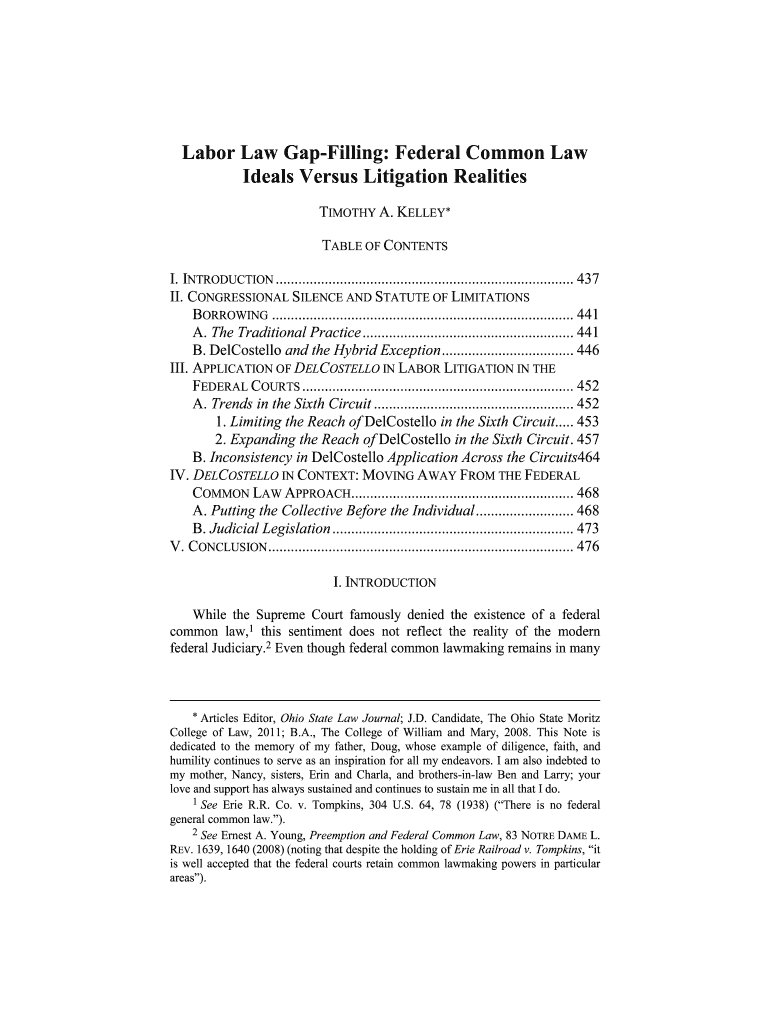
The term "Labor Law Gap-Filling: Federal Common Law" refers to the application of federal common law principles to address deficiencies or ambiguities in labor law. This methodology is principally leveraged when existing statutory frameworks or state laws do not adequately address specific labor issues, particularly in contexts involving collective bargaining agreements and union-related disputes. Federal common law acts as a supplement, ensuring that legal processes are fair and comprehensive for all parties involved, filling legal voids where federal statutes might be silent or ambiguous.
Key Elements of the Labor Law Gap-Filling: Federal Common Law
Several critical elements characterize this approach:
- Scope of Application: Federal common law mainly applies in labor disputes involving collective bargaining, typically impacting unionized employees more than their non-union counterparts.
- Judicial Precedents: Decisions such as DelCostello v. International Brotherhood of Teamsters set significant precedents, like establishing a six-month statute of limitations for hybrid labor claims.
- Integration with State Laws: Though federal law takes precedence, integration with state statutes often occurs, requiring careful consideration of both frameworks.
- Judicial Interpretation: Courts play a pivotal role in interpreting and applying common law principles to supplement statutory labor laws.
Steps to Complete the Labor Law Gap-Filling: Federal Common Law
Navigating the process involves several essential steps:
- Identify Gaps: Determine specific areas in labor laws where statutory provisions are inadequate.
- Collect Precedents: Gather relevant federal court decisions to understand how similar cases have been managed historically.
- Consult Legal Experts: Engage with attorneys specializing in labor law to provide insights into potential legal strategies using federal common law.
- Evaluate Outcomes: Consider the potential outcomes and legal implications of pursuing a case through federal common law principles.
- Proceed with Application: File the necessary legal documentation, leveraging both federal common law and relevant state statutes as needed.
Legal Use of the Labor Law Gap-Filling: Federal Common Law
Federal courts commonly implement labor law gap-filling by applying established principles of federal common law whenever statutory law is insufficient. This process ensures consistency across jurisdictions, providing a unifying legal framework for interpreting labor-related disputes. This method is indispensable in situations where labor law intricacies necessitate a nuanced judicial approach, balancing individual rights with organizational interests.
Examples of Using the Labor Law Gap-Filling: Federal Common Law
Several noteworthy examples highlight the applicability of this approach:
- Hybrid Claims: Cases involving both breaches of collective bargaining agreements and unfair labor practices where federal common law dictates procedural timelines and limitations.
- Union Representation Disputes: Situations where the adequacy of representation under existing statutory frameworks is questioned, necessitating a federal common law approach to determine fairness and equity.
- Collective Bargaining Agreement Interpretation: When contract terms are ambiguous, federal common law provides guidelines for interpretation and enforcement.
Who Typically Uses the Labor Law Gap-Filling: Federal Common Law
This legal framework is primarily used by:
- Plaintiff-Employees: Especially union members seeking recourse for grievances related to collective bargaining agreements and representation issues.
- Labor Unions: Organizations needing legal clarity on responsibilities and duties under federal labor statutes.
- Employers: Companies looking to resolve disputes where statutory guidance is either unclear or absent, ensuring compliance with overarching federal labor standards.


State-Specific Rules for the Labor Law Gap-Filling: Federal Common Law
While federal common law serves as a unifying framework, state laws can influence its application:
- Specific Statutory Requirements: Some states might have unique labor provisions that can integrate or conflict with federal interpretations.
- Dual Application: Courts may concurrently consider state and federal laws, requiring a comprehensive understanding of both legal systems.
- Precedent Influence: State court decisions can sometimes shape the application of federal common law, depending on the jurisdiction and context.
Penalties for Non-Compliance
Non-compliance with labor laws, exacerbated by misunderstandings of common law applications, can lead to:
- Legal Sanctions: Courts can impose penalties for failure to adhere to established labor law standards, including federal common law guidelines.
- Monetary Fines: Employers and unions might face financial repercussions for improper practices under labor law frameworks.
- Injunctions: Judiciary bodies can enforce specific actions or prohibit practices inconsistent with labor law or common law interpretations, impacting organizational operations.