




01. Edit your form online
Type text, add images, blackout confidential details, add comments, highlights and more.

Type text, add images, blackout confidential details, add comments, highlights and more.

Draw your signature, type it, upload its image, or use your mobile device as a signature pad.

Send it via email, link, or fax. You can also download it, export it or print it out.
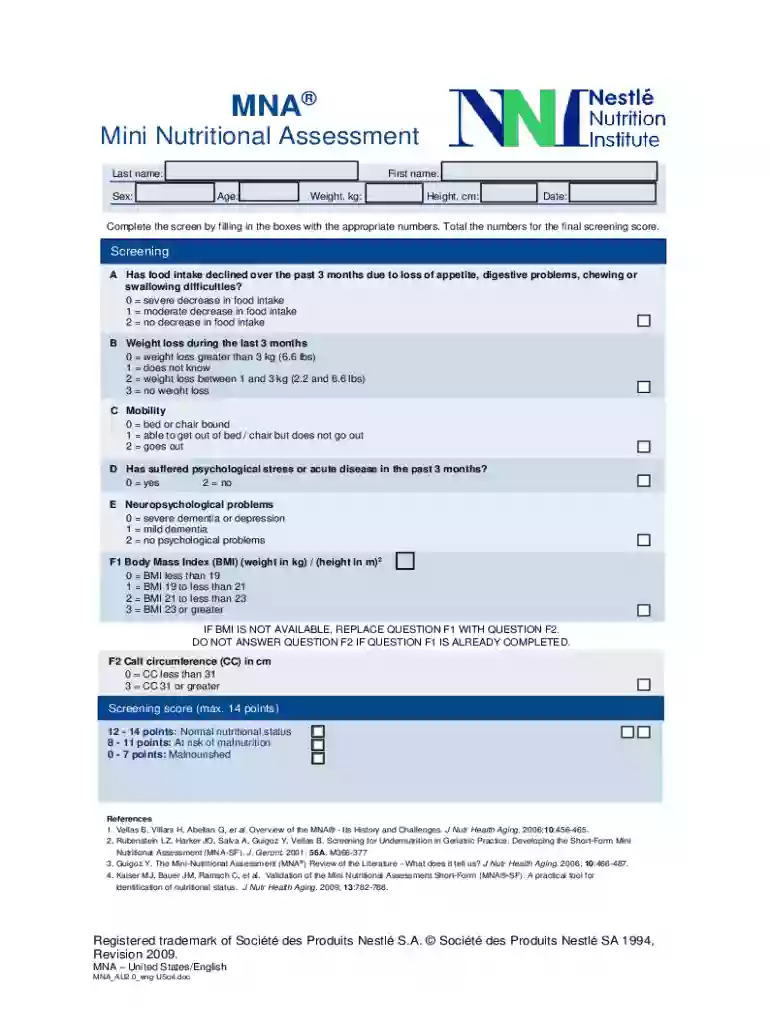
The Mini Nutritional Assessment (MNA®) is a validated screening tool used to evaluate the nutritional status of individuals, particularly focusing on the elderly population. This tool is instrumental in identifying those who are at risk of malnutrition, thus promoting early intervention. The MNA encompasses a series of questions that address dietary habits, weight changes, mobility, psychological status, and physical measurements like BMI or calf circumference.
Identifying malnutrition early is crucial, as it can significantly affect an individual's overall health and quality of life. The MNA helps healthcare providers make informed decisions about nutritional interventions, potentially improving health outcomes and reducing healthcare costs associated with malnutrition-related complications.
Dietary Intake Evaluation: This involves querying the individual about their dietary patterns, including any changes in appetite or food consumption.
Weight Loss Evaluation: Determine any recent and unexplained weight loss, often calculated from the loss of appetite or malnutrition.
Mobility Assessment: Evaluate the individual's ability to move independently, as mobility can greatly influence nutritional status.
Psychological and Emotional Evaluation: Assess the individual’s psychological stress or acute disease, which may contribute to nutritional risks.
Physical Measurements: Obtain physical measurements such as BMI or calf circumference, which are integral in assessing for malnutrition.
Hospital Settings: Frequently used upon admission to determine patients at risk of malnutrition.
Nursing Homes: Regular assessments ensure that residents maintain adequate nutritional status.
Community Clinics: Used during health screenings for preventive healthcare strategies.
The Mini Nutritional Assessment can typically be accessed through healthcare institutions or online medical resources. It is available in both digital and paper formats, ensuring ease of use in various clinical environments.
Typically, a healthcare professional such as a nurse or dietitian administers the MNA. It is a straightforward process, taking approximately 10 to 15 minutes to complete, requiring no special equipment apart from a measuring tape and a scale.
The responses generate a total score, categorizing individuals into three groups: normal nutritional status, risk of malnutrition, and malnourished. This scoring helps in determining the intensity of required nutritional intervention.
The MNA must be used in accordance with healthcare policies and ethical guidelines, ensuring confidentiality and respectful submission to individuals being assessed. Compliance with HIPAA regulations in the United States is essential for maintaining privacy and security of patient information.
Understanding and respecting cultural differences in dietary practices is crucial when interpreting results. The ethical use of the assessment involves obtaining informed consent and using results to support and enhance individual health outcomes.
Initially conceived for elderly populations, the MNA has undergone revisions to accommodate broader demographic uses. Variants may exist with slight methodological differences, but the core objective remains constant. Advances in digital technology have enabled electronic and app-based versions of the MNA, fostering wider and more efficient application in clinical settings.
While the MNA is not directly linked to specific software like TurboTax or QuickBooks, compatibility with electronic health records (EHR) systems ensures seamless integration into hospital and clinic workflows. These integrations facilitate easier data management and tracking over time.
By maintaining a comprehensive understanding and application of the Mini Nutritional Assessment, healthcare providers can significantly improve patient outcomes through early identification and intervention in nutritional deficiencies.
We've got more versions of the A guide to completing the Mini Nutritional Assessment form. Select the right A guide to completing the Mini Nutritional Assessment version from the list and start editing it straight away!
At DocHub, your data security is our priority. We follow HIPAA, SOC2, GDPR, and other standards, so you can work on your documents with confidence.


