






Definition and Meaning
The "2023 505 Nonresident Income Tax Return Instructions" for Maryland taxes is a comprehensive guide designed for individuals who do not reside in Maryland but have income generated from sources within the state. It provides detailed procedures for filing personal income taxes, ensuring compliance with Maryland law while maximizing potential deductions and credits. This document is essential for understanding how nonresidents can fulfill their tax obligations in Maryland.
How to Use the Instructions
To effectively navigate the 2023 505 instructions, begin by identifying sections relevant to your financial position, such as taxable income sources and eligible tax credits. Follow these steps:
- Review Eligibility: Determine if your income type requires filing.
- Calculate Income: Include Maryland-sourced income according to state-specific rules.
- Understand Deductions: Identify applicable subtraction modifications.
- Follow Form Instructions: Adhere to detailed line-by-line guidance for accurate completion.
Examples of practical application include identifying applicable tax credits or understanding which income types are taxable under Maryland law for nonresidents.
Steps to Complete the Form
The process to complete the 2023 505 tax return involves several critical steps:
- Gather Information: Collect all relevant financial documents, such as W-2s, 1099s, and financial statements detailing Maryland-sourced income.
- Fill Out Personal Information: Start with basic details including name, Social Security number, and address.
- Income Detailing: Provide precise breakdowns of all income from Maryland-based activities or sources.
- Apply Deductions and Credits: Input any eligible deductions, subtraction modifications, or tax credits.
- Calculate Tax: Use Maryland-specific rates provided in the instructions to determine tax liability.
- Submit the Form: File either electronically or via mail, ensuring adherence to specified deadlines.
Important Terms Related to the Form
Understanding key terminology is crucial:
- Nonresident: An individual who earns income in Maryland but does not reside there.
- Subtraction Modification: Adjustments allowed by Maryland to decrease taxable income.
- Tax Credit: A benefit that can reduce the tax owed to the state.
These terms are integral in ensuring accurate and lawful completion of the tax return.
Filing Deadlines and Important Dates
Timely submission is essential to avoid penalties:
- Standard Deadline: April 15 of the following year, unless extended.
- Electronic Filing Deadline: Typically mirrors the standard filing date but offers convenience and expedited processing.
Understanding these timelines ensures compliance and prevents unnecessary fines.
Required Documents
Before beginning the form, ensure availability of:
- W-2 Forms: For employment income from Maryland sources.
- 1099 Forms: For freelance or contract income.
- Previous Year’s Return: Helps in continuity and consistency of filed information.
- Receipts: Supporting documents for any tax credits or deductions claimed.
Having these documents ready streamlines the filing process and helps in verifying data entered.
Key Elements of the Form
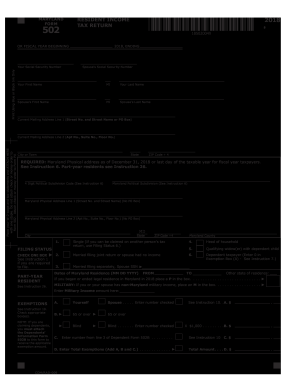
The 2023 505 form is structured with critical sections:
- Personal Information: Ensures the form is correctly attributed to the taxpayer.
- Income Detailing: Aligns with Maryland’s tax guidelines on taxable income.
- Deductions and Credits: Sections for reducing taxable income outlined specifically for nonresidents.
- Signature and Declaration: Finalizes the form, legally binding the information provided as accurate.
Understanding these key components ensures thorough completion and minimizes errors.
State-Specific Rules
Maryland implements specific rules for nonresidents:
- Tax Liability: Only on income derived from Maryland sources.
- Subtraction Modifications: Unique to Maryland's tax code, allowing adjustments for certain types of income or expenses.
- Military Taxpayer Provisions: Special rules available for nonresident military personnel.
These regulations highlight the importance of tailored compliance with state laws.
Digital vs. Paper Version
Choosing between digital and paper options:
- Digital Submission: Offers efficiency, quick processing, and access to e-filing services.
- Paper Submission: Suitable for individuals who prefer traditional filing or lack digital access.
Weighing these options helps in selecting the method that best suits the filer’s needs, considering factors such as convenience and access to resources.