




01. Edit your form online
Type text, add images, blackout confidential details, add comments, highlights and more.

Type text, add images, blackout confidential details, add comments, highlights and more.

Draw your signature, type it, upload its image, or use your mobile device as a signature pad.

Send it via email, link, or fax. You can also download it, export it or print it out.
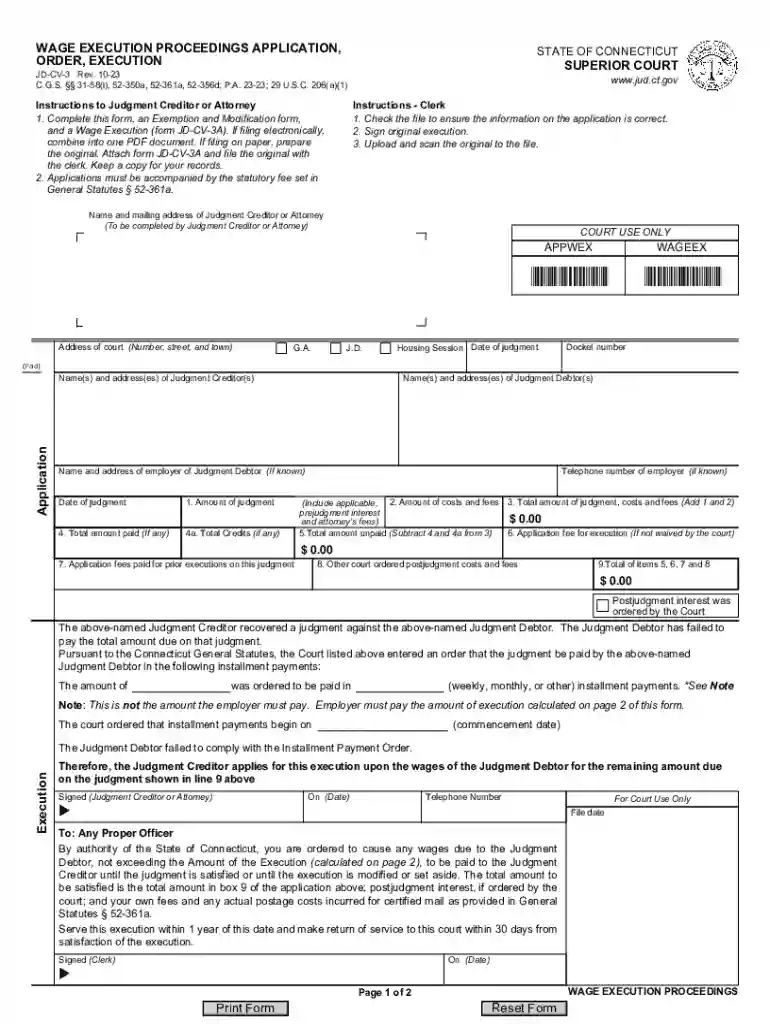
"Wage Execution Proceedings, Application, Order, Execution" refers to a legal procedure that allows a judgment creditor to collect unpaid wages from a judgment debtor through a court order. This process, often initiated after a judgment has been made in favor of the creditor, involves the debtor's employer withholding a portion of the debtor's wages and redirecting it to the creditor. These proceedings are critical in ensuring that creditors receive what is owed to them, following due legal processes.
To effectively utilize the Wage Execution Proceedings Application, judgment creditors must first obtain a court order permitting wage garnishment. This application serves as a formal request to initiate the wage garnishment process. Creditors must provide necessary information about the judgment, including the amount due and details about the debtor and the debtor's employer. It's crucial to adhere to specific state laws and regulations, as they can affect the procedure and outcome of wage execution.
The legal use of wage execution proceedings is strictly regulated. Courts must issue the order, ensuring that the debtor's rights are protected under federal and state law. The process must not infringe upon exemptions or thresholds established to maintain a minimal standard of living for the debtor. Legal professionals often assist in these proceedings to ensure compliance and protect all parties involved.
When preparing to submit the application for wage execution proceedings, several documents are typically required:
Different states have varying rules regarding wage execution proceedings. Understanding these differences is crucial for proper application and compliance:
Judgment creditors can leverage the application in various scenarios:
The timeline for processing a wage execution application can vary based on jurisdiction:
Failing to comply with wage execution orders can lead to significant penalties:
Considering the gravity of wage execution proceedings, thorough understanding and adherence to all legal requirements is essential for all involved parties.
We've got more versions of the WAGE EXECUTION PROCEEDINGS APPLICATION, ORDER, EXECUTION form. Select the right WAGE EXECUTION PROCEEDINGS APPLICATION, ORDER, EXECUTION version from the list and start editing it straight away!
At DocHub, your data security is our priority. We follow HIPAA, SOC2, GDPR, and other standards, so you can work on your documents with confidence.


