






Definition and Meaning
The concept of "States with Vehicle Emissions Inspection Reciprocity - Pages" refers to a system in which certain U.S. states acknowledge and accept vehicle emissions testing results from other states. This system can greatly benefit vehicle owners who live in or frequently travel between states with emissions requirements. Understanding the nuances of this reciprocity can help vehicle owners ensure compliance with their home state's environmental regulations without undergoing multiple tests. Emission reciprocity agreements streamline the process and eliminate duplicated compliance efforts for residents who are temporarily residing or working in another state.
Importance of Reciprocity Agreements
- Simplifies Compliance: Vehicle owners can avoid repeated emissions tests, which saves time and resources.
- Encourages Interstate Mobility: Facilitates easier vehicle registration and usage across state lines.
- Supports Environmental Goals: Ensures consistent adherence to emissions standards to improve air quality.
How to Use the States with Vehicle Emissions Inspection Reciprocity
For vehicle owners residing or frequently traveling across state borders, understanding how to use vehicle emissions inspection reciprocity is crucial. This section provides step-by-step guidance on utilizing these agreements.
-
Verify Reciprocity: Check your home state's Department of Motor Vehicles (DMV) or Environmental Protection Agency (EPA) website to confirm the existence of a reciprocity agreement with the state you are traveling to or residing in.
-
Documentation Requirements: Gather necessary documentation such as your current emissions test results, vehicle registration, and proof of residency if required.
-
Contact Local Authorities: Reach out to local DMV officials in both states to confirm specific procedures and paperwork you may need.
-
Submit Required Information: If applicable, submit your emissions inspection results and any required forms to the receiving state's DMV.
-
Monitor Compliance: Regularly check for changes in reciprocity agreements which may require additional actions on your part.
Helpful Tips
- Stay Updated: Reciprocity agreements can change, so regular checks are advisable.
- Document Everything: Keep a copy of all correspondence and documentation related to the reciprocity agreement.
Steps to Complete the States with Vehicle Emissions Inspection Reciprocity
Completing the process for vehicle emissions inspection reciprocity involves several key steps that ensure compliance and simplicity for vehicle owners.
-
Research Eligibility: Determine if your state and the state you're interested in have a reciprocity agreement.
-
Prepare Documentation: Collect all necessary documents, including a valid emissions test result from your home state and your vehicle registration.
-
Review Instructions: Each state may have specific instructions or forms required to process the reciprocity.
-
Complete Relevant Forms: Fill out any forms required by the receiving state to acknowledge the test completed in your home state.
-
Submit Through Appropriate Channels: Depending on the state, submissions can often be done online, via mail, or in person at a DMV office.
-
Follow-up: Ensure the receiving state has acknowledged your submission and that your vehicle's compliance status is up-to-date.
Key Elements of the States with Vehicle Emissions Inspection Reciprocity
Understanding the key elements involved in vehicle emissions inspection reciprocity can significantly simplify the process for vehicle owners.
- State Agreements: Not all states have reciprocity agreements. Confirm which states have existing arrangements.
- Type of Inspection Accepted: Verify the type of emissions test your state accepts under reciprocity (e.g., smog test, On-Board Diagnostics test).
- Validity Period: Check the validity period for an out-of-state emissions test result. Some states require tests to be recent, typically within the last six to twelve months.
- Submission Deadline: Be aware of any deadlines for submitting reciprocity forms to avoid penalties.
Examples of Reciprocity
- California and Oregon: California recognizes Oregon's emission inspections for residents temporarily stationed in Oregon.
- New Jersey and New York: These states offer mutual recognition of vehicle inspections, making it easier for commuters.
State-specific Rules for Vehicle Emissions Inspection Reciprocity
Each state may have distinct rules and considerations regarding emissions inspection reciprocity. Understanding these variations can help vehicle owners navigate the complexities of cross-state regulations.
- California: Requires vehicles to meet stricter emissions standards; some out-of-state tests may not qualify unless they adhere to California's stringent requirements.
- Texas: Has relaxed rules for military personnel stationed out of state with vehicles registered in Texas.
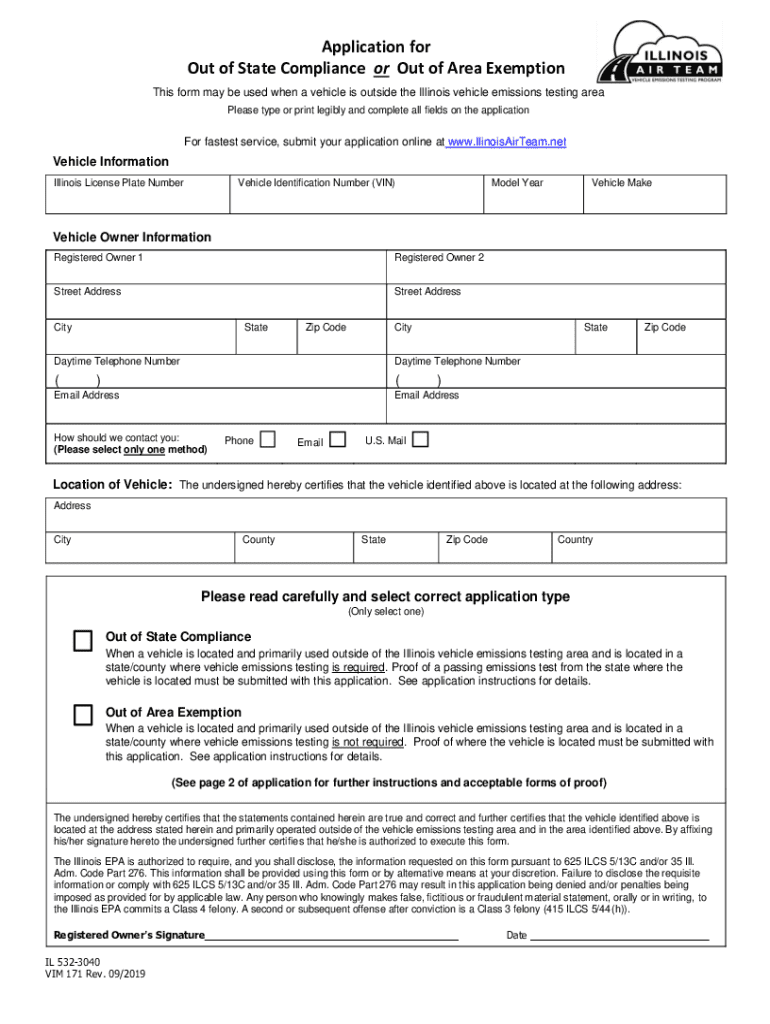
- Illinois: Offers out-of-state compliance options for residents temporarily in other jurisdictions.
Legal Use of Vehicle Emissions Inspection Reciprocity
Successfully navigating legalities is essential when dealing with vehicle emissions inspection reciprocity.
- Compliance Verification: Ensure compliance with both your home state and the state where your vehicle is temporarily located.
- Avoiding Penalties: Understand legal ramifications for failing to adhere to reciprocity terms, which might include fines or registration denials.
- Record Keeping: Maintain detailed records of your emissions testing and any communications regarding reciprocity.
Form Submission Methods (Online, Mail, In-Person)
When submitting documents for vehicle emissions inspection reciprocity, knowing the available submission methods can expedite the process.
- Online Submission: Many states offer online portals for easy submission. Requires digital copies of emissions tests and forms.
- Mail: Alternatively, you can send forms and documentation via post to specified DMV addresses.
- In-Person: Visiting a local DMV office is an option if clarification or immediate assistance is needed.
Penalties for Non-Compliance with Vehicle Emissions Report
Failing to comply with vehicle emissions inspection reciprocity can lead to various penalties, requiring careful adherence to regulatory requirements.
- Fines and Fees: Non-compliance may result in financial penalties.
- Registration Issues: Your vehicle registration could be suspended, preventing legal use of the vehicle.
- Inspection Requirements: You may have to undergo additional, possibly more intensive, emissions tests to satisfy state compliance.