



Definition and Purpose of the Pre-Order Form
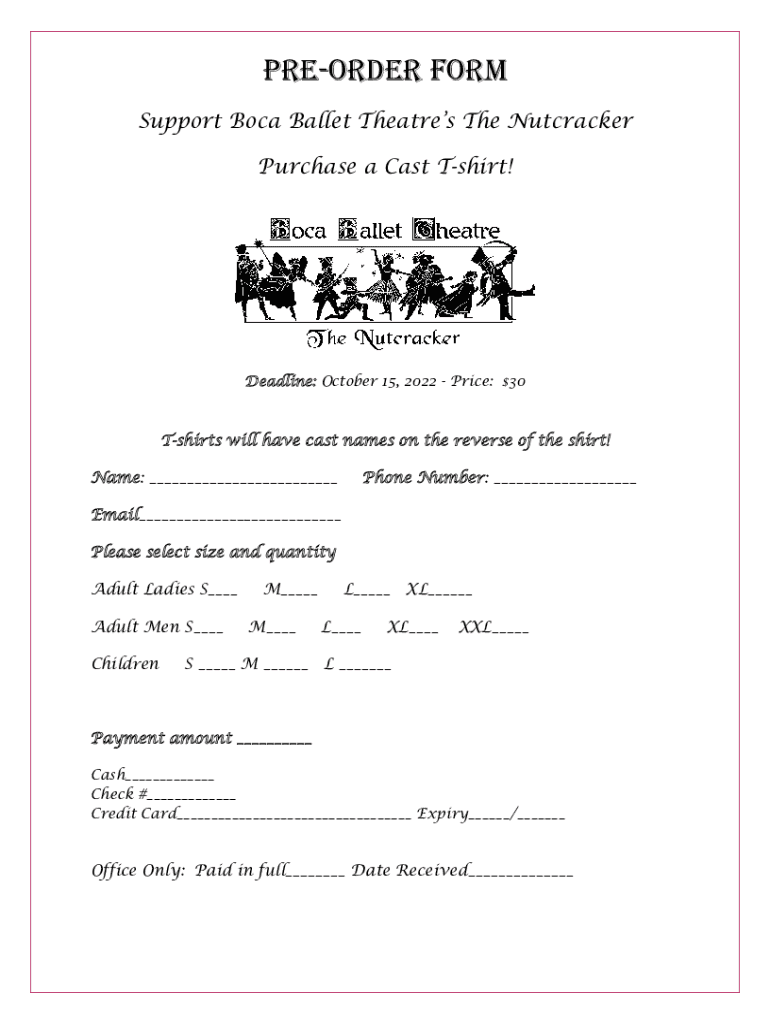
A pre-order form is a specialized document used to facilitate the advance purchase of goods or services before they are officially available to the public. This process allows both businesses and consumers to gauge demand and secure transactions ahead of a full release. The primary goal of pre-ordering is to ensure that customers have immediate access to products upon release, while businesses can anticipate inventory and manage production more effectively. Typically used for items like limited-edition merchandise, event tickets, or advance copies of a book, pre-order forms often include specifics about the product, pricing, payment terms, and estimated delivery dates.
Steps to Complete the Pre-Order Form
Completing a pre-order form involves several key steps to guarantee accuracy and ease the transaction process:
-
Gather Necessary Information: Prior to filling out the form, ensure you have all relevant details such as personal information, product options, and desired quantities.
-
Fill Out Personal Details: Enter your name, contact information, and any other requested personal data to facilitate communication and shipping.
-
Select Products and Quantities: Choose the products you wish to order, specifying the quantity of each item. This section may also include variations such as size or color.
-
Provide Payment Information: Include your payment method, which could be credit card details or a payment service account. Ensure this section is completed securely to protect sensitive data.
-
Review and Submit: Carefully review all entered information for accuracy before submitting the form. Ensure that any required fields are filled to avoid processing delays.
Key Elements of the Pre-Order Form
The structure of a pre-order form is crucial for clear communication and smooth transactions. Essential elements include:
-
Product Description: Details like the item name, features, and specifications help customers understand what they are ordering.
-
Price and Payment Terms: Clearly state the cost of each item, including any applicable taxes or shipping fees, and outline payment terms.
-
Delivery Information: Estimated delivery dates and shipping methods should be mentioned to set customer expectations.
-
Contact Information: Providing a way for customers to reach support for questions or issues enhances the ordering experience.
Who Typically Uses the Pre-Order Form
Pre-order forms are utilized by a wide array of individuals and organizations:
-
Consumers anticipating high-demand products such as technology gadgets, concert tickets, or limited-edition memorabilia.
-
Retail Businesses that wish to gauge interest and secure sales before the official release of a new product, aiding inventory management.
-
Non-profits and Performance Groups offering advanced sales for events or merchandise, ensuring funding and support are secured beforehand.

Importance and Benefits of Pre-Ordering
Pre-ordering offers numerous strategic advantages for both buyers and sellers:
-
Demand Forecasting: Businesses can better understand market interest, reducing unsold inventory and optimizing production schedules.
-
Customer Assurance: It provides assurance to customers that they will receive their product promptly upon release, fostering loyalty and satisfaction.
-
Cash Flow Management: Securing orders in advance helps businesses maintain a steady cash flow, essential for operations and new project funding.
Legal Use and Compliance Considerations
Using pre-order forms necessitates adherence to specific legal guidelines and industry standards. These may include:
-
Consumer Protections: Ensure clear communication of terms to protect consumers from potential misinformation.
-
Refund Policies: Clearly defined return and refund policies must be in place to handle situations where the product cannot be delivered as promised.
-
Data Security: Organizations must adhere to data protection regulations, safeguarding customers' personal and payment information, especially when the form is digital.
Digital vs. Paper Form Versions
There are benefits and considerations for both digital and paper pre-order forms:
-
Digital Forms: Offer convenience with ease in distribution, modification, and submission. They reduce processing time and are environmentally friendly.
-
Paper Forms: May be used in scenarios where technological access is limited or when physical copies are necessary for record-keeping.
Examples and Case Studies
Real-world examples underscore the usefulness of pre-order forms:
-
Book Releases: Authors often use pre-order forms to promote upcoming books, allowing fans to secure a copy and receive it on release day.
-
Limited-Edition Apparel: Clothing brands might offer pre-orders for exclusive designs, creating excitement and ensuring production meets demand.
-
Event Tickets: Theatre productions, like the Boca Ballet Theatre's "The Nutcracker," employ pre-order forms to guarantee seat availability while planning audience capacity.
By understanding and implementing a comprehensive pre-order strategy, businesses and individuals can effectively manage early sales, enhance customer relations, and streamline their operations.