






Definition and Meaning
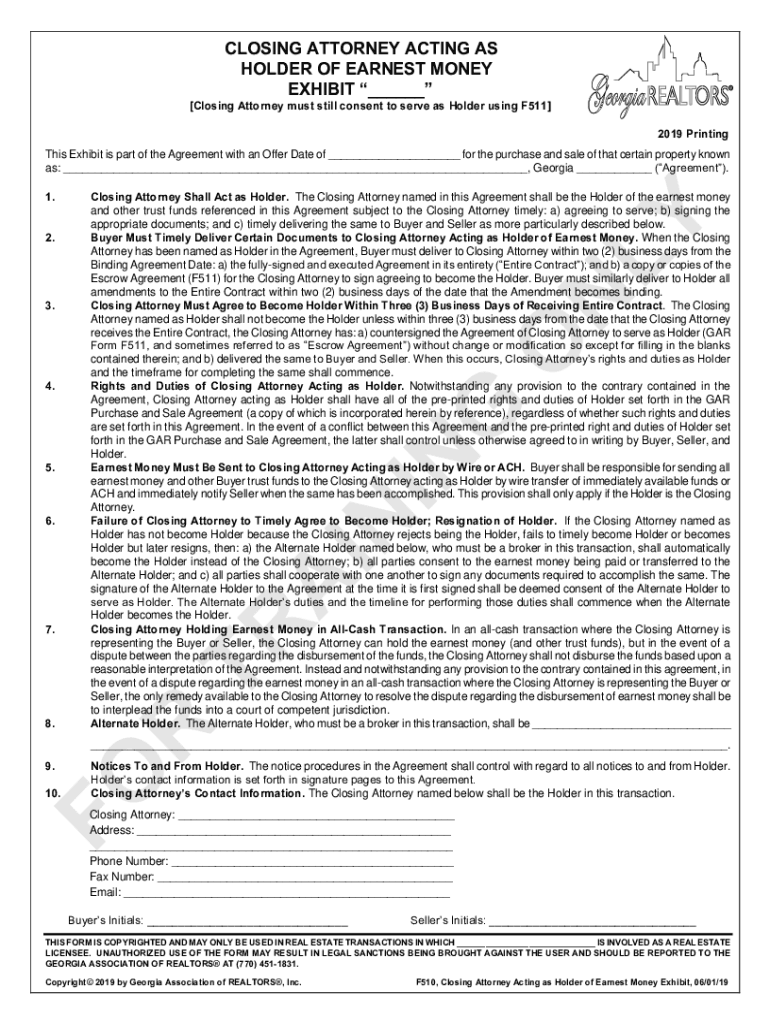
The "Closing Attorney Acting as Holder of Earnest Money Exhibit" is a legal document used primarily in real estate transactions to define the role and responsibilities of a closing attorney when acting as the holder of earnest money. This document establishes the legal framework for managing and safeguarding earnest money deposited by a buyer in the purchase of real property. The closing attorney serves as a neutral third party entrusted with holding the funds until the parties fulfill the contract terms or until the funds need to be disbursed according to the agreement. This ensures that both parties adhere to the contractual obligations set forth in the real estate transaction.
Key Elements of the Exhibit
A comprehensive understanding of the key elements within this exhibit is crucial to ensure proper execution:
-
Responsibilities of the Closing Attorney: The attorney must agree to safeguard and manage the earnest money until the transaction's conditions are met. They are responsible for ensuring the funds are securely held and distributed appropriately.
-
Timeline for Agreement: The timeline specifies when the closing attorney must agree to act as holder. Delays or failures to agree within the timeframe might necessitate alternate arrangements.
-
Alternate Holder Provisions: If the closing attorney declines or cannot act as the holder, the exhibit outlines procedures for appointing an alternate holder to ensure the continuity of the transaction.
-
Fund Transfer Methods: The exhibit specifies acceptable methods for transferring earnest money, such as wire transfers or ACH payments, to mitigate risks associated with conventional payment methods like checks.
How to Use the Exhibit
Utilizing the "Closing Attorney Acting as Holder of Earnest Money Exhibit" requires understanding its practical application:
-
Initial Agreement: Engage with a qualified closing attorney and ensure they formally agree to act as holder of earnest money per the outlined conditions.
-
Document Delivery: Buyers must deliver any necessary documents and earnest money funds to the appointed holder within stipulated timelines to validate the agreement's activation.
-
Monitor Compliance: All parties should monitor compliance with the terms of the exhibit, ensuring that earnest money handling adheres to the agreed procedures and legal requirements.
Steps to Complete the Exhibit
Successfully completing this form involves several critical steps:
-
Select a Closing Attorney: Choose an attorney experienced in handling real estate transactions to serve as earnest money holder.
-
Agreement Signing: Both parties and the chosen attorney must sign the exhibit to confirm acceptance of the outlined responsibilities and terms.
-
Transfer of Earnest Money: Use specified methods to submit earnest money to the attorney within the agreed time.
-
Retention of Documentation: Retain copies of the signed exhibit and receipt of earnest money transfer for future reference and legal validation.
Legal Use and Compliance
Ensuring legal compliance with the "Closing Attorney Acting as Holder of Earnest Money Exhibit" involves adhering to established standards:
-
Legal Safeguards: The attorney must ensure all actions align with state real estate laws and the terms outlined in the agreement.
-
Disbursement Procedures: Follow the legal provisions for disbursing the fund only under conditions agreed upon by both parties, preventing unauthorized fund release.
-
Audit Trail Maintenance: Maintain a detailed audit trail documenting the transaction history, holding duration, and disbursement records.
State-Specific Rules
While the exhibit maintains standard practices, some states may impose additional requirements:
-
Georgia: Given its specificity to Georgia transactions, this state may have unique stipulations regarding attorney involvement in real estate transactions. Attorneys must be knowledgeable about these to ensure compliance.
-
Real Estate Commission Guidelines: Each state may have a real estate commission offering additional directives on handling earnest money, which the closing attorney must adhere to.
Common Scenarios and Examples
Understanding practical applications provides clarity on the exhibit's utility:
-
Real Estate Purchases: Commonly used in negotiated transactions where buyers and sellers agree on property conditions, necessitating the safeguarding of earnest money.
-
Contingencies: Attorneys may need to hold funds during contingencies like inspections or appraisals, requiring careful monitoring until resolutions are met.
Important Terms Explained
-
Earnest Money: A deposit made by the buyer demonstrating serious intent to purchase property, safeguarded by the closing attorney until transaction completion.
-
Alternate Holder: An alternative entity or individual appointed to hold earnest money if the primary closing attorney is unavailable or fails to act.
Understanding these elements and scenarios equips parties with the knowledge necessary for the effective use of the "Closing Attorney Acting as Holder of Earnest Money Exhibit" in real estate transactions.