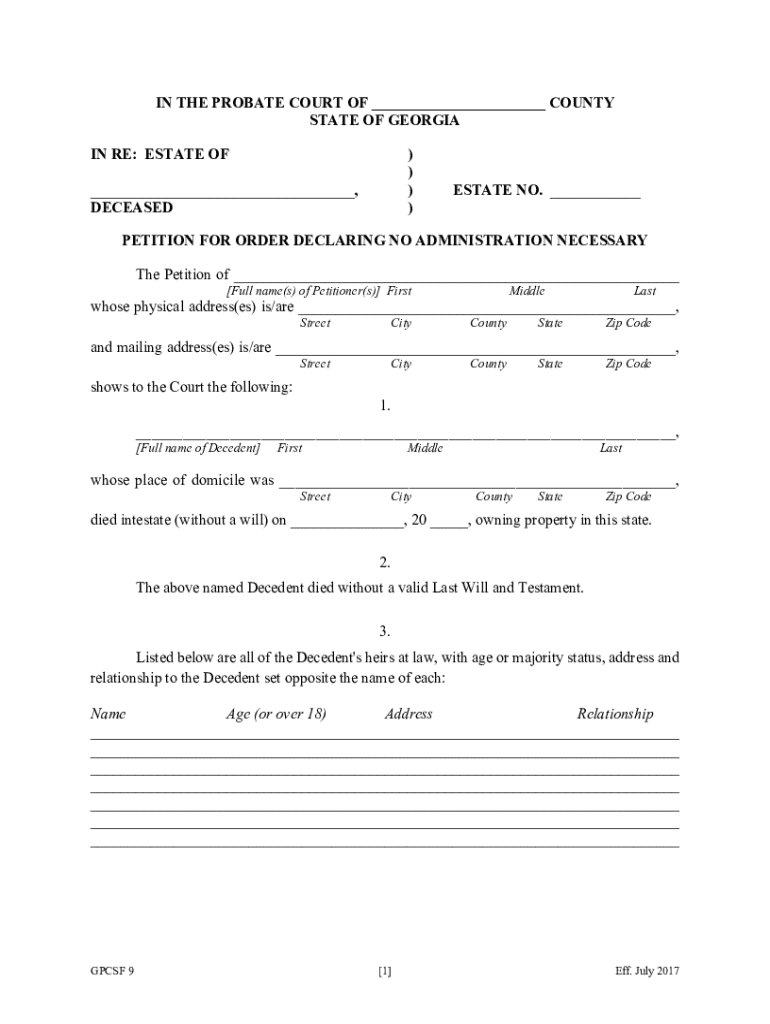







Definition and Meaning of the Georgia Small Estate Affidavit
A Georgia small estate affidavit is a legal document used to facilitate the transfer of a deceased individual's estate without a formal probate process. It is particularly beneficial when the decedent has passed away without a will, known as intestate. This document allows heirs to legally declare that the estate is small enough to bypass the lengthy probate proceedings, enabling a more efficient distribution of assets. It includes critical information such as the details of the decedent's heirs, property, and confirmation that there are no outstanding debts.
Eligibility Criteria for the Georgia Small Estate Affidavit
To utilize a Georgia small estate affidavit, certain eligibility criteria must be met:
- Estate Value: The total value of the estate must fall below the state’s threshold for small estates, which can vary from year to year.
- Heir Agreement: All heirs must unanimously agree on the distribution of the estate assets and provide written consent.
- No Will: The affidavit is typically used when there is no will present, thus requiring a solid understanding of intestate succession rules.
- No Outstanding Debts: All debts must be settled, or creditors must have agreed to the distribution terms outlined in the affidavit.
- Judicial Approval Not Required: For estates meeting the criteria, this affidavit circumvents the need for judicial intervention, expediting the settlement process.


How to Obtain the Georgia Small Estate Affidavit
The process of obtaining a Georgia small estate affidavit involves several steps:
- Contact the Probate Court: Reach out to the probate court in the county where the decedent lived. The court can provide forms and guidance on the necessary documentation.
- Review Local Regulations: Regulations can vary, so it’s essential to understand any county-specific guidelines that may impact the affidavit.
- Collect Required Documents: Assemble documentation, including the decedent’s death certificate, a list of assets, and heir consent forms.
- Complete the Affidavit: Fill out the affidavit form with accurate information regarding the estate and submit it as per local court requirements.
Key Elements of the Georgia Small Estate Affidavit
The affidavit comprises various elements crucial for its validity:
- Affiant Information: Details about the person making the affidavit, who is typically an heir.
- Decedent’s Details: Information about the deceased, including full name and date of death.
- Asset Inventory: A concise yet comprehensive list of the decedent's assets and their estimated values.
- Heir Information: Names and relationships of the heirs in agreement, along with their signatures.
- Debt Declaration: Confirmations stating all debts have been resolved or properly managed.
- Notarization: The document must be signed in the presence of a notary public to validate it.
Steps to Complete the Georgia Small Estate Affidavit
Completing the affidavit requires careful attention to detail:
- Gather Required Information: Ensure all necessary details about the decedent and the estate are at hand.
- Fill Out the Form: Accurately complete each section of the affidavit, ensuring all information is correct.
- Obtain Unanimous Consent: Secure signatures from all heirs, confirming their agreement on the estate distribution plan.
- Notarize the Affidavit: Have the affidavit notarized to legitimise the document.
- Submit to Court: File the completed affidavit with the appropriate probate court.
State-Specific Rules for Georgia Small Estate Affidavit
Georgia’s rules around small estate affidavits necessitate compliance with specific state statutes:
- Maximum Estate Value: Couples taking advantage of the affidavit must ensure the estate’s value doesn’t exceed the state-defined threshold.
- Heir Unanimity: All heirs must consent, reflecting Georgia’s stringent requirements for uncontested estate settlements.
- Probate Alternatives: Knowledge of other probate shortcut procedures is vital if the estate exceeds the threshold or if complications arise.
Examples of Using the Georgia Small Estate Affidavit
Practical scenarios where the affidavit is useful include:
- Family Heirlooms: An heir may use the affidavit to claim and distribute tangible personal property like family heirlooms or collectibles.
- Small Bank Accounts: When the decedent held small bank accounts exclusively in their name, heirs can use the affidavit to access funds without probate.
- Unclaimed Tax Refunds: The document facilitates heirs in retrieving any unclaimed tax refunds due to the decedent, which remain part of the estate.
Legal Use of the Georgia Small Estate Affidavit
Understanding the legal application of the affidavit is crucial:
- Probate Avoidance: The affidavit serves as a legal notice that the estate does not require probate, effectively transferring title assets without court intervention.
- Consent and Cooperation: The affidavit requires careful legal agreement from all parties, reflecting legally binding decisions on asset distribution.
- Asset Protection: It ensures a legally defensible transfer, protecting the assets from legal disputes when properly executed.