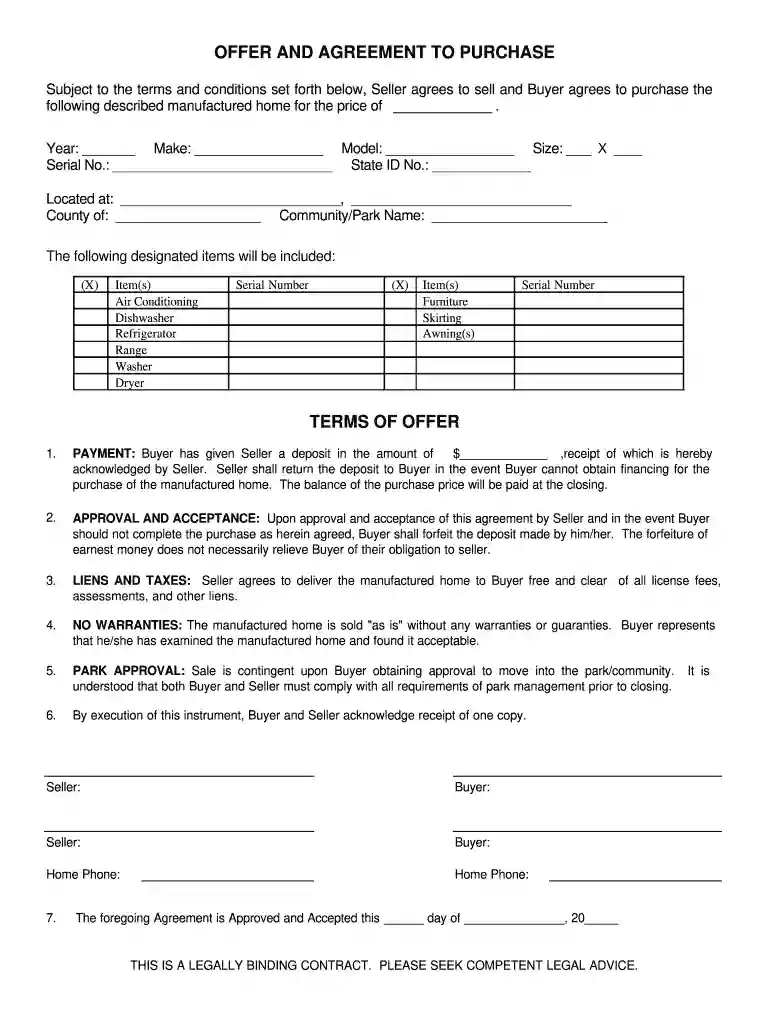
Definition and Key Components of a Mobile Home Purchase Agreement
A mobile home purchase agreement is a legally binding contract between the buyer and seller that outlines the specific terms and conditions of the sale of a manufactured home. This document codifies the essential elements of the transaction, ensuring clarity and protection for both parties involved.
Essential Elements
- Identification of Parties: The agreement must clearly list the names and addresses of both the buyer and the seller. This ensures that all parties are legally recognized in the transaction.
- Description of the Mobile Home: Detailed information about the mobile home is crucial, including its make, model, year, and any unique identification numbers like the Vehicle Identification Number (VIN). This prevents any potential disputes regarding which property is being sold.
- Purchase Price and Payment Terms: The contract should specify the total purchase price, any down payment that is required, and the schedule for remaining payments. If financing is involved, details about interest rates and loan terms must also be included.
- Conditions of Sale: The agreement outlines whether the sale is “as is,” meaning that the buyer accepts the home's current condition, and specifies any warranties or repairs that the seller is obligated to complete before the sale is finalized.
Additional Considerations
- Deposit and Refund Conditions: The terms regarding any deposit made by the buyer should be clearly stated, including conditions under which it may be refundable. This is essential in protecting the buyer's financial interests.
- Approval from Mobile Home Park: If the mobile home is located in a community or park, the contract may require that the buyer obtain approval from the park management. This ensures that the new owner will be allowed to place their home in the park.
- Timeline for Closing: The agreement should set a timeline indicating when the purchase will be concluded, including any necessary contingencies such as inspections or financing contingencies.
Steps to Create a Mobile Home Purchase Agreement
Creating a mobile home purchase agreement involves several critical steps that ensure both parties understand their rights and obligations.
- Gather Necessary Information: Before drafting the agreement, collect all essential details, including the mobile home's specifics, financing arrangements, and party information.
- Draft the Agreement: Using a mobile home purchase agreement template can simplify this process. Ensure that all terms discussed are integrated into the document.
- Review the Document: Both parties should carefully review the agreement. It is critical to ensure that all terms are clearly stated and that there are no ambiguities.
- Negotiate Terms: If either party is unsatisfied with specific conditions, this is the time to negotiate and amend the agreement before signing.
- Sign the Agreement: Once both parties agree to the terms, the document should be signed. This usually requires the signatures of both buyer and seller, along with the date.
- Distribute Copies: Each party should receive a fully signed copy of the agreement for their records. This serves as a legal document, safeguarding the interests of both parties.
Importance of Legal and Regulatory Compliance
Understanding the legal framework surrounding a mobile home purchase agreement is vital. Various state laws govern these transactions, affecting aspects such as contract enforceability and consumer protection.
Legal Requirements
- State-Specific Regulations: Each state may have unique laws regarding mobile home sales. It is essential to be aware of local regulations, especially regarding disclosures about the property or the transaction process.
- Compliance with Financing Laws: If financing is involved in the purchase, the agreement must comply with federal and state financing laws, including the Truth in Lending Act.
Consumer Protections
- Right to Cancel: Some states may grant buyers a right to cancel the purchase agreement within a specific time frame after signing.
- Disclosure Obligations: Sellers may be required to disclose known issues with the mobile home, such as repairs needed or past damages. Failure to provide these details can lead to legal repercussions.
Variants of Mobile Home Purchase Agreements
There exist different types of mobile home purchase agreements that cater to various scenarios. Each variant serves distinct needs and may incorporate specific clauses relevant to the transaction type.
Standard Purchases vs. Lease Options
- Standard Purchase Agreement: This is the most straightforward form, focusing solely on the sale of a mobile home.
- Lease with Option to Purchase: This variant allows the buyer to lease the mobile home for a specified time, with an option to purchase at the end of the lease. It can be beneficial for buyers who need time to secure financing.
State-Specific Agreements
- Florida Mobile Home Purchase Agreement: Mobile home sales in Florida come with distinct requirements and forms that vary significantly from other states. It often includes provisions specific to parks within the state.
- California Mobile Home Purchase Agreement: Similarly, agreements in California must adhere to local laws and regulations, which may include additional disclosures or regulatory compliance issues.
Conclusion on the Relevance of a Mobile Home Purchase Agreement
The mobile home purchase agreement serves as a crucial tool for facilitating the sale of manufactured homes. By understanding its components, creation process, legal implications, and available variants, both buyers and sellers can navigate the transaction more effectively, ensuring that their rights are protected throughout.