






Definition and Meaning
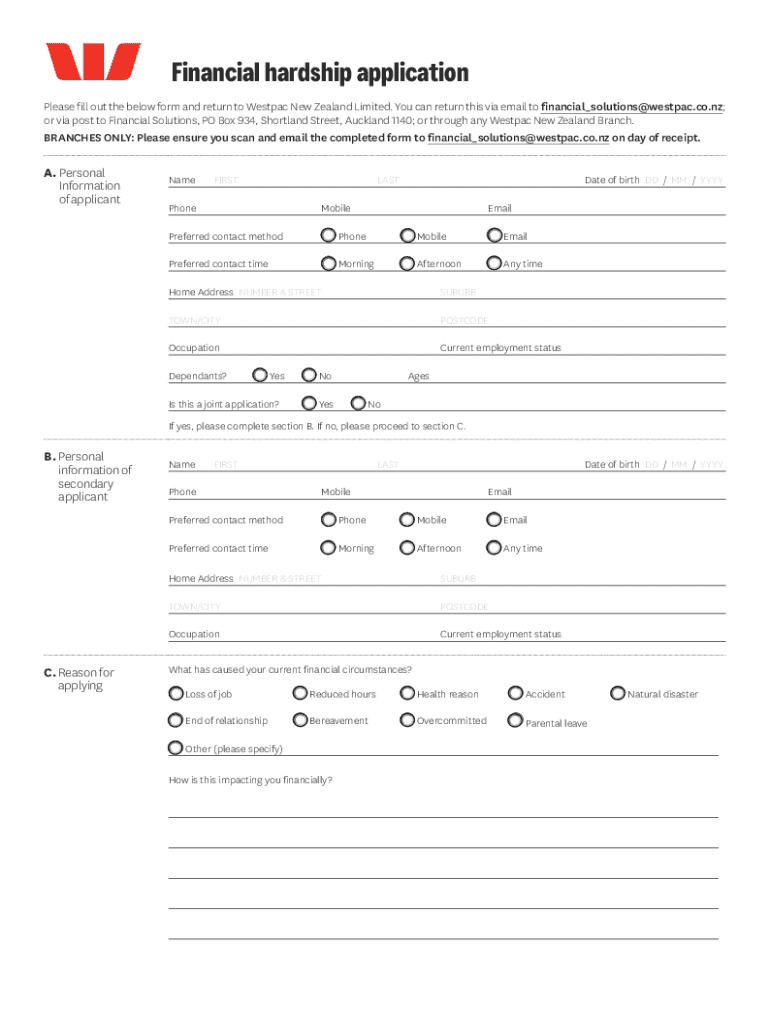
The Financial Hardship Application is a formal request by individuals or businesses experiencing financial difficulties seeking assistance to alleviate their economic burdens. This application is often used to apply for relief measures such as loan modifications, temporary payment reductions, or deferrals on financial obligations. Typically, applicants must provide detailed information regarding their financial circumstances, including income, expenses, and assets, to justify their need for assistance. Various financial institutions and government agencies offer these applications to support individuals or entities in distress.
Obtaining the Financial Hardship Application
To obtain the Financial Hardship Application, applicants typically need to contact the institution or agency offering financial relief directly. This can be done through the institution's official website, customer service, or in-person at a branch location. Some organizations may provide downloadable forms for convenience, while others might require individuals to fill out the application via an online portal. It's important to ensure that the application obtained is current and applicable to the specific relief program being sought.
Where to Look
- Financial Institutions: Banks and credit unions often have dedicated sections on their websites for hardship applications.
- Government Agencies: Agencies such as the IRS or local housing authorities may offer hardship applications for delayed tax payments or rental assistance.
- Non-Profit Organizations: Organizations that provide debt or financial counseling services might also offer forms or guidance on applying for financial hardship assistance.
Steps to Complete the Financial Hardship Application
Completing a Financial Hardship Application involves several steps to ensure that all required information is accurately provided.
-
Gather Necessary Documents: Collect documentation such as recent pay stubs, tax returns, bank statements, and any proof of changes in financial circumstances (e.g., job loss, medical expenses).
-
Fill Out Personal Information: Provide personal details, including your name, address, and contact information, followed by any secondary applicants.
-
Detail Financial Circumstances: List all income sources, monthly expenses, and any existing debts or liabilities.
-
Provide Consent: Many applications require consent for credit checks and use of personal data, aligned with the issuing organization's privacy policy.
-
Review and Submit: Carefully review the application for accuracy and completeness before submission. Failure to provide comprehensive details may result in delays or rejection.
Importance of a Financial Hardship Application
Submitting a Financial Hardship Application can offer various benefits, such as access to reduced interest rates, deferred payments, or extended terms on financial obligations. This application demonstrates to creditors that the applicant is proactively seeking manageable solutions and is committed to fulfilling their obligations within their capacity. Furthermore, it may also provide peace of mind and temporary financial relief during challenging times.
Benefits Include
- Loan Modifications: Adjustments to loan terms to make repayments more affordable.
- Deferred Payments: Temporary suspension of payments without penalties.
- Waived Fees: Removal of late fees or penalties during hardship periods.
Typical Users of the Financial Hardship Application
The Financial Hardship Application is typically used by individuals, families, or businesses experiencing a significant decline in income or unexpected expenses. Common scenarios include job loss, medical emergencies, natural disasters, or economic downturns. Businesses undergoing reduced revenue may also apply to re-negotiate the terms of operational loans or leases.
Typical Users Include
- Individuals: Experiencing pay cuts, job loss, or unexpected expenses.
- Businesses: Facing reduced sales, increased costs, or disaster impacts.
- Students: Needing assistance with tuition or loan repayment adjustments.
Required Documents for the Financial Hardship Application
Submitting a successful Financial Hardship Application requires supporting documentation to verify claims. Providing thorough and accurate documentation can expedite the approval process.
Essential Documents
- Income Verification: Payslips, tax returns, or unemployment documentation.
- Expense Records: Monthly utilities, rent, or mortgage payment statements.
- Asset Details: Bank statements, property deeds, or investment statements.
- Proof of Hardship: Documentation of medical bills, insurance claims, or layoff notices.
Form Submission Methods
Depending on the issuing organization’s guidelines, the Financial Hardship Application can be submitted through various methods, each with its own advantages.
Submission Options
- Online Portals: Immediate submission with the option for electronic document uploads.
- Mail: Traditional paper submission; tracking is recommended for security.
- In-Person: Direct handover to institutional representatives for acknowledged receipt.
Legal Use and Compliance of the Financial Hardship Application
Complying with the legal requirements when submitting a Financial Hardship Application is crucial for its acceptance and effective processing.
Legal Considerations
- Truthful Reporting: Legal obligations require applicants to provide accurate information.
- Consent and Privacy: Compliance with privacy policies and consent for credit checks.
- Adherence to Deadlines: Timely submission is critical to avoid penalties or missed benefits.
Understanding and addressing these aspects ensure a correctly completed form, increasing the likelihood of approval and appropriate relief measures.