01. Edit your form online
Type text, add images, blackout confidential details, add comments, highlights and more.

Type text, add images, blackout confidential details, add comments, highlights and more.

Draw your signature, type it, upload its image, or use your mobile device as a signature pad.

Send it via email, link, or fax. You can also download it, export it or print it out.
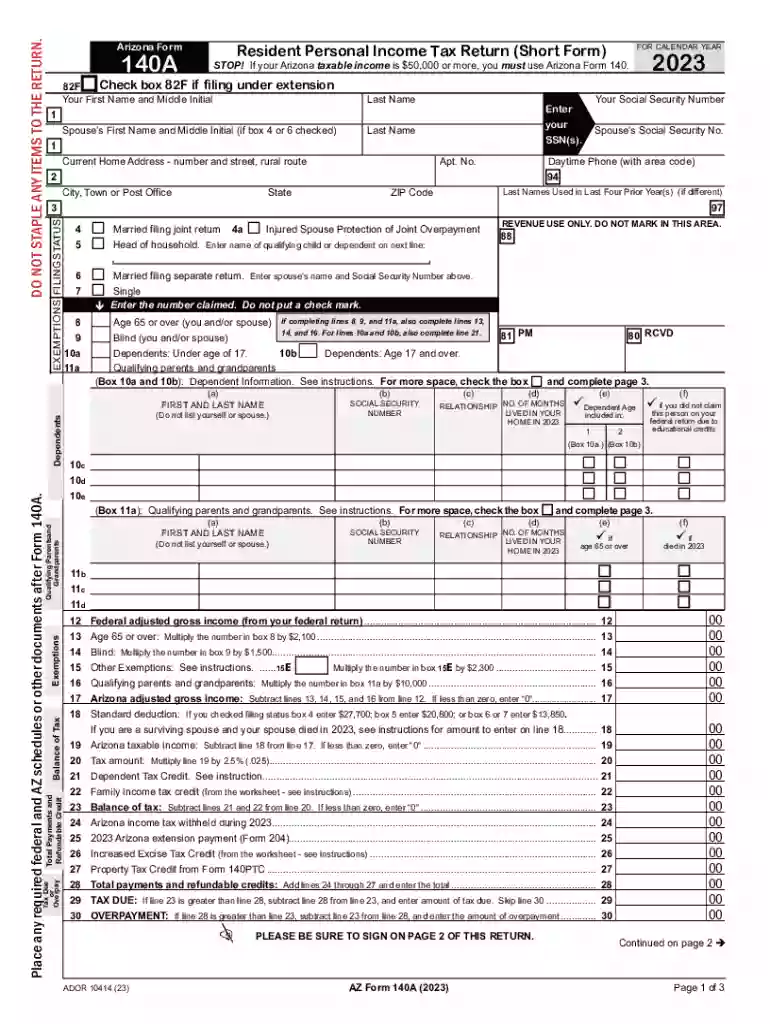
Arizona Form 140 is a crucial document for residents with a taxable income of $50,000 or more. This particular tax-form is designated for those needing a full personal income tax return. It allows taxpayers to declare their income, exemptions, and any applicable deductions comprehensively. The form's core purpose is to provide a structured format for residents to accurately calculate their tax liabilities or potential refunds for the tax year. Understanding its importance in the Arizona tax filing process is essential for compliance.
Completing Arizona Form 140 requires a detailed approach to ensure accuracy. Taxpayers must declare their total income, personal exemptions, and allowable tax deductions. Important sections include:
Arizona Form 140 is essential for those with $50,000 or more in taxable income to meet state tax obligations accurately. It ensures proper reporting of all financial activity and aids in claiming eligible deductions. The form helps in avoiding errors that could lead to penalties or audits and ensures compliance with state tax laws. Moreover, it provides a structured overview for understanding your financial health in the context of state taxation.
Arizona has unique state-specific tax laws that govern the use and submission of Form 140:
To properly complete Form 140, include all supporting documentation:
For Arizona Form 140, timely submission aligns with important deadlines:
Failure to comply with Arizona Form 140 requirements may result in:
By following these guidelines, Arizona residents can confidently manage their state income tax obligations with clarity and precision.
We've got more versions of the If your Arizona taxable income is $50,000 or more, you must use Arizona Form 140 form. Select the right If your Arizona taxable income is $50,000 or more, you must use Arizona Form 140 version from the list and start editing it straight away!
At DocHub, your data security is our priority. We follow HIPAA, SOC2, GDPR, and other standards, so you can work on your documents with confidence.