






Definition & Meaning
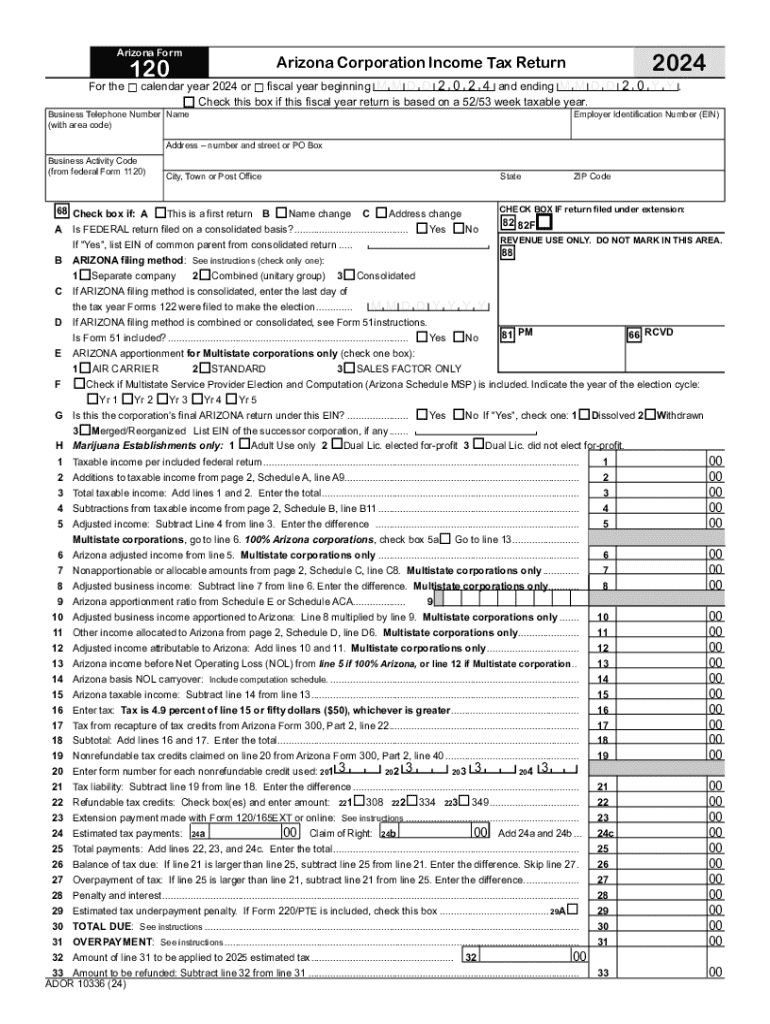
Arizona Form 120 is the official tax document used by corporations to report their income, deductions, and tax liabilities to the Arizona Department of Revenue. It serves as the state-level equivalent of the federal corporate income tax return and includes sections essential for determining a corporation's taxable income. This form is crucial for ensuring compliance with state tax laws, offering a structured way to report financial information, which includes business details, income adjustments, and tax credits.
Steps to Complete the Arizona Form 120
Completing Arizona Form 120 requires attention to detail and a methodical approach. Here’s a step-by-step guide:
- Gather Necessary Information: This includes financial statements, federal income tax returns, and any documentation related to deductions and credits claimed.
- Business Identification: Fill out sections relating to your business’s legal name, address, and EIN.
- Calculate Income & Adjustments: Report gross income and make necessary adjustments to reflect Arizona-specific rules.
- Determine Apportionment Ratios: If operating in multiple states, compute the income subject to Arizona tax using the apportionment formula.
- Tax Credits and Payments: Identify and apply eligible tax credits, and include any estimated payments made during the year.
- Review and Sign: Ensure all information is accurate before signing the form. Misreporting can lead to penalties.
Why Use Arizona Form 120
Corporations required to file state taxes need Arizona Form 120 to remain compliant with Arizona tax regulations. This form allows corporations to:
- Accurately report their taxable income and assess their tax liability.
- Claim any entitlements to deductions and tax credits.
- Ensure compliance with Arizona's corporate tax laws to avoid penalties and legal issues.
Important Terms Related to Arizona Form 120
Understanding terminology is essential for completing Arizona Form 120:
- Taxable Income: The amount of income subject to state taxes after adjustments and deductions.
- Apportionment: The method of determining the portion of income attributable to Arizona for tax purposes.
- Deductions: Allowable subtractions from gross income as per state taxable regulations.
Filing Deadlines / Important Dates
Timeliness is crucial for filing Arizona Form 120. Corporations must submit this form by the 15th day of the fourth month following the close of their taxable year (e.g., April 15 for calendar-year filers). Extensions are permissible but require appropriate requests, often necessitating documentation provided beforehand to support the extension’s validity.
Required Documents
Various documents aid in filling out Arizona Form 120:
- Federal Tax Return: The starting reference for state filings.
- Income Statements: Essential for assessing gross receipts and deductions.
- Detailed Payroll Records: For businesses claiming deductions based on employee costs and benefits.
- Previous Year’s Filings: Useful for verifying consistency and accuracy in current submissions.
Penalties for Non-Compliance
Failure to submit or late submission of Arizona Form 120 can result in financial and legal ramifications:
- Late Filing Penalties: Typically a percentage of the tax due.
- Interest on Unpaid Taxes: Accruing daily starting from the due date until payment is made.
- Potential Audits: Increasing scrutiny from the Arizona Department of Revenue.
Digital vs. Paper Version
Corporations have options when choosing how to file:
- Digital Filing: Preferred due to efficiency, immediate confirmation, and reduced error rate. Many tax software options, like TurboTax or QuickBooks, facilitate e-filing.
- Paper Filing: Traditional but slower and prone to mistakes. Ensure all sections are legible and complete to avoid delays.
Software Compatibility
Using software to complete Arizona Form 120 can streamline the filing process:
- TurboTax and QuickBooks: These platforms offer tailored solutions for Arizona tax, aiding in calculations, ensuring legal compliance, and prompt submission.
- Other Accounting Software: Often customizable for specific needs, particularly helpful for multi-state operations needing detailed apportionment calculations.
Business Entity Types (LLC, Corp, Partnership)
Not all businesses file Arizona Form 120. Typically, it is for corporations; however, understanding its applicability is essential:
- Corporations: Required to file unless exempt.
- LLCs and Partnerships: Generally do not file this form but may be impacted when taxed as corporations under specific conditions.