







Understanding the Church Benevolence Request Form
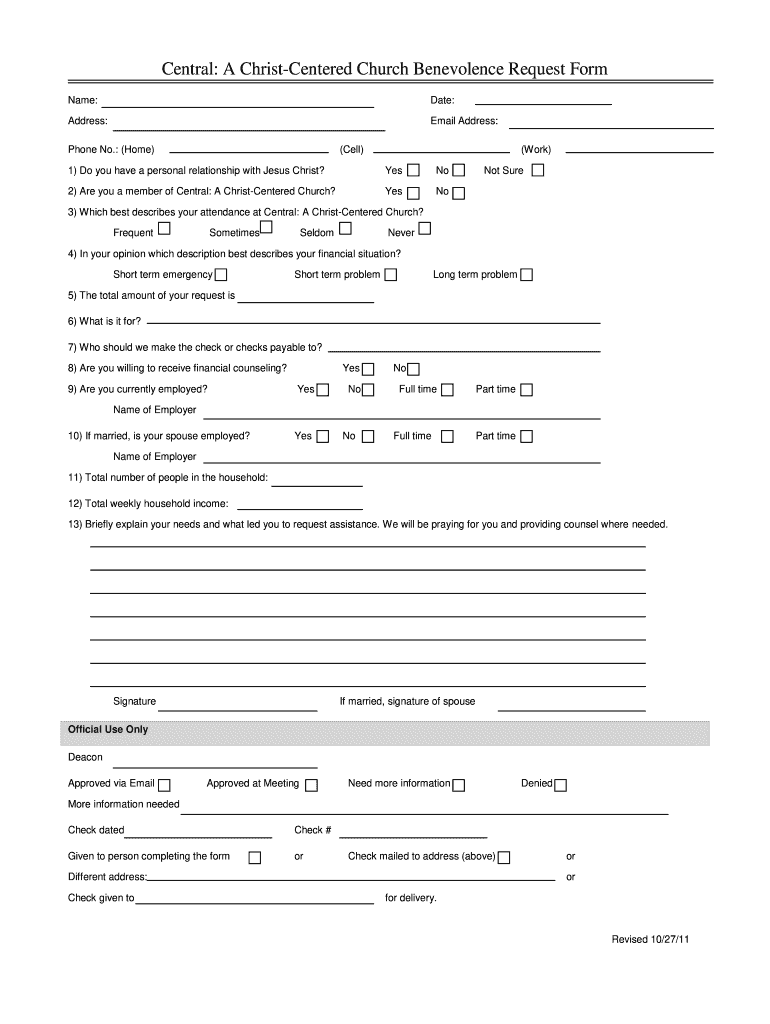
The church benevolence request form is a structured document utilized by congregations to facilitate the application process for financial assistance aimed at members in need. It is essential for enabling churches to provide timely support to those facing temporary hardships. The form outlines specific eligibility requirements and guides applicants through the necessary steps to submit their requests for aid.
How to Use the Church Benevolence Request Form
The church benevolence request form is straightforward, ensuring that applicants can easily articulate their needs. Here are the basic steps for using this form effectively:
- Obtain the Form: Locate the form from your church office or website. Many churches offer the form online for easy access.
- Complete the Form: Provide accurate and detailed information, including personal details, reasons for the request, and any supporting documentation.
- Submit the Form: Depending on the church's protocol, submit your completed form either online, via email, or in person.
- Await a Decision: After submission, the form will be reviewed by designated church leaders or committees, typically involving a follow-up discussion if needed.
Obtaining the Church Benevolence Request Form
To obtain the church benevolence request form, applicants should follow these suggestions:
- Check the Church Website: Many congregations provide downloadable forms on their official websites.
- Visit the Church Office: Request a physical copy directly from church staff during office hours.
- Ask for Assistance: If uncertain, inquiring with a pastor or church member can guide you on how to access the form.
Steps to Complete the Church Benevolence Request Form
Completing the church benevolence request form involves several key components. Focus on the following points to ensure thorough and clear submissions:
- Applicant Information: Fill in personal details such as name, address, and contact information.
- Reason for Request: Clearly explain the financial need, specifying circumstances influencing the request. Be concise yet descriptive.
- Financial Information: Include current income sources, expenses, and any other financial obligations to support your case.
- Documentation: Attach necessary supporting documents that could validate your situation, such as bills or proof of income.
It is crucial to fully disclose information accurately, as this aids the church in making informed decisions while providing assistance.
Important Terms Related to the Church Benevolence Request Form
Understanding some key terms related to the church benevolence request form can help applicants navigate the process more effectively:
- Benevolence: Financial assistance provided by the church to individuals in need, typically for short-term crises.
- Eligibility Criteria: Conditions that must be met to qualify for benevolent assistance, often including membership in the church and demonstrating financial need.
- Application Process: The steps and procedures a person follows to apply for assistance, from form submission to review and decision.
Familiarity with these terms ensures clarity and preparedness throughout the application process.
Key Elements of the Church Benevolence Request Form
The main components of a typical church benevolence request form include:
- Personal Information Section: Basic details about the applicant, including identification and contact information.
- Assistance Request Section: Space to describe the financial hardship in detail, allowing for context and depth.
- Budgetary Information Section: A breakdown of income and requisite expenses to support the request.
- Signature Line: A consent area for the applicant, often indicating that the information provided is accurate and truthful.
Each of these elements serves a vital role in enabling church leaders to evaluate requests thoroughly and fairly.
Legal Use of the Church Benevolence Request Form
The church benevolence request form is bound by both ethical standards and legal guidelines. Proper use may involve:
- Confidentiality: Maintaining the privacy of the applicant's information throughout the approval process and beyond.
- Documentation: Keeping records of requests in compliance with church policies and potential IRS guidelines for charitable giving.
- Compliance with Guidelines: Adhering to church policies that outline procedures for granting assistance, ensuring fairness and consistency in aid distribution.
Understanding these legal implications fosters trust between congregation members and church officials while maintaining compliance with applicable regulations.
Examples of Using the Church Benevolence Request Form
Practical examples illustrate the versatility of the church benevolence request form:
- Emergency Medical Expenses: An individual may request assistance to cover unexpected health-related bills, exemplifying the form's use in crisis situations.
- Utility Bill Support: A family struggling to pay their monthly electric bill may outline their financial hardships and request temporary assistance through the form.
- Job Loss Relief: An applicant who recently lost their job can indicate their circumstances and provide appropriate documentation, highlighting the need for financial support.
These examples showcase real-life scenarios where the church benevolence request form can play a crucial role in offering immediate relief and support to community members in need.
Application Process & Approval Time for the Church Benevolence Request Form
The application process for the church benevolence request form involves several phases:
- Submission: The applicant submits the completed form along with required documentation.
- Initial Review: Designated church staff or a benevolence committee reviews the request for completeness and eligibility.
- Evaluation: A follow-up meeting may be scheduled to discuss the request further, allowing church leaders to assess the applicant's situation comprehensively.
- Decision: The church will determine approval or denial of the request based on existing policies and guidelines. The response timeline may vary based on the church's internal process, typically ranging from one week to one month after submission.
By adhering to this structured approach, churches can ensure fairness and transparency in addressing benevolence requests and supporting their congregations effectively.




