






Definition and Purpose of the Chemistry 360 Syllabus
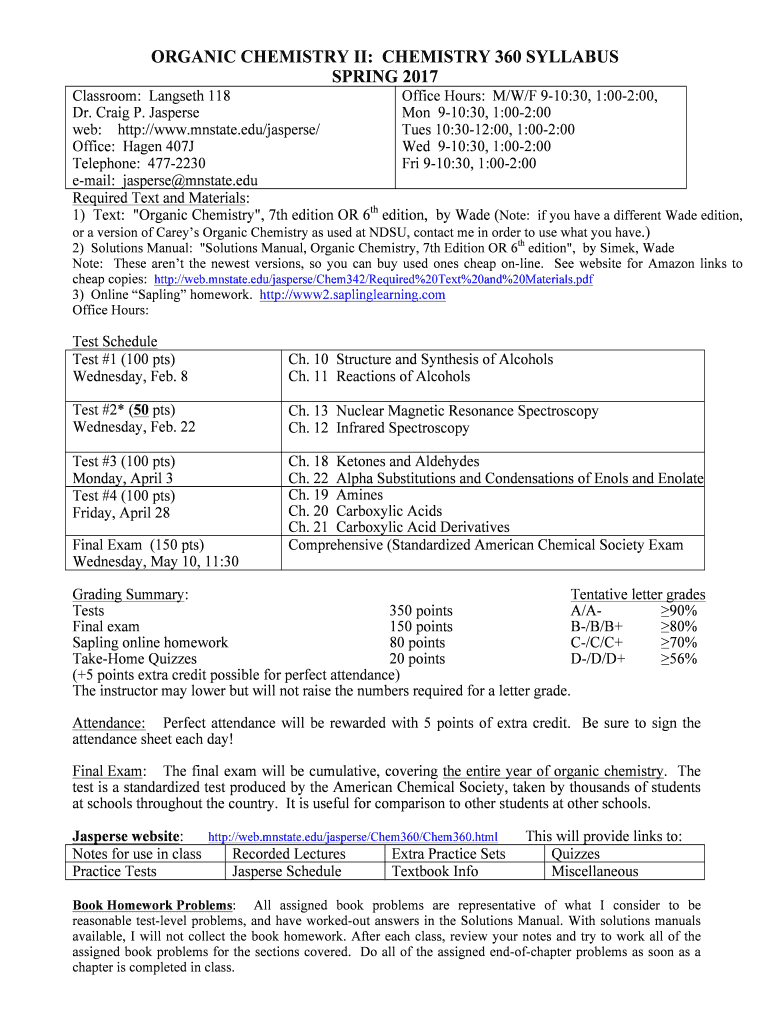
The Organic Chemistry II: Chemistry 360 Syllabus serves as a comprehensive academic guide for students enrolled in the course, typically offered by institutions like Minnesota State University Moorhead. It details the curriculum, covering the study of organic compounds such as oxygen and nitrogen-containing molecules, and outlines key objectives like reaction mechanisms and synthesis processes.
Key Components of the Syllabus
- Course Structure: Includes lectures, laboratory sessions, and evaluations such as quizzes and exams.
- Learning Objectives: Focus on understanding organic compound structures and reactions.
- Assessment Criteria: Grading based on tests, assignments, lab performance, and participation.
How to Access the Chemistry 360 Syllabus
Students can obtain the Chemistry 360 Syllabus through several avenues:
- Online Portals: Access via the university's official website or student management systems.
- Direct Communication: Contact course instructors or the academic department for physical or digital copies.
- Campus Resources: Available at campus libraries or academic help centers.
Steps to Complete the Chemistry 360 Course
Successfully navigating the Organic Chemistry II course involves understanding and adhering to its syllabus:
- Familiarize with Requirements: Carefully read the syllabus at the start of the semester.
- Attend All Sessions: Regularly participate in lectures and labs for hands-on learning.
- Stay Informed on Deadlines: Keep track of assignments, quizzes, and exam dates.
- Seek Clarifications: Engage in consultations during office hours for specific queries or difficulties.
- Complete Required Readings: Ensure all textbooks and materials are completed as outlined in the syllabus.
Audience and Users of the Chemistry 360 Syllabus
The primary users of the Chemistry 360 Syllabus are:
- Undergraduate Students: Those pursuing a degree in chemistry or related fields.
- Instructors and Teaching Assistants: Utilized as a framework for delivering course content and assessing student progress.
- Academic Advisors: Help guide students in course selection and understanding academic demands.
Essential Terms in the Chemistry 360 Context
Clarity in terminology helps students navigate the course:
- Synthesis: The process of combining small molecules to form a more complex structure.
- Reaction Mechanisms: Step-by-step sequence of reactions by which an overall chemical change occurs.
- Hydrocarbons: Compounds composed entirely of hydrogen and carbon, fundamental in organic chemistry.
Legal and Institutional Compliance for the Chemistry 360 Syllabus
Adhering to the outlined guidelines within the syllabus ensures both academic integrity and institutional compliance, notably:
- Academic Honesty: Upholds the integrity of student work, prohibiting plagiarism and cheating.
- Accessibility: Supports students with disabilities through tailored assistance and modifications.
- Grading Policies: Follows institutional standards for impartial and fair assessment.
Examples of Application for the Chemistry 360 Syllabus
Practical uses of the syllabus extend beyond mere course structure:
- Study Guide: Serves as a reference to prepare for exams and assessments.
- Scheduling: Helps students organize and plan semester activities around major academic commitments.
- Resource Allocation: Assists faculty in distributing teaching materials and support resources effectively.
Digital versus Printed Versions of the Syllabus
Different formats of the Chemistry 360 Syllabus provide distinct advantages:
- Digital Format: Allows for easy access, updates, and integration with digital devices like laptops or tablets.
- Printed Format: Provides a tangible and unchanging reference that some students find easier to interact with during studies or consultations.
Software Compatibility for Syllabus Access
For students using digital resources, compatibility is crucial:
- Learning Management Systems: Often compatible with platforms like Moodle or Blackboard.
- Document Editors: Editable formats are supported by standard office software such as Microsoft Word or Google Docs.