






Definition & Meaning
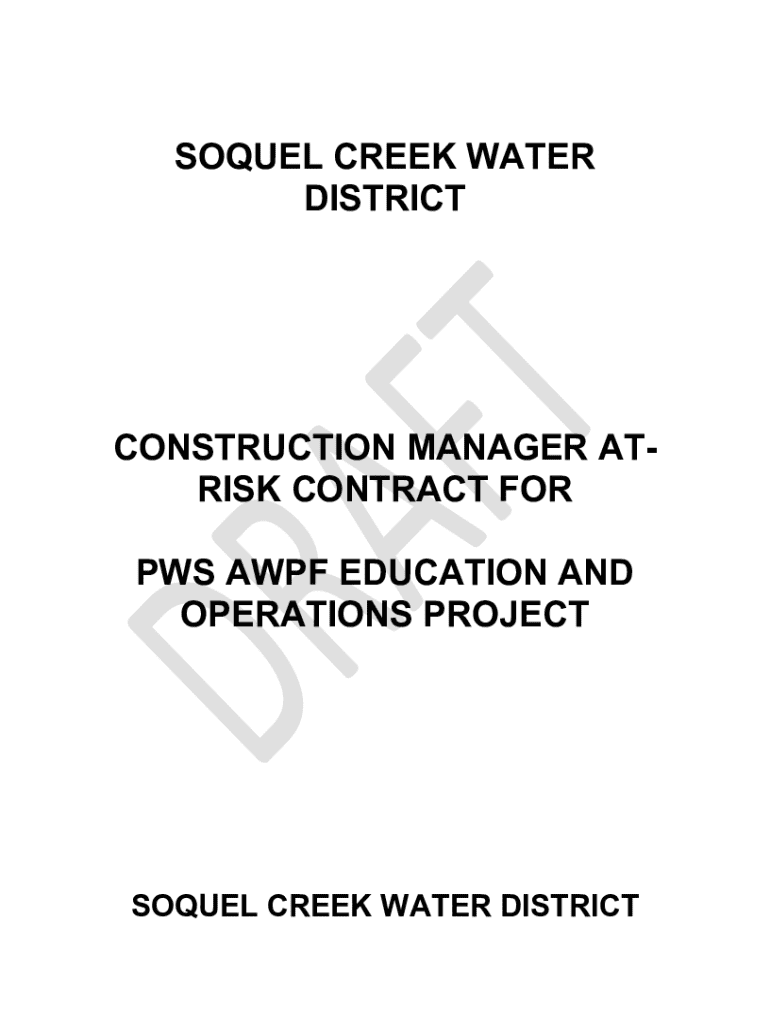
The Construction Manager At-Risk (CMAR) template form contract is a structured agreement used primarily in the construction industry. It establishes a formal relationship between a project owner, such as a water district, and a construction manager at-risk. This contract outlines the manager's responsibilities during both preconstruction and construction phases. The fundamental purpose of the CMAR contract is to ensure that the project is completed on time and within the agreed budget while minimizing risks. The construction manager agrees to deliver the project at a guaranteed maximum price, thereby assuming the risks of project overruns.
Key Elements of the CMAR Template Form Contract
Responsibilities and Roles
- Preconstruction Phase: The contract details the planning, budgeting, and scheduling tasks to be carried out before construction begins. This includes collaboration with architects and engineers to minimize potential conflicts during the construction phase.
- Construction Phase: Responsibilities such as project management, site supervision, procurement of materials, and coordination with subcontractors are clearly defined.
Compliance and Legal Obligations
- Legal Compliance: All parties involved must adhere to federal, state, and local regulations, including environmental and safety standards.
- Change Orders: The process for handling modifications to the project's scope or design, which can affect cost or schedule, is outlined.
Financial Provisions
- Cost Proposals: The construction manager must provide detailed cost estimates, which are reviewed and approved by the project owner.
- Payment Terms: Milestone-based payment schedules ensure that compensation aligns with project progress.
Legal Use of the CMAR Template Form Contract
The CMAR template form contract is a legally binding document. It complies with the relevant laws and regulations set by the construction industry in the United States, including the ESIGN Act, which governs electronic signatures. Legal provisions in the contract address risk management, performance bonds, insurance requirements, as well as dispute resolution mechanisms. Arbitration clauses may be present to handle disagreements amicably without resorting to litigation.
Steps to Complete the CMAR Template Form Contract
-
Gather Necessary Information:
- Identify and document the project scope, timeline, and budget.
- Gather information about the project owner, CMAR, and other stakeholders.
-
Define Responsibilities:
- Clearly outline tasks and responsibilities during both preconstruction and construction phases.
- Ensure alignment with architects, engineers, and subcontractors.
-
Detail Financial Estimates:
- Compile comprehensive cost proposals and establish payment terms.
- Include provisions for change orders and unexpected expenses.
-
Review Legal Obligations:
- Ensure the contract includes necessary compliance and safety standards.
- Establish terms for performance bonds and insurance coverage.
-
Sign and Store Securely:
- Obtain signatures from all relevant parties and store the contract securely, using platforms like DocHub to ensure data protection and compliance.
Important Terms Related to CMAR Template Form Contract
- Guaranteed Maximum Price (GMP): A financial cap that the CMAR agrees not to exceed.
- Preconstruction Services: Preparatory activities to improve cost estimation and planning.
- Substantial Completion: A stage where the project is sufficiently complete to be used for its intended purpose.
- Performance Bond: A surety bond issued by an insurance company to guarantee the completion of the project.
Examples of Using the CMAR Template Form Contract
Case Study: Water District Project
In the Soquel Creek Water District project, the CMAR template form contract facilitated collaboration between the district and the construction manager. By clearly defining roles and responsibilities, the project team could effectively manage resources and adhere to the GMP. This structured approach minimized risks and enhanced accountability across the board.
Scenario: Educational Institution Expansion
An educational institution expanding its campus might employ a CMAR contract to manage complex phases of construction while maintaining budgetary constraints. The CMAR's involvement during preconstruction ensures that project goals align with academic calendars and institutional objectives.
State-Specific Rules for the CMAR Template Form Contract
While the CMAR contract generally adheres to U.S. federal laws, individual states may impose additional requirements or modifications. For example, California may have specific environmental compliance mandates, whereas Texas might focus more on safety regulations. Understanding these regional differences is crucial for the successful execution of a CMAR contract.
Software Compatibility (DocHub, QuickBooks, etc.)
Digital Integration
Platforms like DocHub enhance the functionality of the CMAR template form contract by providing tools for electronic completion, signature capture, and secure storage. QuickBooks can be used in conjunction with DocHub to manage financial aspects of the contract seamlessly. These integrations streamline processes, reduce administrative overhead, and ensure accuracy in financial reporting.
File Format Considerations
The CMAR contract can be managed as a PDF or DOC file, allowing for compatibility with various software solutions. Whether working on desktop or mobile, these digital formats ensure efficient document handling and accessibility across different platforms.
Who Typically Uses the CMAR Template Form Contract
The primary users of the CMAR template form contract are project owners in the construction industry. This includes municipal bodies, educational institutions, and private developers. Construction managers, subcontractors, and architects also engage with these contracts to align on project objectives and deliverables. The contract's structured approach is especially beneficial in large-scale projects where coordination and risk management are vital for success.