
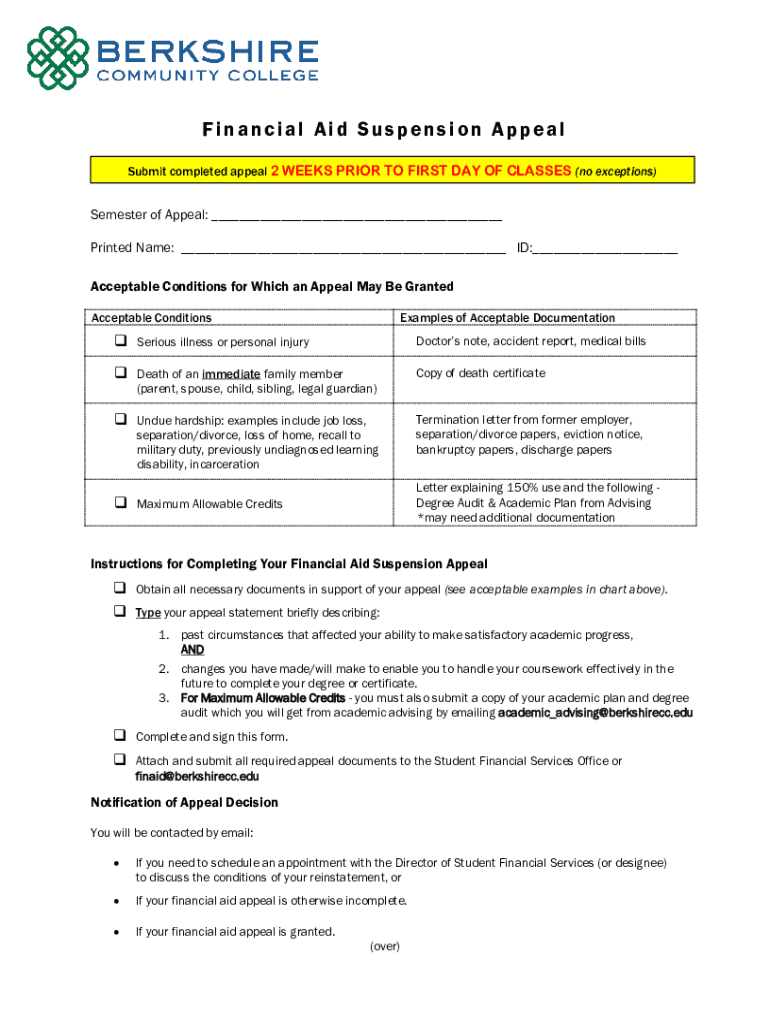







Definition & Meaning
The "sample letter of extenuating circumstances for financial aid" is a template guide used by students to communicate unforeseen situations affecting their ability to meet financial aid requirements. These situations can include medical issues, family emergencies, or other personal hardships. Writing this letter is a formal process to request consideration from a financial aid office for special circumstances that might affect a student's financial need or academic progress.
Examples of Extenuating Circumstances
- Medical Emergencies: Serious health issues requiring hospitalization or prolonged treatment.
- Family Emergencies: Death or severe illness of a close family member impacting financial stability or emotional capacity.
- Natural Disasters: Events like hurricanes or earthquakes that physically displace families or deplete resources.
- Loss of Income: Sudden unemployment or decrease in familial financial support.
Key Elements of the Sample Letter
A comprehensive letter of extenuating circumstances should include:
- Introduction: A clear statement of purpose, indicating the reason for the letter.
- Description of Circumstances: Detailed account of the events that led to the current situation. Include specifics such as dates, locations, and individuals involved when applicable.
- Impact on Academic and Financial Situation: Explain how the circumstances have affected your school performance or financial status.
- Supporting Documentation: List of attached documents such as medical records or termination letters that corroborate the claims.
- Conclusion and Request for Consideration: A polite closing that reinforces the request for a reassessment of the financial aid award or requirements.
Supporting Documentation
- Hospital bills or doctor's notes for medical issues.
- Death certificate or obituary for family emergencies.
- Insurance claims or police reports for natural disasters.
- Employment termination letter for loss of income.
Steps to Complete the Sample Letter
- Identify the Circumstance: Clearly understand the event that has impacted your financial or academic status.
- Gather Evidence: Collect all necessary documents that validate your claims.
- Draft the Letter: Begin with personal information, followed by a detailed explanation of circumstances, impact, and a request for aid reconsideration.
- Review and Edit: Ensure clarity, coherence, and accuracy. Check for grammatical errors and embellishments.
- Submit: Send the letter to the financial aid office, following their preferred submission method.
Who Typically Uses the Sample Letter
Primarily, students who face unexpected hardships that might influence their eligibility for continuing financial aid use this letter. It is also used by students who are appealing for additional aid due to newfound financial burdens.


Eligibility Criteria for Using the Letter
- Be currently enrolled in an educational institution with a financial aid package.
- Have verifiable extenuating circumstances impacting financial situation or academic performance.
- Be able to provide appropriate documentation.

How to Obtain the Sample Letter
Sample letters can typically be accessed through:
- School Websites: Many colleges and universities provide templates or guidelines on their financial aid page.
- Financial Aid Offices: Visit or contact the office directly to request examples or instructions.
- Online Educational Resources: Platforms like DocHub can offer templates and editing tools for crafting your letter.
Submission Methods
- Online: Through a school's financial aid portal or email.
- Mail: Sending a hard copy to the financial aid office.
- In-Person: Hand-delivering to ensure personal acknowledgment and possible immediate feedback.
Important Terms Related to the Sample Letter
- Satisfactory Academic Progress (SAP): Standards set by the institution that students must meet to remain eligible for financial aid.
- Verification: Process where the financial aid office checks for accuracy of information provided.
Legal Use and Considerations
Writing a letter of extenuating circumstances involves no specific legal guidelines, but it does require honesty and accuracy. All claims should be truthful, as falsifying information can lead to severe consequences, including loss of aid or other disciplinary actions. Always consult the guidelines provided by your institution to ensure compliance with their requirements.
This material, following the structure and requirements provided, delivers on the need for a comprehensive coverage of each block related to crafting a "sample letter of extenuating circumstances for financial aid."




