






Definition and Importance of Acceptance of Office Guardianships and Conservatorships
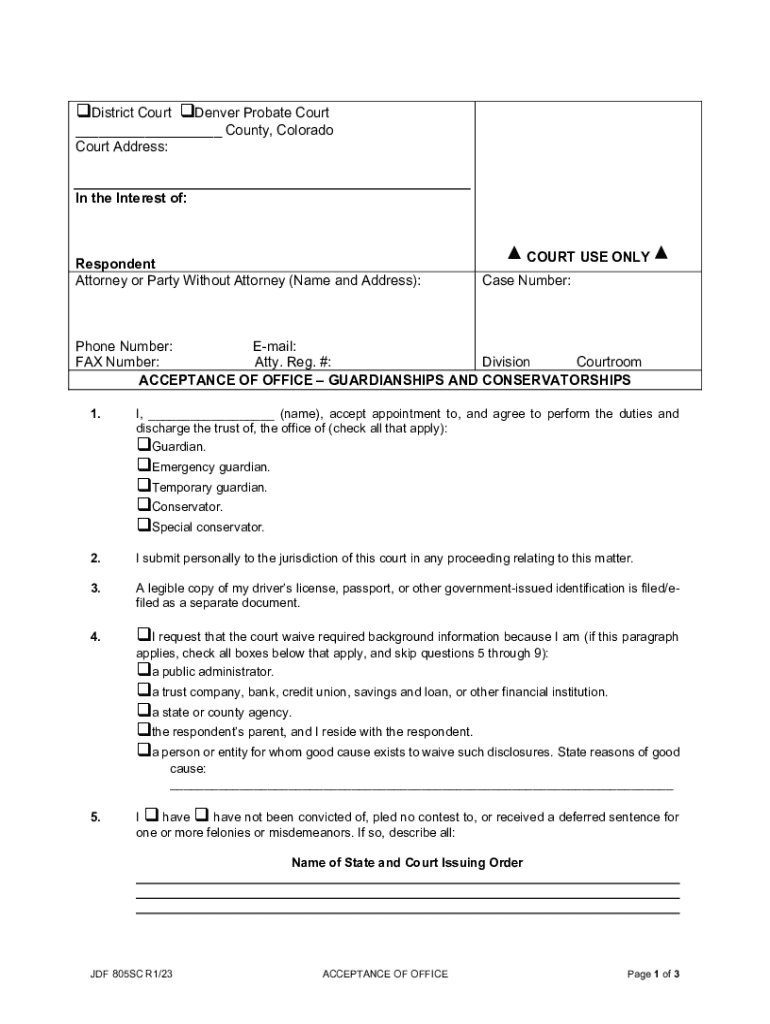
The "Acceptance of Office Guardianships and Conservatorships" form is a critical legal document used in the United States, specifically designed for individuals appointed as guardians or conservators by a probate court, such as in the Denver Probate Court, Colorado. It serves to officially recognize and confirm the acceptance of duties by the appointed party. The form outlines the responsibilities, obligations, and requirements that the appointee must acknowledge and fulfill.
Key Responsibilities and Legal Obligations
- Acknowledgement of the court's jurisdiction over the appointed individual.
- Verification of identification, ensuring accurate and legal recognition.
- Consent to background checks to ascertain the appointee's suitability.
- Reporting obligations, where disclosure of any criminal history or civil judgments is mandatory.
Understanding the depth and breadth of these responsibilities is essential for legal compliance and effective fulfillment of the guardian or conservator role.
Steps to Complete the Acceptance of Office Guardianships and Conservatorships
Completing this form involves a structured process designed to ensure thorough preparation and accurate information submission. The following sequence provides a clear guide:
- Review the Form Thoroughly: Understand all sections, terms, and requirements before beginning.
- Provide Personal Information: Include full name, address, and other personal details.
- Confirm Understanding of Responsibilities: Sign the section acknowledging comprehension of the duties and responsibilities.
- Submit to Background Check: Provide necessary consent and identification for processing background verification.
- Complete the Identification Verification Section: Follow instructions for submitting IDs and other required documents.
- Submit the Form: Depending on the jurisdiction, submit via mail, online, or in-person at the appropriate probate court.
Completing these steps ensures adherence to legal requirements and prepares appointees for their role.
Legal Use and Context of the Acceptance of Office
This form is legally binding and has specific uses within the realm of guardianships and conservatorships. It legally signifies the acceptance of a court's appointment and the responsibilities therein, creating formal accountability for the appointee.
Contextual Applications
- Guardianships: Overseeing personal and healthcare decisions for those unable to do so themselves.
- Conservatorships: Managing financial and estate matters for individuals who cannot manage their own affairs.
Understanding these differing contexts helps recognize the significance of each responsibility and the potential legal implications of non-compliance.
Key Elements of the Form
The form contains several key elements critical for ensuring comprehensive acceptance and understanding:
- Identification Verification: Requires specific proof of identity to avoid fraudulent appointments.
- Consent to Jurisdiction: Legally binds the appointee to the court's authority.
- Disclosure of Personal History: Honest divulgence of past criminal records or civil lawsuits ensures transparency and suitability.
- Acknowledgment of Duties: Formal acknowledgment of the responsibilities and expectations from the guardian or conservator.
Each element plays a pivotal role in maintaining the integrity and legality of the guardianship or conservatorship.
Who Typically Uses This Form
This document is primarily used by individuals appointed by a probate court as guardians or conservators. These appointees can include:
- Family members appointed to oversee the care of a relative.
- Professional guardians or conservators who manage multiple appointments.
- Individuals or organizations acting in a fiduciary capacity.
Recognizing who typically uses this form helps understand the varied roles and responsibilities that guardians and conservators may embody.
State-Specific Rules and Variances
While the general function of the form remains consistent, state-specific rules can influence its use:
- Colorado: Requires personal jurisdiction consent and includes stringent disclosure requirements.
- California: May have different filing methods or additional documentation requirements.
- New York: Could involve varying background check processes and reporting obligations.
Understanding state-specific requirements ensures compliance and proper fulfillment of guardianship and conservator roles.
Important Terms and Legal Language
Familiarity with legal terminology related to the form aids in better comprehension and execution:
- Guardianship: The appointment to make personal decisions on behalf of another.
- Conservatorship: The role of managing financial and estate matters for another individual.
- Probate Court: A specialized court that handles matters like inheritances, guardianships, and conservatorships.
Recognizing these terms clarifies the form's purpose and the legal commitments involved.
Penalties for Non-Compliance
Failure to correctly complete and submit the "Acceptance of Office Guardianships and Conservatorships" form can result in significant penalties, including:
- Legal repercussions, such as fines or dismissal from the role.
- Potential civil liabilities for mismanagement of duties.
- Damage to personal reputation and professional standing.
Being aware of the serious ramifications of non-compliance stresses the importance of accuracy and diligence when handling the form.