01. Edit your form online
Type text, add images, blackout confidential details, add comments, highlights and more.

Type text, add images, blackout confidential details, add comments, highlights and more.

Draw your signature, type it, upload its image, or use your mobile device as a signature pad.

Send it via email, link, or fax. You can also download it, export it or print it out.
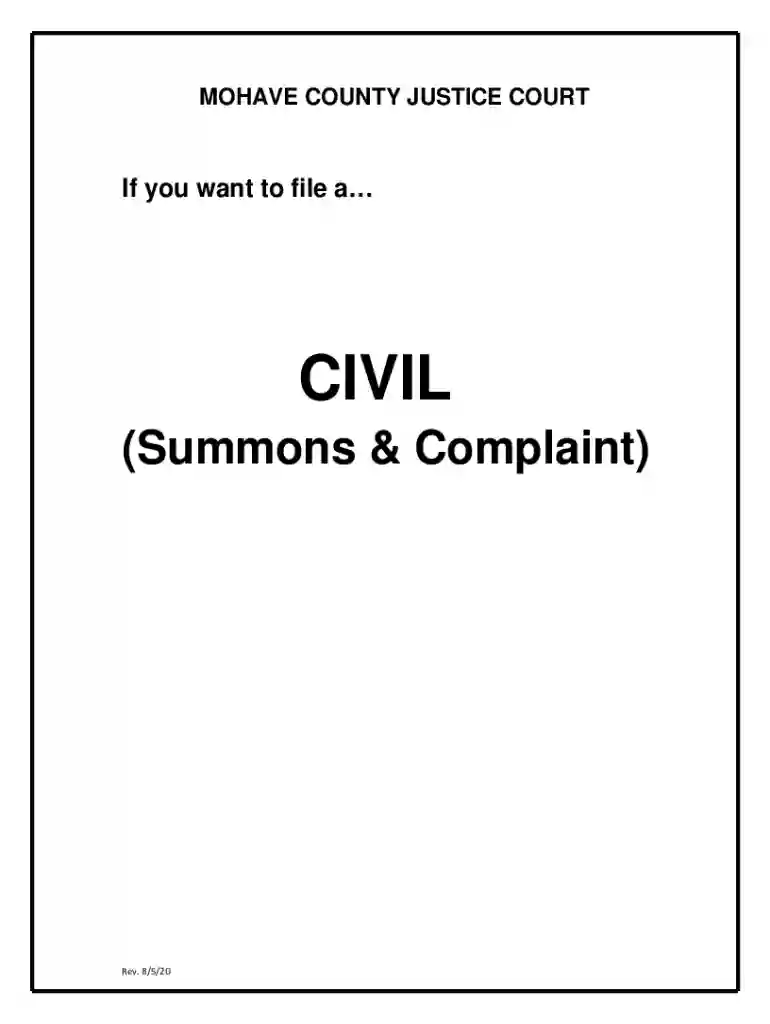
Small claim cases in Arizona involve disputes where individuals can resolve minor legal matters or financial disagreements without requiring extensive legal procedures. These cases are typically handled in justice courts where the jurisdictional limit does not exceed $10,000. The purpose is to provide an accessible and efficient method for plaintiffs and defendants to present their issues without incurring substantial legal fees or requiring formal legal representation.
Prepare Your Complaint: Draft a concise statement of your claim, ensuring it clearly outlines the basis of your complaint and the amount being claimed. It's essential to include any relevant supporting evidence.
Determine the Correct Venue: File your case in the justice court that has jurisdiction over the area where the defendant resides or where the incident occurred.
Complete Necessary Forms: Obtain and fill out the small claim complaint form at the local justice court. Ensure all information is accurate and legible.
Submit Your Form: File your completed form with the appropriate court and pay any required filing fees. This process can often be completed in person or sometimes by mail.
Serve the Defendant: After filing, you must serve the defendant with a copy of the complaint and the court summons. This can be done through a process server or other legal method as permitted by Arizona laws.
Prepare for Court: Gather all pertinent documents, evidence, and any witnesses needed to support your claim in preparation for the court date.
Monetary Limit: The jurisdictional limit for small claims in Arizona is $10,000, meaning cases cannot demand more than this amount.
Simplified Court Procedures: The procedures in small claims are streamlined, designed to be navigable without legal representation.
No Jury Trials: Small claims cases are decided by a judge, eliminating the need for jury deliberations.
Limited Pre-Trial Discovery: Traditional discovery processes are limited, expediting the timeline from filing to resolution.
Arizona has specific rules governing small claim cases. These include regulations about where cases can be filed, the types of cases eligible for small claims, and the enforcement of judgments. Plaintiffs and defendants are advised to familiarize themselves with these to ensure compliance and enhance their case's likelihood of success.
Small claim cases are often utilized by individuals or small business owners seeking to resolve disputes over debts, contract breaches, property damage, or similar issues. These cases attract parties who desire a quick, cost-effective resolution without engaging in prolonged and costly litigation.
Adherence to specific timelines is crucial in small claim cases. Filing deadlines include statute of limitations for initiating a claim and deadlines for responding to complaints. Missing these deadlines can result in a case dismissal or unfavorable default judgment. Plaintiffs should consult local court resources for precise deadlines applicable to their case.
Options for submitting small claim cases in Arizona typically include:
Each court may have different methods, so verifying with the specific venue is advisable for ensuring proper submission.
We've got more versions of the Small Claim Cases and General Information in Arizona form. Select the right Small Claim Cases and General Information in Arizona version from the list and start editing it straight away!
At DocHub, your data security is our priority. We follow HIPAA, SOC2, GDPR, and other standards, so you can work on your documents with confidence.