Key Elements of the Restorative Reflection Sheet docx
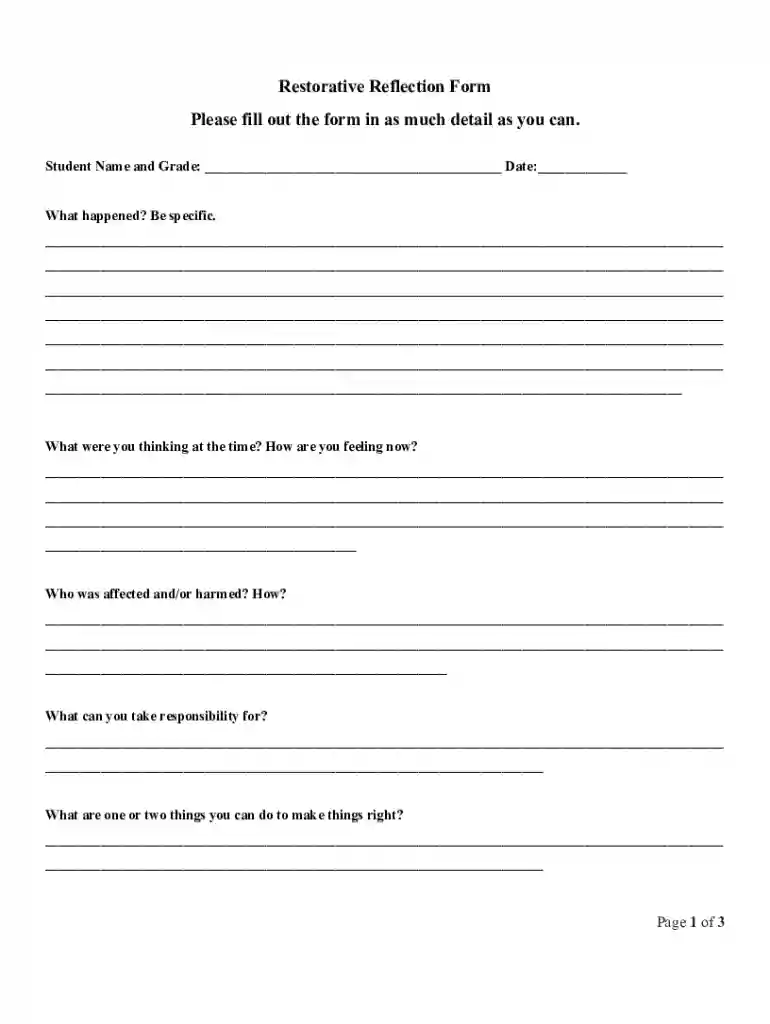
The Restorative Reflection Sheet docx is designed to foster self-reflection and accountability among individuals, particularly students. This form is structured to help users understand the impact of their actions and facilitate a restorative process. The key elements of the form include:
- Incident Description: Users are prompted to detail the specific event or incident that occurred, providing a clear understanding of the situation.
- Impact Assessment: This section encourages users to reflect on how their actions have affected others, promoting empathy and awareness of consequences.
- Responsibility Acknowledgment: Individuals must identify aspects of the incident for which they can take responsibility, fostering a sense of ownership and accountability.
- Action Plan for Amends: The form guides users in creating a plan to make amends, encouraging proactive steps to repair any harm caused.
- Emotional Reflection: Users are asked to consider their feelings during the incident and as they complete the form, promoting emotional awareness and growth.
- Learning Outcomes: This section encourages users to reflect on what they have learned from the situation and how they might apply these insights in the future.
How to Use the Restorative Reflection Sheet docx
Utilizing the Restorative Reflection Sheet docx effectively involves a step-by-step process that guides individuals through introspection and proactive resolution. Here's how to approach it:
- Complete the Incident Description: Start by writing a detailed account of the event from your perspective. Be sure to include specific actions and words exchanged.
- Reflect on the Impact: Consider how your actions have affected others. Identify specific individuals impacted and describe the nature of this impact.
- Acknowledge Responsibility: Honestly assess which parts of the incident you are responsible for. This step is crucial for taking ownership and committing to change.
- Develop an Action Plan: Think about ways to address the harm caused. List actionable steps that can help mend relationships or rectify the situation.
- Explore Emotional Responses: Describe your emotions during the incident and while filling out the sheet. Note any changes in feelings as you work through the process.
- Summarize Learning Outcomes: Conclude with reflections on lessons learned and new perspectives gained, enhancing your personal growth.
Steps to Complete the Restorative Reflection Sheet docx
Filling out the Restorative Reflection Sheet docx involves several focused steps aimed at thorough reflection and accountability:
- Review the Form Structure: Familiarize yourself with each section of the form to understand the information required.
- Gather Relevant Information: Reflect on the incident and gather your thoughts. This may involve speaking with others involved or reviewing notes if available.
- Fill Out Each Section: Address each prompt truthfully and in detail. Ensure your responses are comprehensive and reflect genuine introspection.
- Revise for Clarity and Depth: Review your responses to ensure they are clear and detailed. Revise any parts that lack depth or specificity.
- Submit for Review (if applicable): In educational or organizational contexts, submit the completed form to the relevant authority or facilitator for feedback.
- Follow Up on Action Plan: Implement the steps outlined in your action plan and monitor the outcomes, making adjustments as necessary.
Who Typically Uses the Restorative Reflection Sheet docx
The Restorative Reflection Sheet docx is predominantly used by:

- Students: In educational settings, students use the form to reflect on behavior and its impact on peers, promoting a responsible school environment.
- Educators: Teachers and administrators might implement this form as part of a restorative justice program or disciplinary process.
- Counselors: In therapy or counseling sessions, the form can be used as a tool for clients to reflect on behavior and work through conflict.
- Organizations: Teams and groups within organizations may use the form to address conflicts or transgressions, fostering a culture of accountability.
Importance of the Restorative Reflection Sheet docx
The Restorative Reflection Sheet docx plays a critical role in encouraging personal responsibility and community healing through:
- Facilitating Dialogue: It opens up lines of communication for those involved in an incident to express their perspectives.
- Promoting Empathy: By understanding the impact of one's actions, individuals develop empathy towards those affected.
- Encouraging Accountability: It fosters a sense of responsibility by requiring individuals to take ownership of their actions.
- Supporting Behavioral Change: Through reflection and action planning, users are guided towards positive behavioral changes.
- Contributing to Restorative Justice: The form aligns with restorative justice principles, aiming to heal rather than punish.
Examples of Using the Restorative Reflection Sheet docx
In educational environments, the Restorative Reflection Sheet docx may be utilized in several scenarios:
- After a Bullying Incident: A student completes the sheet to reflect on their involvement in bullying, considering the emotional harm caused and ways to make amends.
- Disruptive Classroom Behavior: A student writes about a classroom disturbance, acknowledging how it affected classmates' learning and planning steps to avoid future disruptions.
- Conflict Resolution: After a conflict between peers, both parties use the form to reflect on their roles, the impact on each other, and how they can restore their relationship.
Legal Use of the Restorative Reflection Sheet docx
While the Restorative Reflection Sheet docx itself isn't a legally binding document, it plays a supportive role in restorative justice processes:
- Documentation of Accountability: It serves as documented evidence of an individual's commitment to addressing their behavior.
- Facilitates Resolution Process: In some legal or quasi-legal settings like schools, it can be part of a structured resolution process involving parents, teachers, and students.
- Encourages Voluntary Compliance: While not legally enforceable, the commitments made in the action plan reflect a voluntary agreement to rectify harm.
Software Compatibility and Integration
To maximize usability, the Restorative Reflection Sheet docx should be compatible with various digital platforms and tools:
- File Format Compatibility: Ensure the sheet is available in formats like DOCX and PDF for editing and sharing across different software applications.
- Integration with Document Management Systems: Utilize tools like DocHub to edit, share, and securely store completed forms, enhancing workflow efficiency.
- Support for Collaborative Platforms: Enable sharing and real-time collaboration through platforms like Google Workspace, allowing involved parties to comment or provide input.