
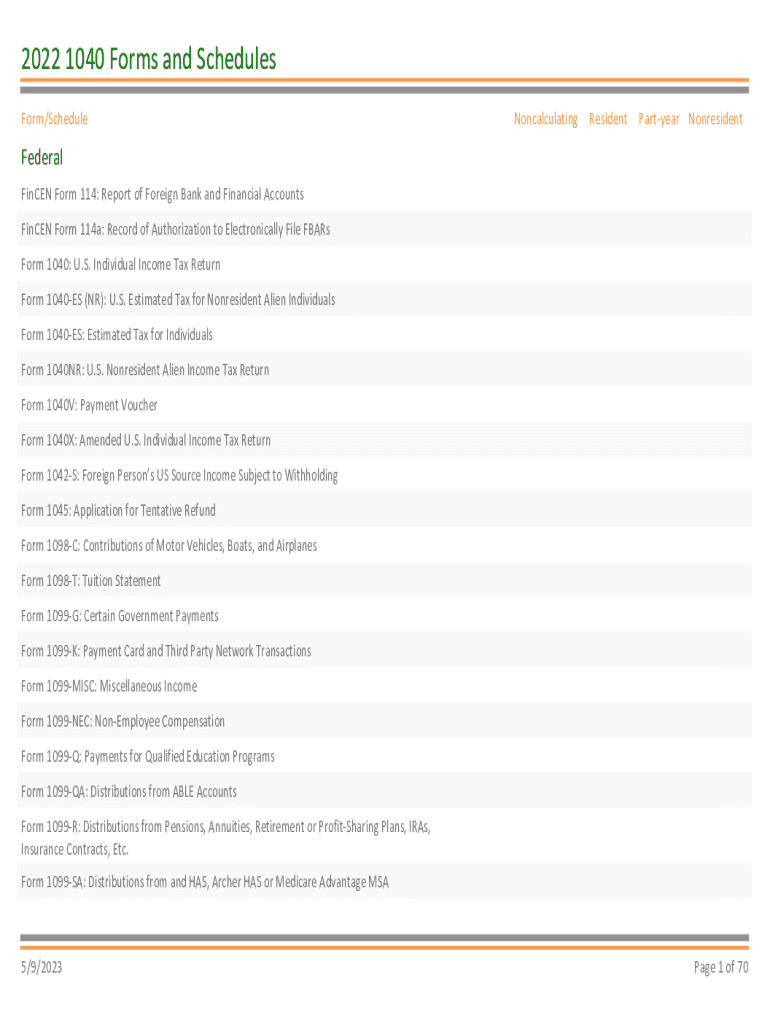







Definition & Meaning
FinCEN Form 114, commonly known as the Report of Foreign Bank and Financial Accounts (FBAR), is a mandatory document for U.S. taxpayers who hold a financial interest or signature authority over foreign financial accounts. The form aims to assist the U.S. government in identifying taxpayers who may be using offshore accounts to evade taxes. The Financial Crimes Enforcement Network (FinCEN) enforces this requirement to monitor and deter illegal activities such as money laundering.
Foreign financial accounts include bank accounts, brokerage accounts, mutual funds, and certain types of trusts or life insurance policies with a cash value. The reporting threshold is generally set at $10,000. If the total value of all foreign financial accounts exceeds this amount at any point during the calendar year, the form must be filed.
Important Terms Related to FinCEN Form 114
-
Financial Interest: This is when a person has ownership or control over the account or its assets. An individual with financial interest is typically the owner of record or has legal title.
-
Signature Authority: This refers to the authority to control the disposition of assets within an account by direct communication with the institution maintaining the account.
-
Foreign Account: Accounts housed in a bank or financial institution located outside the United States. These can include accounts from foreign banks, investment companies, or insurance companies with cash values.
Understanding these terms is crucial for accurate compliance with reporting requirements. Failure to understand these concepts can lead to errors in filing and potential penalties.
Eligibility Criteria
To determine who must file the FinCEN Form 114, individuals should consider the following:
-
U.S. Citizenship or Residency: Any U.S. citizen, resident, corporation, partnership, limited liability company, trust, or estate with qualifying foreign financial accounts must file.
-
Threshold Requirement: If the aggregate value of the foreign accounts exceeds $10,000 at any time during the calendar year, filing the form is mandatory.
-
Account Types: Foreign bank accounts, brokerage accounts, mutual funds, trusts, or certain life insurance policies with a cash value are included in the reporting.
Special care should be taken to determine eligibility annually, as changes in foreign account balances or ownership status could alter filing obligations.


Steps to Complete the FinCEN Form 114
-
Gather Required Information: Collect details for all foreign financial accounts. This includes names on the accounts, account numbers, names and addresses of the foreign banks, and the maximum value of each account during the reporting year.
-
Access the Filing System: The form is filed electronically through the BSA E-Filing System, which is accessible via the FinCEN website.
-
Input Account Details: Enter required account and identifying information into the electronic form. Ensure all details are accurate to avoid potential compliance issues.
-
Review and Submit: Carefully review the completed form for accuracy. Once verified, submit through the BSA E-Filing System.
Any amendments or corrections should also be filed electronically using the same online system.
Penalties for Non-Compliance
Non-compliance with FBAR filing requirements can result in significant penalties:
-
Willful Violations: These incur higher fines, up to the greater of $100,000 or 50% of the account balance. Criminal penalties might also apply.
-
Non-Willful Violations: Incurs penalties up to $12,459 per violation, unless the taxpayer can demonstrate reasonable cause for the violation and show they voluntarily corrected previous errors.
The severe consequences reinforce the importance of understanding and complying with all FBAR requirements.
Filing Deadlines / Important Dates
The due date for FinCEN Form 114 aligns with the federal tax filing deadline, April 15. However, FinCEN grants an automatic extension to October 15 if the initial deadline is missed. Submitting by the April deadline ensures compliance, while the automatic extension provides additional flexibility if needed.
It is crucial to adhere to these deadlines to avoid penalties, as there is no penalty for filing late if the automatic extension is used, provided the form is submitted before October 15.
Examples of Using the FinCEN Form 114
Consider a U.S. citizen with three accounts in different countries, each holding varying balances. If the aggregated balance of these accounts exceeded $10,000 at any point during the year, the individual would need to file the form. Similarly, a business with authority over a foreign account would also be obligated to file when the threshold is met.
These examples illustrate common scenarios where FinCEN Form 114 would be required, emphasizing the importance of vigilance in monitoring account balances and reporting status.
IRS Guidelines
The IRS provides comprehensive guidelines regarding the filing of FinCEN Form 114. These guidelines clarify who must file, what accounts need to be reported, and how to determine the maximum value of each account. Taxpayers are encouraged to consult IRS resources or a tax professional to ensure compliance with these guidelines, especially given the complexity of international financial dealings.
Digital vs. Paper Version
FinCEN Form 114 must be filed electronically, as there is no paper form alternative. The BSA E-Filing System provides a streamlined process without the need for physical documentation. This transition to digital-only filing increases efficiency and aligns with broader government initiatives to modernize reporting systems.
Electronic submission minimizes delays and errors commonly associated with paper filing, allowing for a more secure and traceable reporting process.




