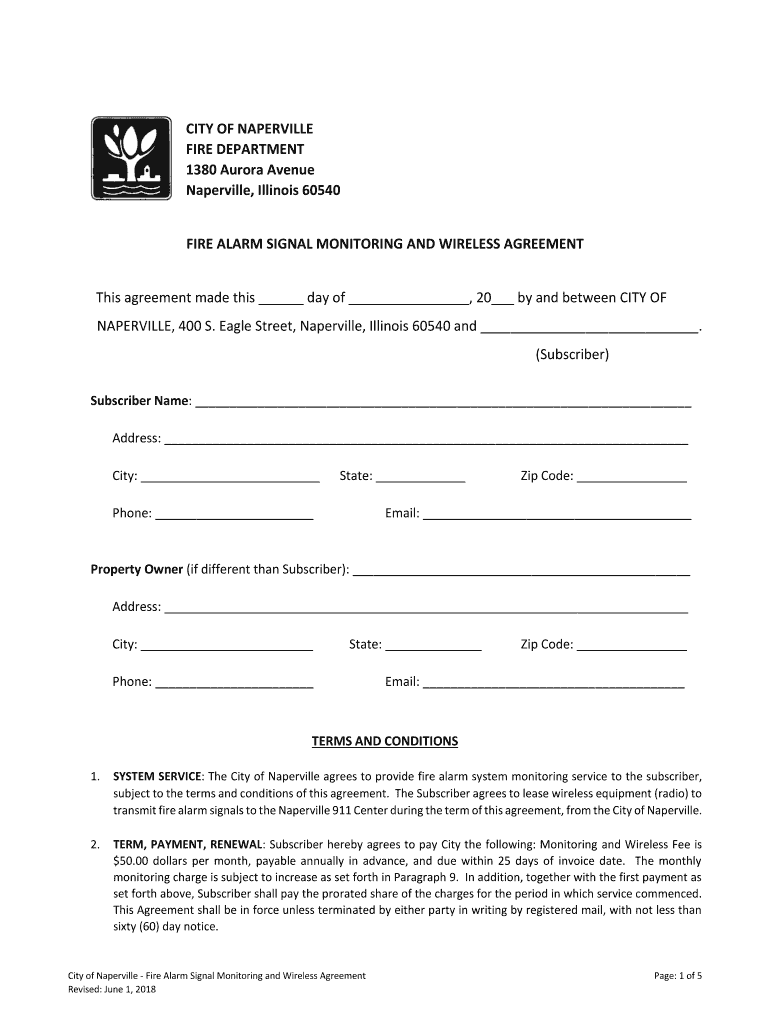







Definition and Purpose of the Fire Alarm Monitoring Agreement - The City of Naperville
The Fire Alarm Monitoring Agreement is a formal contract between the City of Naperville and subscribers. It stipulates the terms and conditions under which fire alarm monitoring services are provided. This agreement is crucial for ensuring that all parties understand their roles in maintaining effective fire safety measures within buildings that are part of the program. Notably, the agreement clarifies that while the city facilitates monitoring, it does not guarantee protection against all losses or provide insurance.
Key Aspects of the Agreement
- Service Provision: Outlines the nature of services provided, such as the connection of fire alarms to a central monitoring system.
- Responsibilities: Details the obligations of both parties, including maintenance of equipment and adherence to safety standards.
- Payment Terms: Describes the fees involved and the payment schedule for using these services.
- Liability Limitations: The agreement includes disclaimers limiting the City's liability in certain situations.
How to Use the Fire Alarm Monitoring Agreement - The City of Naperville
Using the Fire Alarm Monitoring Agreement requires an understanding of its components and how they apply to both parties. Subscribers need to review the contract carefully to ensure compliance with stipulated requirements, such as maintaining the operational readiness of fire alarm systems and respecting payment schedules.
Utilizing the Contract
- Thorough Review: Ensure all terms are understood before signing.
- Compliance: Follow operational guidelines and maintenance requirements strictly.
- Record Keeping: Maintain a copy of the agreement and related documents for easy reference.
Steps to Complete the Fire Alarm Monitoring Agreement - The City of Naperville
Completing the agreement involves several steps to ensure that it is filled out correctly and legally binding. Accuracy in this process is vital to prevent delays in services.
Detailed Steps
- Obtain the Document: Acquire the latest version of the agreement from the City of Naperville’s official resources.
- Provide Required Information: Fill in necessary details such as subscriber information and property details.
- Review Clauses: Carefully read each clause to ensure every point is understood.
- Consult with a Legal Advisor: Seek legal advice if any part of the agreement is unclear.
- Sign and Date the Agreement: Execute the signing in accordance with the city's requirements.
- Submit for Approval: Return the completed document to the designated city department.
Key Elements of the Fire Alarm Monitoring Agreement - The City of Naperville
Understanding the essential components of the agreement can aid in its effective implementation and adherence.
Components to Consider
- Monitoring Services: Explanation of the monitoring procedures and response strategies.
- Term and Termination: The duration of the agreement and the conditions under which it can be terminated.
- Responsibility and Maintenance: Obligations related to the upkeep of alarm systems.
Legal Use of the Fire Alarm Monitoring Agreement - The City of Naperville
The legal framework surrounding the agreement ensures both compliance with local regulations and the execution of mutual responsibilities.
Legal Requirements
- Agreement Binding Nature: Once signed, the agreement becomes legally enforceable.
- Jurisdiction: Governed by the laws of the State of Illinois, specifically tailored to the City of Naperville regulations.
- Dispute Resolution: Features procedures for resolving any disagreements that may arise from the contract.
Who Typically Uses the Fire Alarm Monitoring Agreement - The City of Naperville
This agreement is primarily used by property owners, business managers, and other stakeholders who require fire safety monitoring within Naperville.


Target Users
- Commercial Property Owners: Those managing properties where public safety is a priority.
- Residential Building Managers: Responsible for multifamily dwellings with fire safety requirements.
- Municipal Contractors: Those engaged by the city to implement fire safety measures.
State-Specific Rules for the Fire Alarm Monitoring Agreement - The City of Naperville
The agreement must adhere to Illinois state laws and local ordinances specific to Naperville.
Rules to Follow
- Compliance with State Fire Codes: Adherence to Illinois fire safety standards and codes is mandatory.
- Local Ordinances: Any additional city-specific laws must be incorporated into the agreement.
- Annual Review: Contracts may need regular updates or reviews in line with changing state regulations.
Examples of Using the Fire Alarm Monitoring Agreement - The City of Naperville
Real-world examples illustrate how the agreement functions in various circumstances.
Scenarios
- Commercial Enforcement: A retail chain enters into an agreement to comply with fire safety regulations across multiple outlets.
- Residential Buildings: A property management firm uses the agreement for ensuring tenant safety across their managed properties.
- Public Spaces: Facilities such as libraries and community centers utilize the agreement for enhanced public safety compliance.