






Definition & Meaning
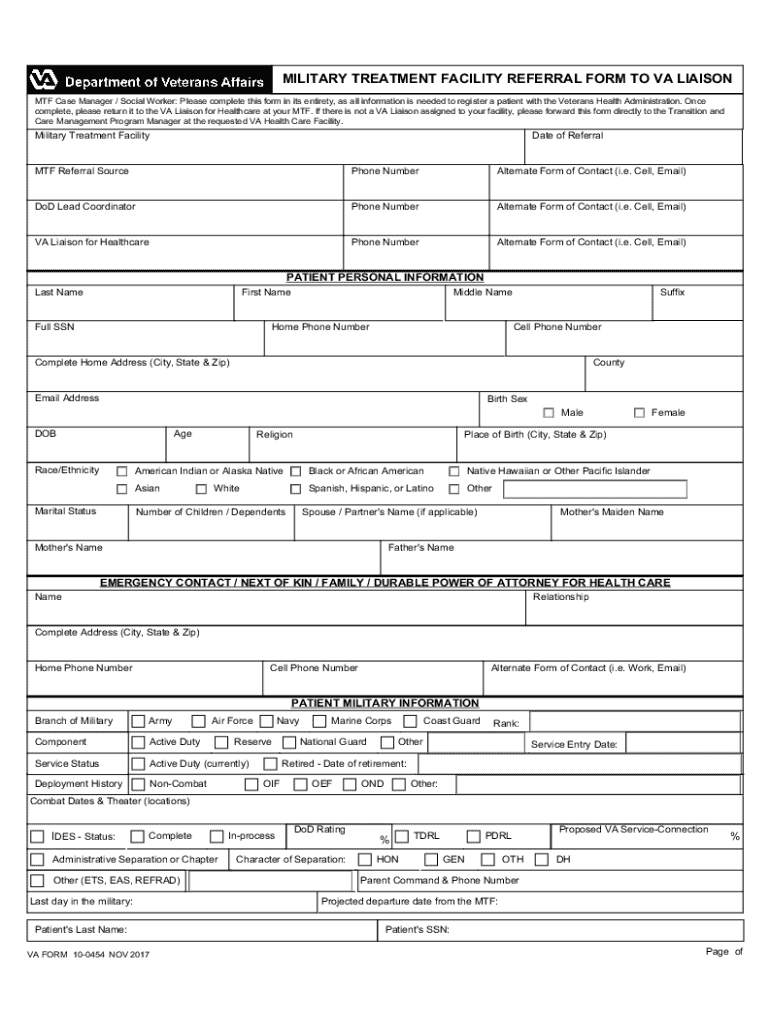
The Military Treatment Facility Referral Form to VA Liaison is a critical document used primarily by case managers and social workers. Its main purpose is to facilitate the referral of military patients to the Veterans Health Administration (VHA) for both outpatient and inpatient healthcare services. This form captures comprehensive patient information, which includes personal, military, and health details necessary to ensure seamless healthcare management and continuity of care for veterans transitioning from military to civilian medical treatment settings.
How to Use the Military Treatment Facility Referral Form to VA Liaison
Using this form involves several strategic steps to ensure all necessary information is correctly recorded and submitted. It is designed to be filled out by authorized professionals who possess detailed knowledge of the patient’s medical history and treatment needs. Users should start by gathering complete patient information, including military service details and current medical conditions. Following this, the form must be filled consecutively, ensuring each section is fully completed to avoid delays in referral processing. Finally, the completed form should be reviewed for accuracy before submission to the designated VA liaison or program manager.
Steps to Complete the Military Treatment Facility Referral Form to VA Liaison
-
Collect Patient Information: Begin by gathering all relevant patient details including full name, date of birth, Social Security number, and military service number.
-
Document Military Service Details: Include information about the patient's military branch, rank, period of service, and discharge status. This can be crucial for eligibility verification for VA services.
-
Health Condition and Treatment Goals: Clearly articulate the patient's current health condition and the specific treatment goals to guide the VA liaison in making appropriate healthcare arrangements.
-
Identify Required Services: Specify the type of services needed, whether outpatient or inpatient, and mention any specialized care required.
-
Verification and Signature: The form should be verified for completeness, signed by the authorized case manager or social worker, and prepared for submission.
-
Submission: Submit the form to the respective VA office via their preferred method, ensuring secure delivery of sensitive patient information.
Key Elements of the Military Treatment Facility Referral Form to VA Liaison
- Patient Identification Section: Includes fields for essential identifiers such as name, Social Security number, and contact information.
- Military Service Record: Captures specifics about the patient’s military background, which can affect eligibility for certain VA services.
- Current Medical Diagnosis: Provides space to describe the patient’s current medical conditions, previous treatments, and any ongoing health concerns.
- Intended Referral Outcome: A section dedicated to defining the goals of the referral and outlining specific healthcare services required.
- Authorization and Consent: Contains a mandatory field for the patient or legal representative's signature, indicating consent for the transfer and sharing of medical information.
Who Typically Uses the Military Treatment Facility Referral Form to VA Liaison
This form is predominantly used by healthcare professionals, especially case managers and social workers, within military treatment facilities. These individuals are responsible for coordinating patient care and ensuring that veterans receive the necessary medical support and resources from the VA. It also involves collaboration with VA liaisons who manage the integration of military medical records into the VA healthcare system.


Legal Use of the Military Treatment Facility Referral Form to VA Liaison
The legal use of this form is grounded in compliance with the standards and regulations set forth by the VHA and relevant federal laws governing patient privacy and healthcare administration. Users must adhere to regulations concerning the handling and sharing of personal medical information, such as the Health Insurance Portability and Accountability Act (HIPAA). Ensuring that all sections of the form are accurately completed and authorized by a qualified professional is crucial for maintaining the form's legal validity.
Required Documents
Certain documents are essential to accompany the referral form to validate the information provided and to facilitate the referral process. These might include:
- Military Discharge Papers (DD Form 214): To verify military service and discharge status.
- Medical Records: Pertinent health records summarizing the patient's medical history and current treatment are required for an accurate assessment by the VA.
- Insurance Information: Details of any existing health insurance coverage that may work alongside VA benefits.
- Authorization for Release of Information: A signed consent form allowing the transfer of medical records from the military treatment facility to the VA.
Form Submission Methods
The form can be submitted through several channels:
- Online Submission: Digital submission through secure VA portals or email, ensuring the encryption of sensitive data.
- Mail: Physical mailing of the completed form and accompanying documents to the specified VA address.
- In-Person: Direct submission to a VA office, which may also involve preliminary consultation with VA staff for any clarifications needed.
Form Variants (Related or Older Versions)
There may be variations of the Military Treatment Facility Referral Form tailored for specific branches of the military or different types of medical treatment needs. Older versions might exist but using the most current version assures compliance with the latest procedural requirements and legislative updates. Practitioners should verify with VA offices to determine if any specialized forms are required for unique treatment plans or circumstances.