Definition & Meaning
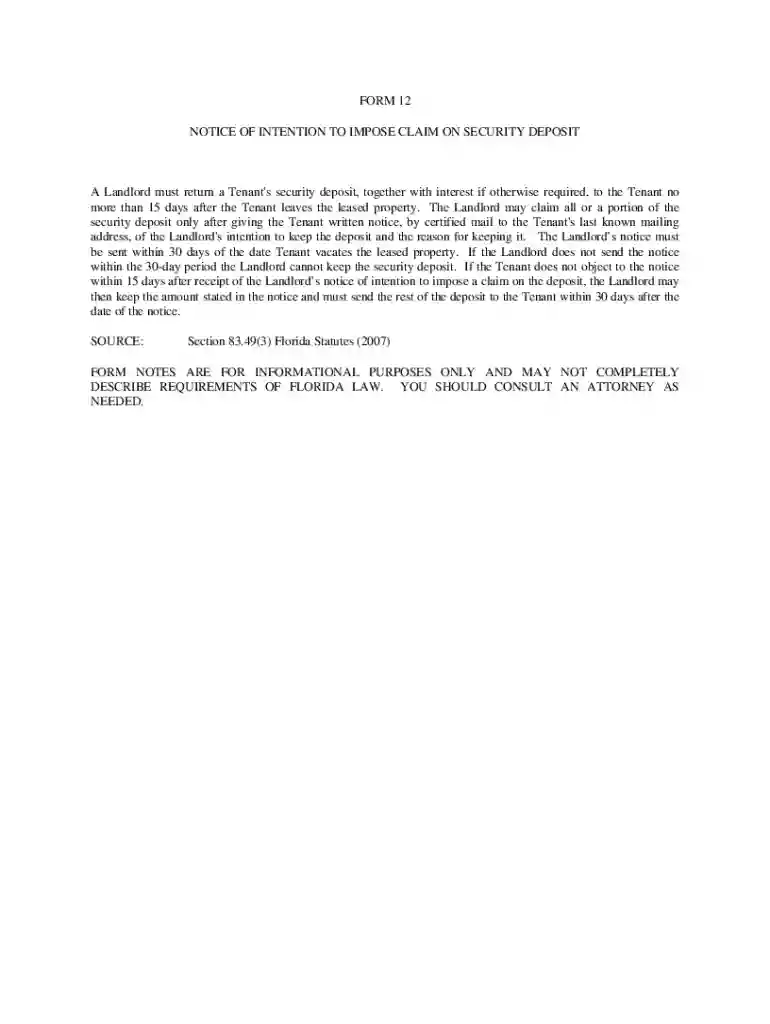
A "notice of intention to impose claim on security deposit" is a legal document used in the state of Florida, as outlined by The Florida Bar. This notice is sent by landlords to tenants to inform them of the landlord's intent to claim a portion of the tenant's security deposit. The purpose of this notice is to provide a detailed explanation for the claim, facilitating transparency and allowing the tenant to challenge the claim within a specified period.
Essential Components
- Purpose: To inform tenants of the landlord's claim on their security deposit.
- Content Requirements: Must include specific reasons for the claim and the exact amount being claimed.
- Legal Framework: Governed by Florida state laws aimed at protecting tenant rights.
Document Features
- Timeliness: The notice must be sent within 30 days after the tenant vacates the property.
- Clarity: Should clearly state the portion of the deposit being claimed and reasons for the deduction.
How to Use the Notice of Intention
Utilizing the notice requires a structured approach to ensure compliance with Florida laws and protect both landlord and tenant rights.
Preparation Steps
- Review the Lease Agreement: Understand the security deposit terms agreed upon by both parties.
- Itemize Claims: Document the specific damages or issues that justify the claim.
- Draft the Notice: Use clear and concise language to detail the reasons for the claim.
Sending the Notice
- Timing: Send within the statutory 30-day period post-tenant vacancy.
- Method: Preferably via certified mail to ensure delivery and provide proof of submission.
How to Obtain the Notice
There are several ways to obtain the required notice document.
Sources for the Form
- Online Access: Available through legal document platforms or the Florida Bar's official resources.
- Legal Assistance: Attorneys specializing in landlord-tenant law can provide the form.
- Property Management Software: Some software solutions include customizable form templates.
Verification and Compliance
- Ensure Legitimacy: Verify the form's compliance with current legal standards.
- Customizations: Adapt the template to include all specific details relevant to your situation.
Steps to Complete the Notice
Completing the notice involves a sequential process that ensures thoroughness and legality.
Detailed Instructions
- Gather Documentation: Compile all evidence supporting your claim, such as repair invoices or photos of damages.
- Fill Out the Form: Insert necessary information, including tenant details, claim amount, and detailed reasons.
- Review for Accuracy: Double-check all entries for completeness and legal compliance.
- Finalize: Ensure the document is dated and signed appropriately.
Proactive Measures
- Seek Legal Advice: If uncertain, consult with a legal professional to clarify any ambiguities.
- Prepare for Objections: Anticipate potential disputes and be prepared with evidence.
Importance of the Notice
Issuing this notice is crucial for several reasons, emphasizing the importance of maintaining legal and professional standards.
Key Benefits
- Legal Protection: Mitigates risk by ensuring the landlord's actions align with legal requirements.
- Tenant Communication: Opens a channel for dialogue, reducing misunderstandings and disputes.
- Financial Accountability: Establishes a clear record of the landlord's claims against the deposit.
Scenario Examples
- Damage Repairs: Charging for necessary repairs exceeds normal wear and tear.
- Unpaid Rent: Withholding funds to cover outstanding rental payments.
Who Uses the Notice
The notice's primary users are landlords and property management firms in Florida, requiring familiarity with state-specific laws.
User Profile
- Landlords: Individual property owners managing tenant relations.
- Property Managers: Firms or individuals responsible for overseeing rental property operations.
Use Case Scenarios
- Routine End-of-Lease Procedures: Part of standard lease termination documentation.
- Handling Difficult Tenants: Provides legal backing in contentious security deposit disputes.
Legal Use of the Notice
Adhering to legal standards when issuing the notice is imperative to ensure enforceability.
Compliance Factors
- State Regulations: Must conform to Florida's specific tenant-landlord legislation.
- Documentation: Maintain a comprehensive file of all tenant interactions related to the security deposit.
Potential Consequences of Non-Compliance
- Legal Action: Risks of tenant-initiated lawsuits for non-compliance.
- Financial Penalties: Possibility of forfeiting the right to retain any deposit amounts.
State-Specific Rules
Florida's requirements for handling security deposit claims are distinctive and should be strictly followed.
Mandates in Florida
- Time Limit: 30 days to notify and 15 days for tenant objections.
- Content Specifications: Must be detailed, including all grounds for the claim.
Comparison to Other States
- Variability: Other states might have different timelines and notice requirements.
- Adaptation: Understanding local laws is crucial for landlords operating in multiple states.
These sections provide a comprehensive understanding of the "notice of intention to impose a claim on security deposit" as governed by Florida law, with practical guidance, legal context, and scenarios tailored to landlords needing to navigate this process effectively.