




01. Edit your form online
Type text, add images, blackout confidential details, add comments, highlights and more.

Type text, add images, blackout confidential details, add comments, highlights and more.

Draw your signature, type it, upload its image, or use your mobile device as a signature pad.

Send it via email, link, or fax. You can also download it, export it or print it out.
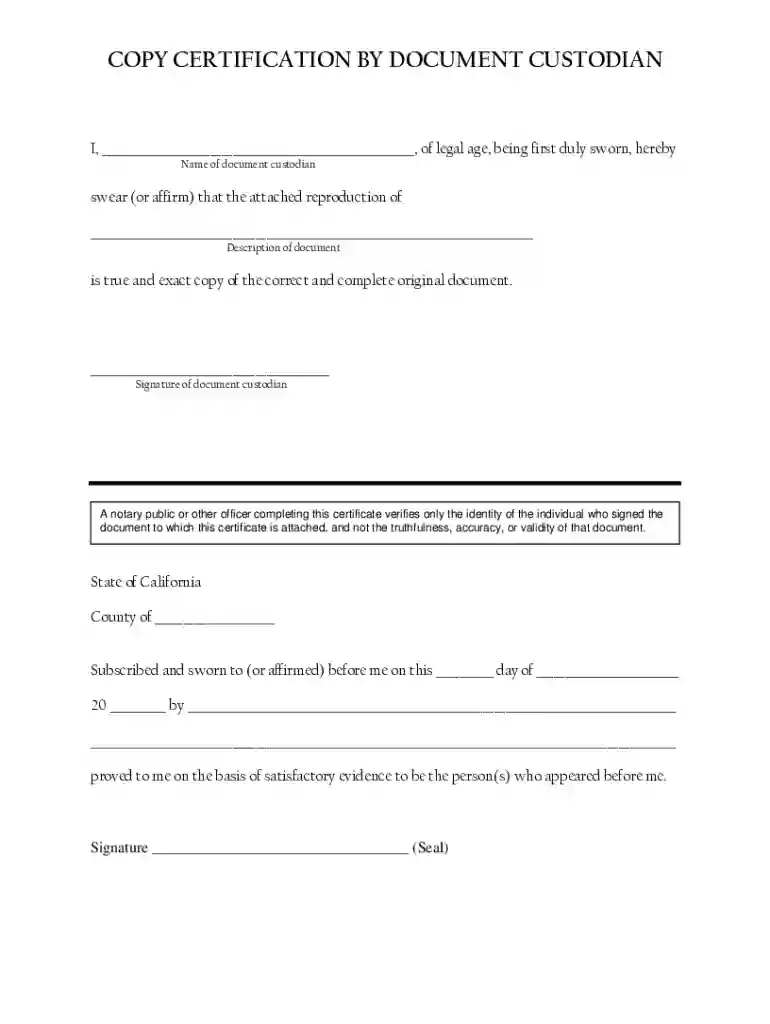
A copy certification is a process wherein a document custodian verifies that a copied document is an identical replica of the original. This verification includes sections detailing the custodian's name, document description, signature, and notary verification. In legal and official contexts, this certification ensures the integrity and authenticity of the document, confirming that the copy can be used in place of the original when needed.
The Hotline Tip titled "How To Perform A Copy Certification By" provides a structured method for conducting a copy certification. You begin by preparing the original and photocopied documents. Next, follow the guidelines in the tip to document details like the custodian's information and document description. Use this tip as a checklist to ensure all steps are completed, including acquiring the necessary signatures and notary verification, which confer the authenticity and legality of the certified copy.
Gather Required Documents: Begin by assembling the original documents and copies that require certification.
Identify the Custodian: The custodian, typically the holder of the original document, must register their name and contact information.
Document Description: Describe the document in detail, including the title, date, and any distinguishing features.
Signature and Verification: The custodian signs the certification statement. This needs to be notarized to validate the certification's authenticity.
Notary Acknowledgment: A notary official affirms the custodian's authority and the certification process's legality, concluding the steps.
In the U.S., copy certifications are widely used to replace original documents in various legal, financial, and business transactions. Certified copies are frequently required in situations like court documents, financial agreements, or when submitting identification papers for official procedures. Always ensure compliance with local laws and regulations governing document certification.
Copy certification processes can vary by state. Some states permit specific documents for certification, while others may have restrictions or additional requirements. It is crucial to consult state-specific guidelines to ensure compliance with local laws. Checking with a legal professional or government office in your state can provide clarity and avoid legal issues.
Copy certification is used in various scenarios:
To complete a copy certification, gather the following documents:
Typically, a copy certification requires in-person submission due to the need for notarization, although specific arrangements might allow for online verification through electronic notarization platforms. Always verify if your local laws and the institutions you're dealing with permit digital submission. For traditional submissions, ensure you understand the institution's mailing requirements or make an appointment for in-person certification where necessary.
We've got more versions of the Hotline Tip: How To Perform A Copy Certification By form. Select the right Hotline Tip: How To Perform A Copy Certification By version from the list and start editing it straight away!
At DocHub, your data security is our priority. We follow HIPAA, SOC2, GDPR, and other standards, so you can work on your documents with confidence.




3 days ago Apply at the copying section of the family court with those details, name the number of copies, pay the prescribed copying fee, and collect a
Requesting an apostille using a copy of a document will require a DocHubd affidavit saying that the document is a true copy of the original.


