Definition & Meaning
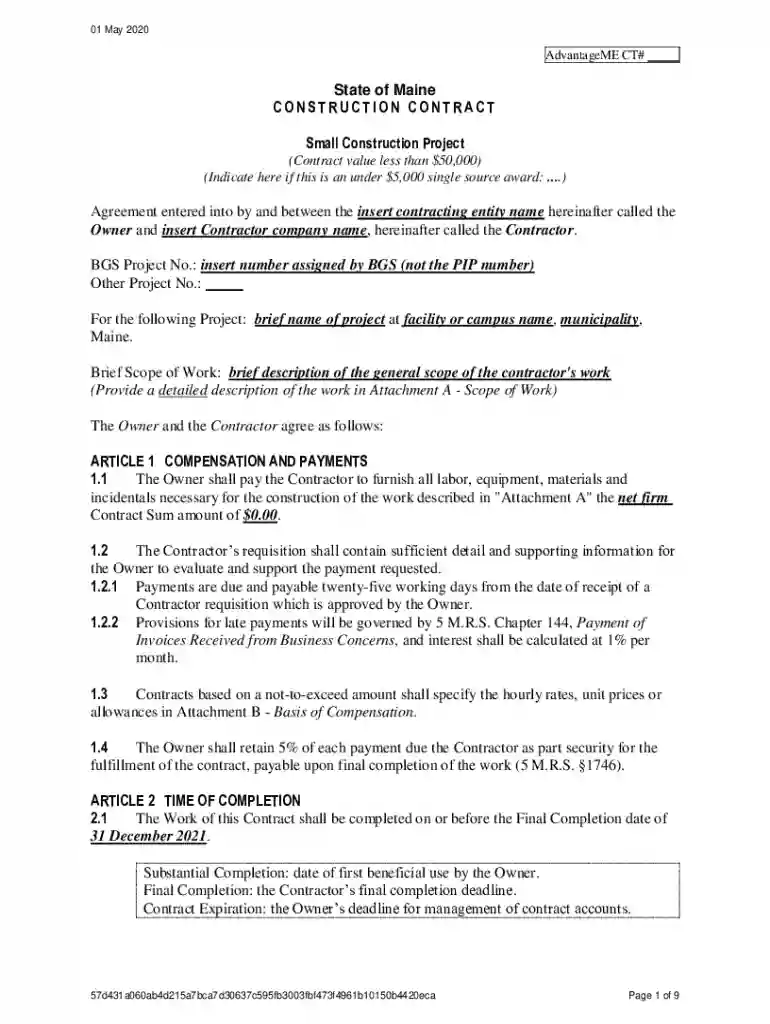
The "Small Construction Project Contract" is a legal document designed to outline the agreement between an Owner and a Contractor for small-scale construction projects. This contract includes detailed terms and conditions that govern the responsibilities and obligations of both parties. It serves to clearly define compensation methods, payment schedules, completion timelines, and the scope of work to ensure transparency and mutual understanding before a project starts.
Key Elements of the Small Construction Project Contract
A robust Small Construction Project Contract should include several key components that ensure all parties have a clear understanding of the expectations and deliverables. Essential elements are:
- Scope of Work: Detailed description of the work to be performed.
- Payment Terms: Clear explanation of how and when payments will be made.
- Timelines: Estimated start and completion dates.
- Responsibilities: Owner's and Contractor's duties and obligations.
- Insurance Requirements: Necessary coverage for both parties.
- Dispute Resolution: Processes for handling disagreements.
- Regulatory Compliance: Assurance of adherence to state and local regulations.
- Liability and Indemnification Clauses: Protection against certain risks and liabilities.
Legal Use of the Small Construction Project Contract
The legal use of the Small Construction Project Contract ensures compliance with state laws and regulations, specifically in the context of construction projects within the United States. Legal use implies:
- Adhering to state-specific building codes and permit requirements.
- Including indemnity clauses that align with state law.
- Ensuring the contract enforces the rights and responsibilities of both parties within a legal framework.
- Providing a legal remedy for breaches of contract terms.
Why Use a Small Construction Project Contract
Utilizing a Small Construction Project Contract is critical for reducing risk and ensuring project success. It:
- Enhances Communication: Clearly written terms reduce misunderstandings.
- Protects Stakeholders: Defines liability and protects against penalties.
- Facilitates Dispute Resolution: Sets procedures for addressing disputes.
- Ensures Compliance: Verifies that all parties meet legal and regulatory standards.
- Clarifies Financials: Outlines payment terms and prevents financial disputes.
Who Typically Uses the Small Construction Project Contract
This type of contract is commonly used by:

- Property Owners: Individuals or entities initiating small construction projects.
- Contractors: Professionals or companies hired to carry out construction work.
- Subcontractors: Individuals or entities undertaking a portion of the project.
- Architects and Designers: Professionals providing design specifications.
Steps to Complete the Small Construction Project Contract
Completing the Small Construction Project Contract involves several critical steps:
-
Preparation:
- Gather necessary project details including scope, budget, and timelines.
- Identify all parties involved and their roles.
-
Drafting:
- Include all key elements like payment terms and dispute resolution methods.
- Ensure clarity in definitions and expectations.
-
Review:
- Verify accuracy and completeness of all details in the draft.
- Seek legal advice to ensure compliance with relevant laws and regulations.
-
Approval:
- Obtain signatures from all parties involved to acknowledge agreement to terms.
- Keep signed copies for record-keeping and future reference.
State-Specific Rules for the Small Construction Project Contract
State-specific regulations play a vital role in drafting and executing a Small Construction Project Contract. While each state has unique requirements:
- Permit Requirements: Ensure all necessary permits are acquired in compliance with state laws (e.g., plumbing, electrical).
- Standard Clauses: Some states mandate inclusion of specific clauses relevant to local laws.
- Insurance Coverage: Verify adherence to state-required insurance minimums.
Examples of Using the Small Construction Project Contract
Real-world scenarios underline the importance of these contracts:
- Residential Renovations: Modifications to homes, such as kitchen or bathroom remodeling.
- Commercial Fit-Outs: Interior work for businesses moving into new spaces.
- Community Projects: Small community developments like parks and local facilities.
- Repairs and Maintenance: Roofing repairs or HVAC upgrades.
In each example, the Small Construction Project Contract ensures that both Owners and Contractors are aware of their duties, payment terms are clear, and projects are completed within defined timelines.