






Definition & Meaning
The "SECTION 5 TAXES and OTHER FORMS DISTRICTS NEED TO - Michigan" refers to a specific section within various tax-related documents required by district-level organizations within Michigan. This section serves as a collection point for necessary tax information and other financial forms that districts must submit to comply with state regulations. It encompasses a range of tax forms, ensuring compliance with both state-specific and federal requirements. The primary purpose of this section is to ensure that all relevant financial activities are reported accurately, thereby facilitating transparent fiscal management and compliance across various administrative districts within the state.
Steps to Complete the SECTION 5 TAXES and OTHER FORMS DISTRICTS NEED TO - Michigan
-
Review Required Documents: Begin by gathering all necessary financial documents, including transaction records, inventory reports, and any previously submitted forms.
-
Initial Preparation:
- Ensure that you have the correct versions of each form, as requirements may change annually.
- Collect all relevant data related to district financial activities.
-
Filling Out Forms:
- Carefully enter all required information, adhering to the specific guidelines outlined for each section.
- Double-check for accuracy to prevent errors that could lead to non-compliance issues.
-
Verification Process:
- Conduct a thorough review of the completed forms to ensure adherence to state and federal guidelines.
- Cross-verify numerical data against original financial documents to ensure there are no discrepancies.
-
Submission:
- Decide on the submission method (online, mail, or in-person) that best suits your district's needs.
- Follow through with the designated submission process before the indicated deadline.
Important Terms Related to SECTION 5 TAXES and OTHER FORMS DISTRICTS NEED TO - Michigan
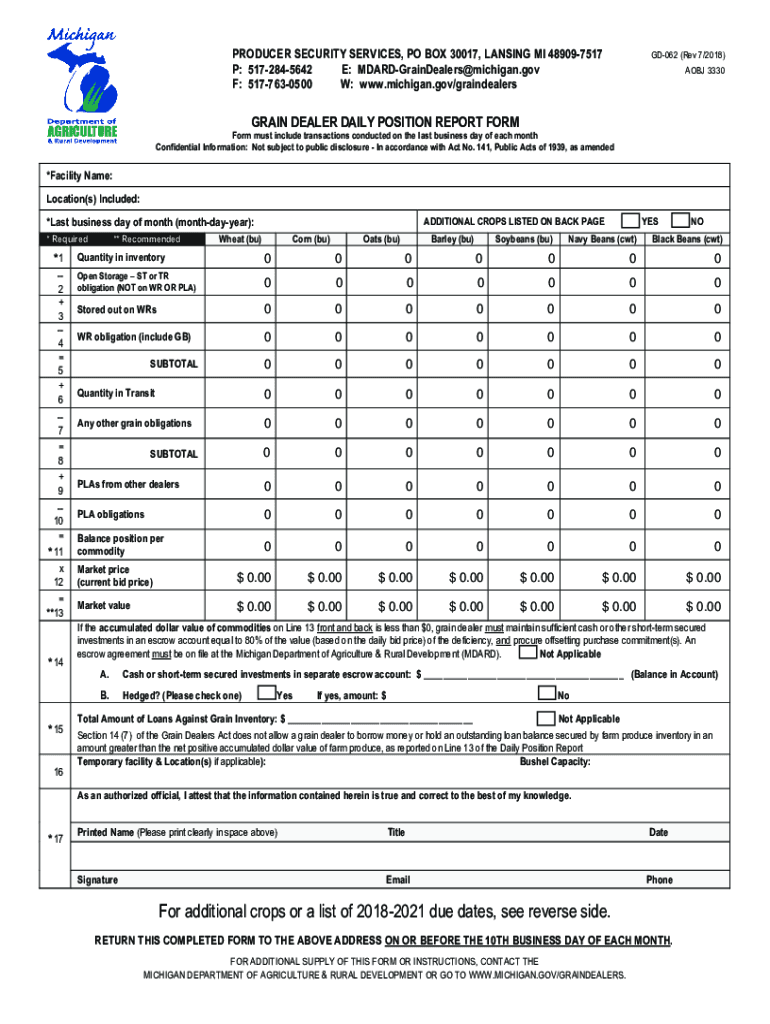
- Grain Dealer Daily Position Report: A specific report used by grain dealers in Michigan to detail financial transactions, critical for comprehensive compliance and reporting.
- ESIGN Act: Legislation that grants electronic signatures the same legal status as handwritten ones, important for digital submission of forms.
- Tax Compliance: Adhering to federal and state tax laws, critical for avoiding penalties and ensuring transparent financial management.
- Form Fields Manager: A tool within certain digital platforms that allows users to insert different types of fillable fields, optimizing form accuracy and usability.
Who Issued the SECTION 5 TAXES and OTHER FORMS DISTRICTS NEED TO - Michigan
This section of tax forms is issued by the Michigan Department of Treasury, a governing body responsible for managing taxation activities in the state. The department oversees the regulation and submission of these forms, ensuring all districts comply with state legal requirements. They provide the official forms to be filled out, as well as the guidelines for submission and compliance.
Filing Deadlines / Important Dates
Districts must ensure timely submission of all forms under "SECTION 5 TAXES and OTHER FORMS DISTRICTS NEED TO - Michigan" to avoid penalties. Typically, these forms must be submitted by the 10th business day of the month following the reporting period. This deadline allows a grace period for compiling and verifying financial data, emphasizing the importance of strict adherence to the set timeline to maintain compliance and avoid fines or audits.
Legal Use of the SECTION 5 TAXES and OTHER FORMS DISTRICTS NEED TO - Michigan
The completion and submission of this form fall under the legal frameworks governing taxation within Michigan. It requires districts to accurately report all financial dealings and comply with specific tax laws. Legal utilization involves ensuring all data is authentic and verifiable, maintaining transparency and accountability in the district's tax reporting obligations. Failing to comply could lead to legal actions, including penalties or more severe sanctions from state taxation authorities.
Examples of Using the SECTION 5 TAXES and OTHER FORMS DISTRICTS NEED TO - Michigan
- Grain Dealers: Utilize the form to report monthly inventory positions, ensuring accurate taxation based on current holdings and transactions.
- Municipal Districts: Must file the necessary forms to display allocation and utilization of funds for district development projects, ensuring compliance with budgetary guidelines.
- Educational Institutions: Report the receipt and expenditure of earmarked funds, complying with governmental oversight on funded programs.
Penalties for Non-Compliance
Failure to accurately complete or submit the required forms within the specified deadline can result in significant penalties:
- Fines: Monetary fines may be levied daily until compliance is achieved.
- Audits: Non-compliance may trigger in-depth audits by tax authorities, leading to increased scrutiny of financial operations.
- Legal Action: Persistent non-compliance may lead to legal proceedings, impacting the district's financial stability and creditworthiness.
State-Specific Rules for the SECTION 5 TAXES and OTHER FORMS DISTRICTS NEED TO - Michigan
Michigan has specific rules regarding the completion and submission of these forms. These rules include:
- The necessity for electronic submission wherever possible to enhance efficiencies and streamline processing.
- Requirements for additional verification of reported financial figures against original records to ensure accuracy.
- Incorporation of district-specific guidelines to account for variances in local compliance requirements.
Districts must remain up-to-date with any amendments to these rules to ensure ongoing compliance with state law.
Software Compatibility
The "SECTION 5 TAXES and OTHER FORMS DISTRICTS NEED TO - Michigan" can be completed using various software tools compatible with document management like DocHub. This software supports file formats such as DOC, PDF, XLS, and TXT, allowing districts to digitize their tax reporting process. Popular accounting software like TurboTax or QuickBooks may also provide solutions for easier data management and submission, ensuring compliance with Michigan’s taxation requirements.